
Our Products
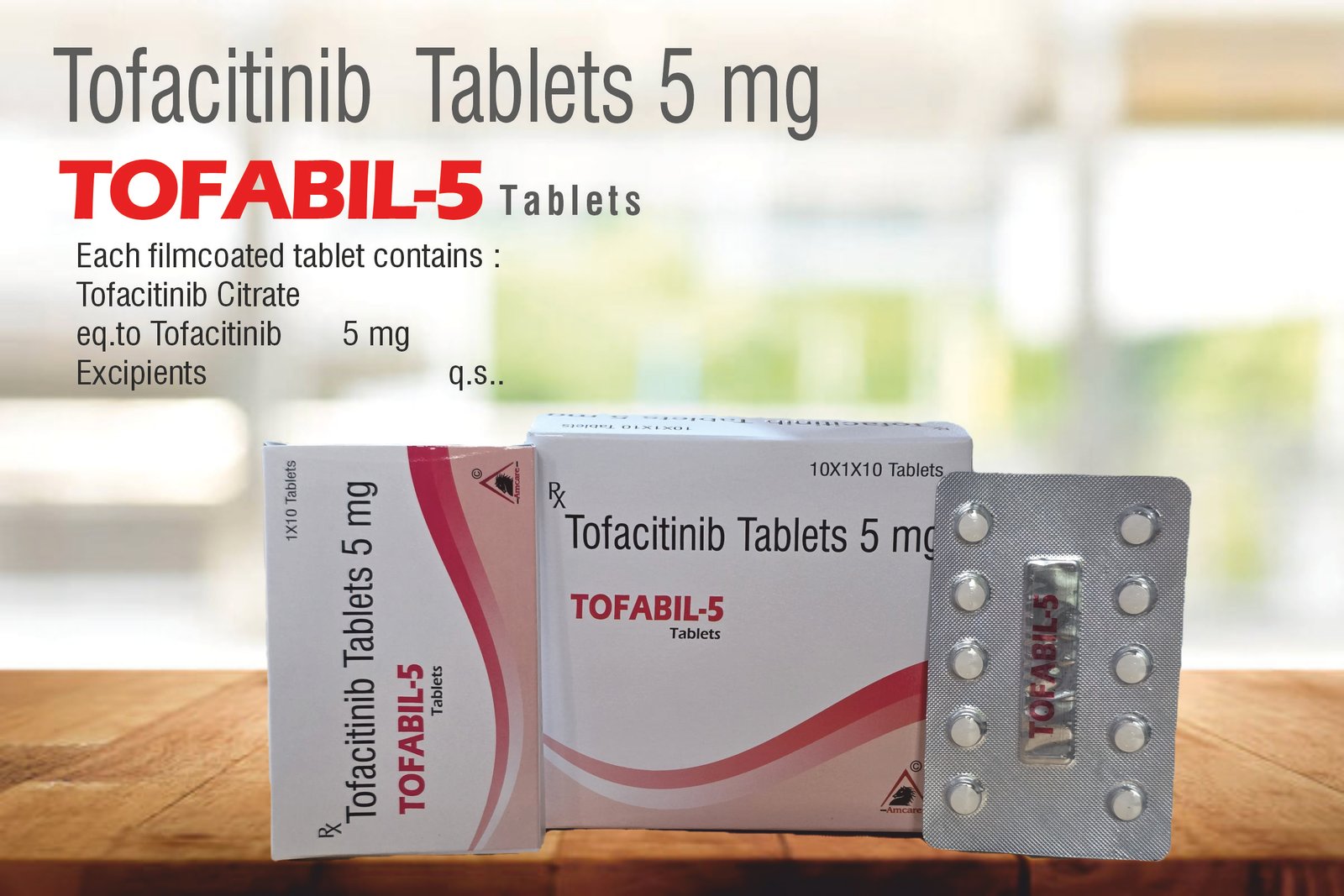
Tofabil-5
Product Composition
Packaging Details
Product Description
TOFABIL-5 Tablets – Tofacitinib 5 mg
TOFABIL-5 Tablets contain Tofacitinib Citrate equivalent to Tofacitinib 5 mg per film-coated tablet. Tofacitinib is an oral Janus kinase (JAK) inhibitor used in the management of selected immune-mediated inflammatory diseases. The medicine requires prescription and appropriate medical monitoring because of important infection, malignancy, cardiovascular and thrombotic warnings.
Composition of TOFABIL-5 Tablets
| Ingredient | Strength per Tablet |
|---|---|
| Tofacitinib Citrate | Equivalent to Tofacitinib 5 mg |
| Excipients | q.s. |
Product Information
| Particular | Details |
|---|---|
| Brand Name | TOFABIL-5 |
| Generic Name | Tofacitinib |
| Strength | 5 mg |
| Dosage Form | Film-coated Tablet |
| Route | Oral |
| Pack Size | 10 × 1 × 10 Tablets |
| Category | JAK Inhibitor / Prescription Medicine |
What are TOFABIL-5 Tablets Used For?
TOFABIL-5 contains tofacitinib, a JAK inhibitor that modifies specific immune and inflammatory signaling pathways.
Tofacitinib is used for selected immune-mediated inflammatory conditions. Depending on the approved indication, patient age and applicable regulatory labeling, tofacitinib may be used in conditions including:
- Rheumatoid arthritis
- Psoriatic arthritis
- Ankylosing spondylitis
- Ulcerative colitis
- Juvenile idiopathic arthritis
- Certain other inflammatory diseases covered by applicable prescribing information.
For a specific patient, the indication and treatment regimen should always be determined by the prescribing physician.
TOFABIL-5 should not be presented as a general painkiller or as a medicine for routine joint pain. It is an immunomodulatory prescription medicine intended for specific inflammatory conditions.
How Does TOFABIL-5 Work?
1. Tofacitinib – JAK Inhibition
Tofacitinib belongs to the Janus kinase inhibitor class.
JAK enzymes participate in intracellular signaling pathways used by several cytokines involved in immune and inflammatory responses.
Tofacitinib inhibits JAK-mediated signaling and consequently reduces signaling from selected cytokines.
Simplified mechanism:
Tofacitinib → JAK inhibition → Reduced cytokine signaling → Reduced immune-mediated inflammatory activity
This mechanism can help reduce signs and symptoms associated with certain immune-mediated inflammatory diseases.
Mechanism of Action in Detail
JAK pathway
Janus kinases are intracellular enzymes involved in signaling from several cytokine receptors.
When inflammatory cytokines bind to their receptors, JAK-mediated signaling can activate downstream pathways that influence gene transcription and immune-cell activity.
Tofacitinib inhibits JAK activity and modifies these signaling pathways.
The result is a reduction in certain cytokine-mediated immune and inflammatory responses.
2. Tofacitinib and Rheumatoid Arthritis
Rheumatoid arthritis is a chronic autoimmune inflammatory disease that can cause:
- Joint pain
- Joint swelling
- Morning stiffness
- Reduced mobility
- Progressive joint damage
Tofacitinib can be used in appropriate patients with moderately to severely active rheumatoid arthritis according to the applicable prescribing information.
Its mechanism targets intracellular immune signaling rather than simply providing symptomatic pain relief.
3. Tofacitinib and Psoriatic Arthritis
Psoriatic arthritis is an inflammatory arthritis associated with psoriasis.
Patients can experience:
- Joint pain
- Joint swelling
- Stiffness
- Reduced physical function
- Inflammatory changes affecting joints and surrounding tissues
Tofacitinib may be used in appropriate adult patients with active psoriatic arthritis according to approved prescribing information.
4. Tofacitinib and Ankylosing Spondylitis
Ankylosing spondylitis is an inflammatory condition primarily affecting the spine and sacroiliac joints.
It can be associated with:
- Back pain
- Stiffness
- Reduced spinal mobility
- Chronic inflammatory symptoms
Tofacitinib is included in current FDA prescribing information as a treatment option for appropriate adult patients with active ankylosing spondylitis.
5. Tofacitinib and Ulcerative Colitis
Ulcerative colitis is a chronic inflammatory disease affecting the colon.
Symptoms can include:
- Frequent bowel movements
- Diarrhea
- Rectal bleeding
- Abdominal discomfort
- Urgency to pass stools
Tofacitinib is used for appropriately selected patients with moderately to severely active ulcerative colitis under specialist medical supervision.
Benefits / Therapeutic Role of TOFABIL-5
1. JAK-Mediated Inflammatory Pathway Modulation
TOFABIL-5 acts on JAK-mediated intracellular signaling pathways involved in immune and inflammatory responses.
2. Management of Selected Inflammatory Conditions
Tofacitinib can be used for specific inflammatory diseases where JAK inhibition is an appropriate treatment strategy.
3. Oral Administration
TOFABIL-5 is administered orally as a film-coated tablet.
4. Disease-Modifying Approach
Unlike conventional analgesics that primarily provide symptomatic pain relief, tofacitinib acts on immune signaling pathways involved in the underlying inflammatory process.
5. Convenient Tablet Dosage Form
The 5 mg tablet provides an oral dosage form that can be incorporated into physician-directed treatment regimens.
Suggested Use / Dosage
TOFABIL-5 should be taken only according to the prescription and instructions of a qualified healthcare professional.
The appropriate dose depends on:
- The indication being treated
- Patient age
- Kidney function
- Liver function
- Concomitant medicines
- Treatment response
- Safety laboratory results
For certain adult inflammatory conditions, the immediate-release tofacitinib regimen includes 5 mg twice daily, but dosing differs by indication and patient circumstances. Therefore, the exact dosage should not be presented as a universal regimen for TOFABIL-5.
Administration
- Take orally with water.
- Follow the dosage prescribed by the physician.
- Tablets may be taken with or without food according to the applicable prescribing information.
- Do not change the dose without medical advice.
- Do not discontinue treatment without consulting the prescribing physician.
Monitoring During Treatment
Because tofacitinib affects immune pathways, appropriate monitoring is important.
The physician may evaluate:
- Complete blood count
- Liver function
- Lipid profile
- Tuberculosis status
- Hepatitis status where appropriate
- Signs and symptoms of infection
- Overall treatment response
The current prescribing information includes recommendations concerning TB evaluation and monitoring of hematological and other safety parameters.
Possible Side Effects
Tofacitinib can cause adverse effects, and the risk profile varies between patients and indications.
Possible adverse effects include:
- Upper respiratory tract infections
- Nasopharyngitis
- Headache
- Diarrhea
- Increased cholesterol/lipid levels
- Changes in blood counts
- Increased liver enzymes
More serious adverse events can occur, including:
- Serious infections
- Tuberculosis
- Certain malignancies
- Serious cardiovascular events
- Thrombotic events
- Hepatitis B reactivation
- Hypersensitivity reactions
The prescribing information carries prominent warnings regarding serious infections and malignancy.
Important Warnings & Precautions
1. Serious Infections
Tofacitinib can affect immune-system function and may increase susceptibility to serious infections.
Patients should be monitored for signs and symptoms of infection.
Treatment may require interruption or additional evaluation if a serious infection develops.
2. Tuberculosis
Patients should be evaluated for tuberculosis before and during treatment as clinically appropriate.
Patients with latent or active TB require appropriate medical management before or during immunomodulatory treatment.
3. Malignancy
Tofacitinib treatment has been associated with an increased risk of certain malignancies.
Patients should be evaluated based on their individual risk factors and monitored appropriately.
4. Cardiovascular Risk
Tofacitinib labeling includes warnings regarding serious cardiovascular events.
Particular attention may be required in patients with cardiovascular risk factors.
5. Thrombosis
Serious thrombotic events, including venous thrombosis and pulmonary embolism, have been reported with JAK inhibitors.
Patients should seek immediate medical attention for symptoms suggestive of thrombosis.
6. Blood Cell Abnormalities
Tofacitinib can affect blood-cell counts.
The physician may therefore monitor:
- Lymphocytes
- Neutrophils
- Hemoglobin
Treatment decisions should be based on appropriate laboratory assessment.
Drug & Medicine Interactions
Patients should inform their doctor about all prescription medicines, OTC medicines, supplements and herbal products they are taking.
Important interaction considerations include:
- Strong CYP3A4 inhibitors
- CYP3A4 inducers
- Certain immunosuppressive medicines
- Biologic DMARDs
- Other medicines affecting immune function
The current prescribing information specifically addresses interactions involving biologic products, live vaccines and cytochrome P450 pathways.
Important
Tofacitinib should generally not be combined with biologic DMARDs or potent immunosuppressive therapies unless specifically directed by an appropriate specialist and permitted by the applicable prescribing information.
Vaccination Considerations
Patients should discuss vaccination with their healthcare professional before and during treatment.
Because tofacitinib affects immune-system activity, live vaccines require particular consideration.
Vaccination status should ideally be reviewed before initiating treatment where appropriate.
Pregnancy & Breastfeeding
Women who are pregnant, planning pregnancy or breastfeeding should inform their healthcare professional before taking tofacitinib.
The safety of treatment must be evaluated based on the individual clinical situation, applicable prescribing information and the potential benefits and risks.
Do not use TOFABIL-5 during pregnancy or breastfeeding unless specifically advised by the treating physician.
Use in Elderly Patients
Older patients may have a greater risk of certain adverse events, particularly infections.
The physician may therefore consider:
- Age
- Existing medical conditions
- Concomitant medicines
- Kidney function
- Infection risk
- Cardiovascular risk
before initiating or continuing treatment.
Use in Patients With Kidney or Liver Problems
Tofacitinib dosage may require adjustment in patients with renal or hepatic impairment.
Patients should inform their physician if they have:
- Kidney disease
- Liver disease
- Abnormal liver-function tests
- Previous hepatitis infection
The dose should be determined by the prescribing physician based on the applicable prescribing information.
When Should Medical Advice Be Sought Immediately?
Patients receiving tofacitinib should seek prompt medical attention if they develop symptoms such as:
- Persistent or severe fever
- Shortness of breath
- Chest pain
- Sudden weakness
- Severe abdominal symptoms
- Leg swelling or pain
- Symptoms of a serious infection
- Unusual or persistent bleeding
- Signs of an allergic reaction
These symptoms may require urgent medical evaluation.
Storage
Store TOFABIL-5 Tablets:
- In a cool, dry place
- Away from direct sunlight
- Protected from excessive heat and moisture
- In the original packaging
- Out of reach of children
Follow the storage conditions specified on the final approved product packaging.
Key Product Features
| Product Feature | Details |
|---|---|
| Brand Name | TOFABIL-5 |
| Active Ingredient | Tofacitinib |
| Strength | 5 mg |
| Salt | Tofacitinib Citrate |
| Dosage Form | Film-coated Tablet |
| Route | Oral |
| Therapeutic Class | JAK Inhibitor |
| Category | Prescription Medicine |
| Pack Size | 10 × 1 × 10 Tablets |
Why Choose TOFABIL-5 Tablets?
TOFABIL-5 provides Tofacitinib 5 mg, an oral JAK inhibitor used in appropriately selected patients with certain immune-mediated inflammatory conditions.
Its pharmacological action is based on modulation of JAK-mediated cytokine signaling, providing a targeted approach to immune and inflammatory pathway management.
Key points:
- Tofacitinib 5 mg
- Oral film-coated tablet
- JAK inhibitor
- Used in selected immune-mediated inflammatory diseases
- Prescription medicine
- Requires appropriate patient selection and monitoring