Our Products

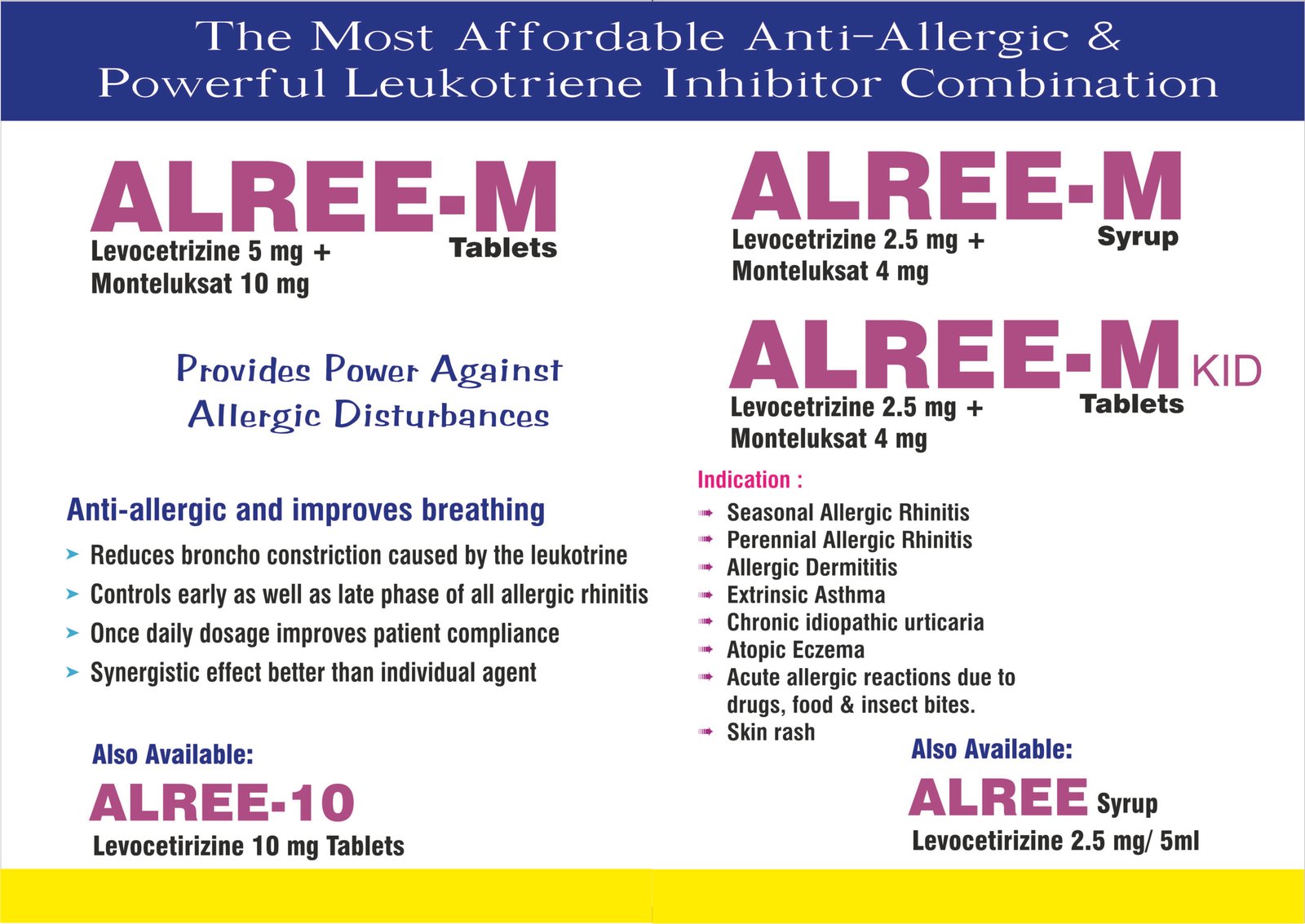
ALREE-M
Product Composition
Packaging Details
Product Description
ALREE-M Tablets
Levocetirizine Hydrochloride 5 mg + Montelukast Sodium 10 mg
ALREE-M is a film-coated oral tablet containing Levocetirizine Hydrochloride 5 mg and Montelukast Sodium 10 mg per tablet, as shown on the supplied artwork. It combines an H1-antihistamine with a leukotriene receptor antagonist and is intended for physician-directed management of selected allergic respiratory conditions.
1. Product Information
| Parameter | Details |
|---|---|
| Brand Name | ALREE-M |
| Composition | Levocetirizine HCl 5 mg + Montelukast Sodium 10 mg |
| Dosage Form | Film-Coated Tablet |
| Route | Oral |
| Therapeutic Category | Anti-Allergic / Antihistamine / Leukotriene Receptor Antagonist |
| Pack Size | 20 × 1 × 10 Tablets |
| Prescription Status | Rx, as shown on artwork |
| Colour | Tartrazine & Titanium Dioxide IP |
Composition
Each film-coated tablet contains:
- Levocetirizine Hydrochloride IP — 5 mg
- Montelukast Sodium IP — 10 mg
- Excipients — q.s.
- Colour: Tartrazine & Titanium Dioxide IP
2. What is ALREE-M Used For?
ALREE-M combines two medicines that work through different pathways involved in allergic respiratory symptoms.
It may be prescribed for selected patients with:
- Allergic rhinitis
- Seasonal allergic rhinitis
- Perennial allergic rhinitis
- Sneezing
- Runny nose
- Nasal itching
- Allergy-associated nasal symptoms
- Allergic respiratory symptoms
- Selected patients with asthma-associated allergic symptoms, where the physician considers montelukast appropriate
Montelukast is approved in the U.S. for allergic rhinitis and asthma, while levocetirizine is used for allergic-rhinitis symptoms and chronic idiopathic urticaria.
Important: The exact indication for the ALREE-M fixed-dose combination should follow its current Indian approval and prescribing information.
3. Mechanism of Action
ALREE-M works through two complementary pathways involved in allergic symptoms.
Levocetirizine
↓
Blocks H1 histamine receptors
↓
Reduces histamine-mediated symptoms
Montelukast
↓
Blocks leukotriene D4 receptors
↓
Reduces leukotriene-mediated airway and nasal effects
Combined concept
Histamine pathway + Leukotriene pathway
↓
Reduction of selected allergic respiratory symptoms
4. Levocetirizine Hydrochloride 5 mg
Levocetirizine is a selective peripheral H1-antihistamine.
During an allergic reaction, histamine contributes to:
- Sneezing
- Nasal itching
- Runny nose
- Watery eyes
- Other allergic symptoms
Levocetirizine blocks H1 receptors and reduces the effects of histamine.
Symptomatic role
Histamine release
↓
H1 receptor activation
↓
Sneezing + itching + rhinorrhea
Levocetirizine
↓
H1 receptor blockade
↓
Reduced allergic symptoms
5. Montelukast Sodium 10 mg
Montelukast is a leukotriene receptor antagonist.
Leukotrienes are inflammatory mediators involved in airway inflammation and allergic respiratory responses.
Montelukast blocks the cysteinyl leukotriene type 1 (CysLT1) receptor, reducing leukotriene-mediated effects.
It can therefore help control selected:
- Allergic respiratory symptoms
- Asthma-related airway responses
- Nasal symptoms associated with allergic rhinitis
Montelukast is not a rescue medicine for an acute asthma attack.
6. Combined Action
| Ingredient | Primary pharmacological role |
|---|---|
| Levocetirizine HCl 5 mg | H1-antihistamine |
| Montelukast Sodium 10 mg | Leukotriene receptor antagonist |
Levocetirizine
Helps control the histamine-mediated component:
- Sneezing
- Runny nose
- Nasal itching
- Allergy-associated symptoms
Montelukast
Acts on the leukotriene pathway involved in:
- Airway inflammation
- Bronchial responses
- Allergic respiratory symptoms
This provides a dual-pathway approach for appropriately selected patients.
7. Potential Therapeutic Benefits
✔ Helps relieve allergic nasal symptoms
Levocetirizine can reduce sneezing, runny nose and itching.
✔ Addresses histamine-mediated allergy
H1-receptor blockade provides antihistamine activity.
✔ Modulates leukotriene activity
Montelukast blocks CysLT1 receptors.
✔ Dual-pathway approach
The two ingredients target different mediators involved in allergic respiratory disease.
✔ Convenient combination
Both active ingredients are provided in a single film-coated tablet.
8. Common Clinical Applications
| Condition / Symptom | Potential role |
|---|---|
| Allergic rhinitis | Symptomatic management |
| Seasonal allergies | Symptomatic management |
| Perennial allergic rhinitis | Symptomatic management |
| Sneezing | Levocetirizine |
| Runny nose | Levocetirizine |
| Nasal itching | Levocetirizine |
| Allergy-associated respiratory symptoms | Combination |
| Selected asthma patients | Montelukast component |
The exact use of the combination should be determined by the treating physician.
9. Allergic Rhinitis
Allergic rhinitis can produce:
- Sneezing
- Runny nose
- Nasal itching
- Nasal congestion
- Watery eyes
Levocetirizine directly addresses histamine-mediated symptoms, while montelukast acts on leukotriene pathways.
However, montelukast should not automatically be considered first-line therapy for mild allergic rhinitis. The FDA advises reserving montelukast for allergic-rhinitis patients who have inadequate response or intolerance to alternative therapies because of its serious neuropsychiatric warning.
10. Asthma-Related Use
Montelukast is used as a controller medicine in appropriate asthma patients.
It may help reduce leukotriene-mediated airway effects and is used for long-term control in appropriately selected patients.
Important
ALREE-M is not a rescue treatment for an acute asthma attack.
A patient experiencing acute breathing difficulty should use their prescribed rescue treatment and seek medical attention when appropriate.
11. Suggested Use & Dosage
The artwork specifies:
- Levocetirizine HCl — 5 mg
- Montelukast Sodium — 10 mg
but does not provide a dosing schedule.
Recommended website wording
Take ALREE-M Tablets only as directed by the physician.
Administration
- Take orally with water.
- Follow the prescribed dose and duration.
- Do not exceed the prescribed dose.
- Take the medicine at the time recommended by the physician.
- Do not discontinue long-term therapy without medical advice.
Because the combination contains montelukast, the prescribing decision should consider the indication and the individual patient’s benefit-risk profile.
12. Side Effects
Possible adverse effects may include:
Levocetirizine-related
- Drowsiness
- Fatigue
- Headache
- Dry mouth
- Dizziness
Montelukast-related
- Headache
- Abdominal discomfort
- Nausea
- Diarrhea
- Upper-respiratory symptoms
Montelukast also carries an important warning regarding neuropsychiatric events, discussed separately below.
13. Important Montelukast Neuropsychiatric Warning
This is an important section that I recommend keeping on the ALREE-M product page.
The FDA requires a Boxed Warning for montelukast concerning serious neuropsychiatric events. Reported symptoms have included:
- Agitation
- Aggressive behaviour or hostility
- Anxiety
- Depression
- Irritability
- Sleep disturbances
- Vivid or abnormal dreams
- Hallucinations
- Confusion
- Restlessness
- Memory problems
- Suicidal thoughts or actions
Patients and caregivers should be advised to contact a healthcare professional promptly if new behaviour or mood-related symptoms occur.
For allergic rhinitis, FDA recommends reserving montelukast for patients who have inadequate response or intolerance to alternative allergy treatments.
14. Drowsiness & Driving
Levocetirizine may cause drowsiness or fatigue in some patients.
Patients should use caution when:
- Driving
- Operating machinery
- Working at heights
- Performing activities requiring full alertness
Alcohol and other sedating medicines may increase impairment.
15. Precautions & Warnings
Inform the physician before using ALREE-M if the patient has:
- Kidney disease
- Liver disease
- Previous allergy to levocetirizine or cetirizine
- Previous reaction to montelukast
- History of significant sleep or behaviour changes
- Existing psychiatric illness
- Asthma requiring regular controller treatment
- Acute breathing difficulty
Patients and caregivers should be informed about the potential neuropsychiatric effects associated with montelukast.
16. Drug Interactions
Tell the doctor or pharmacist about all medicines being taken.
Particular attention should be given to:
Other antihistamines
May increase antihistamine-related effects or drowsiness.
Sedatives and CNS depressants
May increase impairment.
Alcohol
May increase drowsiness.
Asthma medicines
The physician should review the complete asthma regimen before adding montelukast.
Other prescription medicines
Provide the complete medication list to the healthcare professional.
17. Pregnancy & Breastfeeding
Use ALREE-M during pregnancy or breastfeeding should be based on medical advice and an individual risk-benefit assessment.
Patients who are:
- Pregnant
- Planning pregnancy
- Breastfeeding
should inform their healthcare professional before starting treatment.
18. Use in Children
The appropriateness of this specific fixed-dose combination and strength in children should be determined from the current approved Indian product information.
Do not assume that the adult-strength 5 mg + 10 mg combination is appropriate for children simply because individual ingredients have pediatric indications.
19. Use in Elderly Patients
Elderly patients may be more susceptible to:
- Drowsiness
- Dizziness
- Renal impairment
- Medication interactions
Renal function should be considered for levocetirizine dosing.
20. Renal Impairment
Levocetirizine is substantially eliminated through the kidneys.
Patients with impaired renal function may require dose adjustment, and severe renal impairment may affect whether levocetirizine is appropriate.
The specific dose should therefore be determined according to the patient’s renal function and the approved prescribing information.
21. Hepatic Impairment
Montelukast is metabolized extensively in the liver, so patients with significant hepatic impairment should inform their physician.
Individualized medical assessment may be required.
22. When to Seek Immediate Medical Attention
Seek urgent medical attention if the patient develops:
- Difficulty breathing
- Facial, lip or tongue swelling
- Severe allergic reaction
- Severe behavioural changes
- Hallucinations
- Severe agitation
- Suicidal thoughts or behaviour
- Severe confusion
- Significant sleep-related behavioural changes
For new neuropsychiatric symptoms while taking montelukast, patients should stop the medicine and contact a healthcare professional immediately, consistent with FDA safety guidance.
23. Storage
Store ALREE-M Tablets:
- In a cool, dry place.
- Away from direct sunlight.
- Away from excessive heat and moisture.
- In the original packaging.
- Out of reach of children.
Do not use after the expiry date.
24. Key Product Features
ALREE-M Tablets
Dual-mechanism anti-allergic formulation
- Levocetirizine Hydrochloride IP — 5 mg
- Montelukast Sodium IP — 10 mg
- Film-coated tablet
- Oral administration
- Antihistamine + leukotriene receptor antagonist
- 20 × 1 × 10 Tablets
- Rx product as shown on artwork
- Colour: Tartrazine & Titanium Dioxide IP
25. Why ALREE-M?
Levocetirizine 5 mg
Provides H1-antihistamine activity for histamine-mediated allergic symptoms.
Montelukast 10 mg
Blocks leukotriene-mediated effects involved in allergic respiratory disease and asthma.
Dual pathway
Targets two different inflammatory/allergic mediator pathways.
Convenient combination
Two active ingredients are provided in one film-coated tablet.