Our Products
Itrospin®-200
Product Composition
Packaging Details
Product Description
ITROSPIN-200 Capsules
Itraconazole BP 200 mg
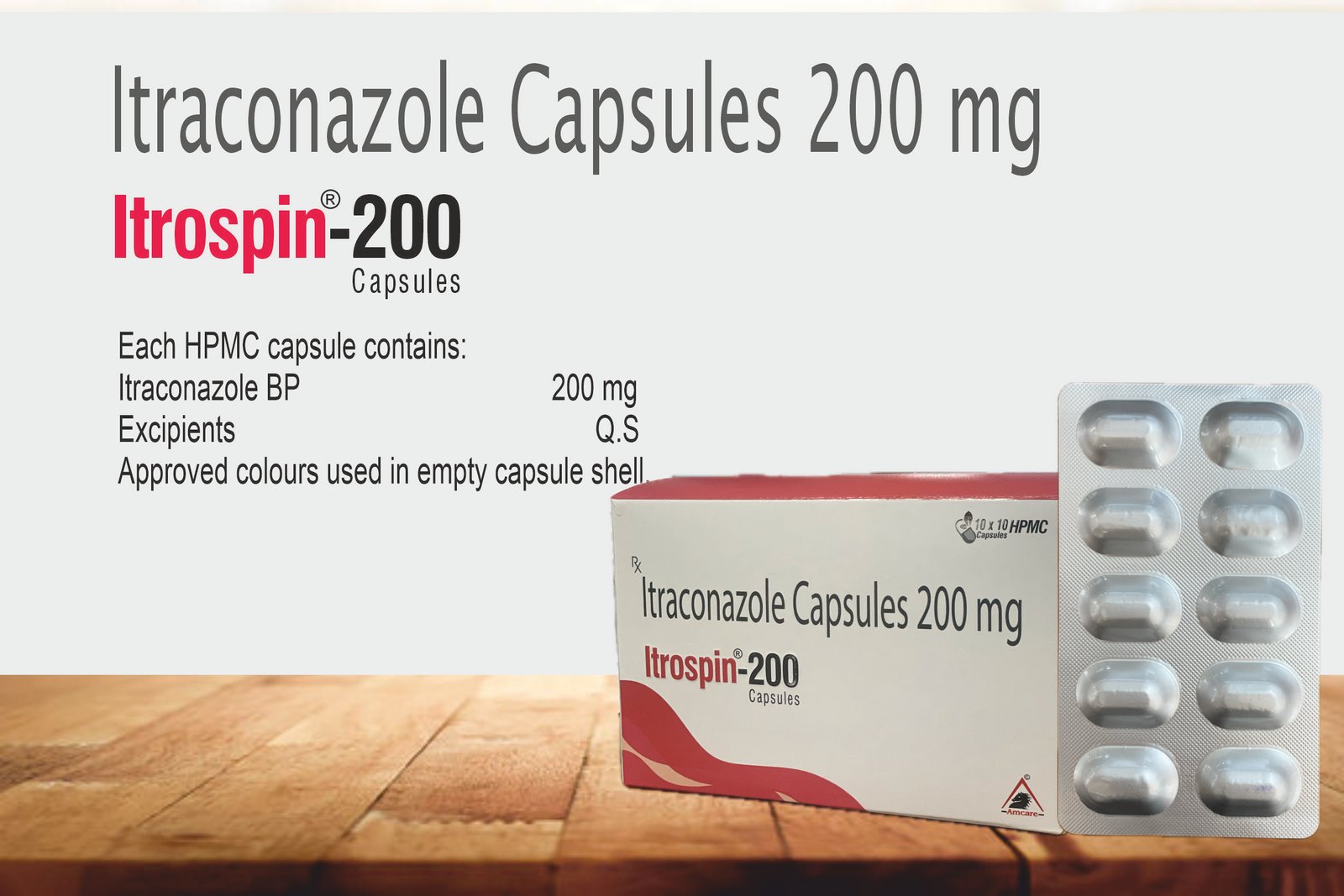
ITROSPIN-200 is a prescription systemic antifungal containing Itraconazole BP 200 mg in an HPMC capsule. Itraconazole belongs to the triazole class of antifungal medicines and inhibits fungal ergosterol synthesis, thereby interfering with fungal cell-membrane formation.
The artwork confirms 200 mg strength, HPMC capsule dosage form and 10 × 10 capsule pack.
1. Product Information
| Particular | Details |
|---|---|
| Brand Name | ITROSPIN-200 |
| Generic Name | Itraconazole |
| Strength | 200 mg |
| Pharmacopoeial Standard | BP |
| Dosage Form | HPMC Capsule |
| Route | Oral |
| Composition | Itraconazole BP 200 mg |
| Excipients | Q.S. |
| Capsule Shell | Approved colours used in empty capsule shell |
| Pack Size | 10 × 10 HPMC Capsules |
| Category | Systemic Antifungal |
| Prescription Status | Rx |
2. What is ITROSPIN-200 Used For?
ITROSPIN-200 contains itraconazole, a systemic triazole antifungal used for selected susceptible fungal infections.
Depending on the diagnosis and approved prescribing information, itraconazole may be used in conditions involving:
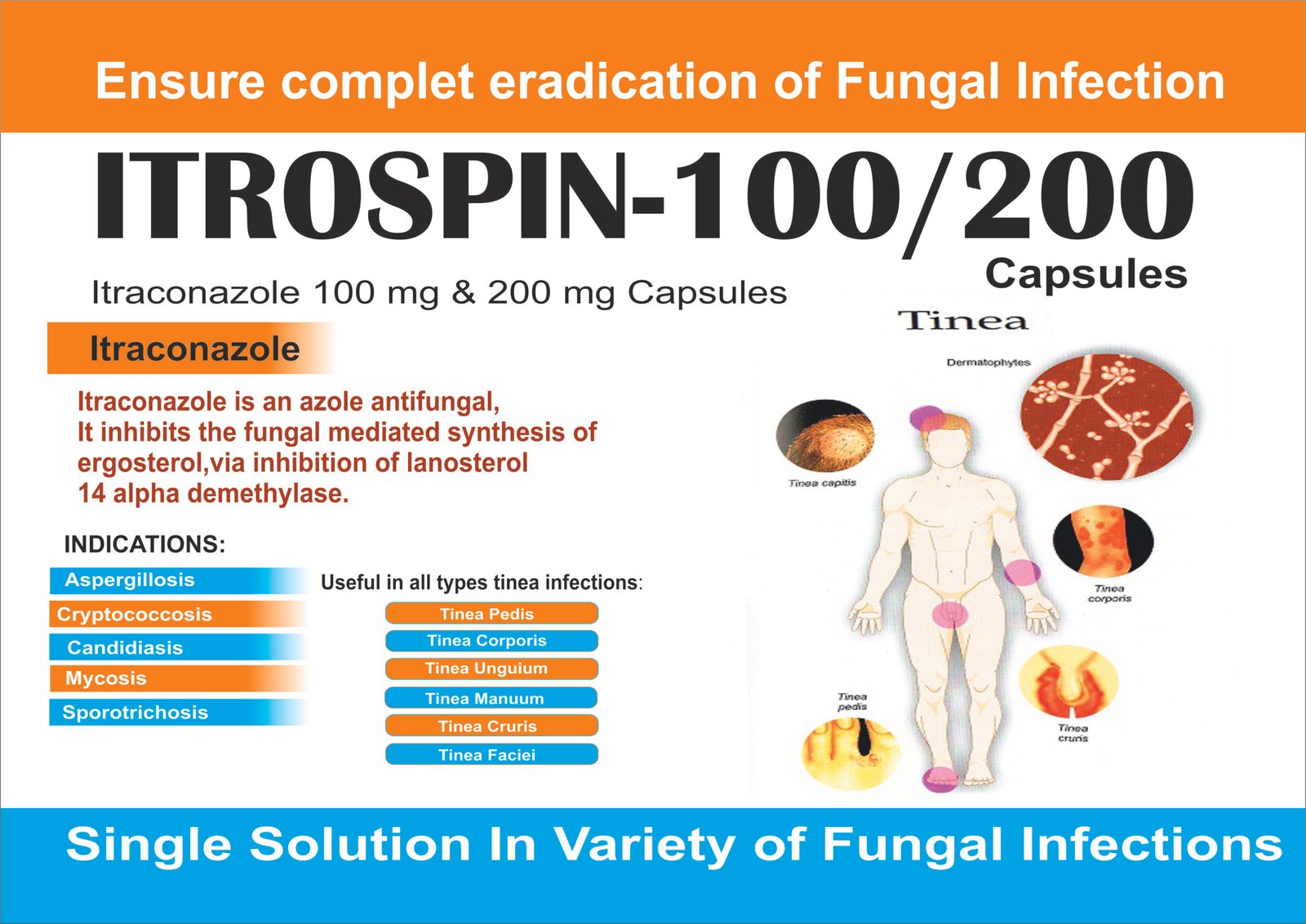
- Dermatophyte infections
- Tinea corporis
- Tinea cruris
- Tinea pedis
- Tinea manuum
- Certain fungal nail infections
- Certain mucocutaneous fungal infections
- Selected systemic fungal infections
The choice of itraconazole depends on the identified or suspected fungal organism, infection site, severity and patient-specific factors.
3. How Does Itraconazole Work?
Itraconazole inhibits fungal lanosterol 14-alpha-demethylase, an enzyme involved in the synthesis of ergosterol.
Ergosterol is an essential component of the fungal cell membrane.
Mechanism
Itraconazole
↓
Inhibits fungal 14-alpha-demethylase
↓
Reduced ergosterol synthesis
↓
Altered fungal cell membrane
↓
Inhibition of fungal growth
This gives itraconazole activity against a range of susceptible fungal organisms.
4. Therapeutic Role of Itraconazole
Itraconazole may be selected when systemic antifungal therapy is clinically appropriate.
Skin fungal infections
It may be used for selected dermatophyte infections such as:
- Tinea corporis
- Tinea cruris
- Tinea pedis
- Tinea manuum
Nail fungal infections
Itraconazole is an established systemic treatment option for selected cases of onychomycosis.
However, patients with ventricular dysfunction such as congestive heart failure or a history of heart failure should not receive itraconazole capsules for treatment of onychomycosis.
Other fungal infections
Depending on the specific formulation, indication and prescribing information, itraconazole may also be used for selected mucosal or systemic fungal infections.
5. Common Clinical Applications
Tinea Corporis
A dermatophyte infection affecting the skin of the body, often producing characteristic circular or expanding lesions.
Systemic treatment may be considered when the infection is extensive, recurrent or otherwise unsuitable for topical treatment.
Tinea Cruris
A fungal infection involving the groin region.
Treatment depends on the extent and severity of infection and previous response to treatment.
Tinea Pedis
Commonly called athlete’s foot.
Itraconazole may be prescribed in selected cases where systemic treatment is considered appropriate.
Onychomycosis
Fungal infection of the nails can be difficult to eradicate because the infection is located within the nail structure.
Itraconazole is used as systemic treatment in selected patients, with regimen and duration determined by the physician.
6. Suggested Use & Dosage
Each ITROSPIN-200 capsule contains:
Itraconazole BP — 200 mg
The 200 mg capsule strength does not establish a universal dosage schedule.
Depending on the infection, itraconazole may be prescribed using different:
- Daily doses
- Treatment durations
- Continuous regimens
- Pulse regimens
Therefore:
ITROSPIN-200 should be taken exactly according to the physician’s prescription. Do not determine the dose or treatment duration solely from the 200 mg capsule strength.
The current prescribing information should be consulted for the specific infection being treated.
7. How to Take ITROSPIN-200
For conventional itraconazole capsules, administration immediately after a full meal maximizes absorption.
General instructions:
- Swallow the capsule whole.
- Do not crush or chew.
- Take immediately after a full meal unless your specific prescribing information states otherwise.
- Take at the prescribed frequency.
- Complete the prescribed treatment course.
- Do not discontinue treatment early without consulting the physician.
Itraconazole capsule absorption can be reduced when gastric acidity is decreased.
8. Gastric Acidity & Absorption
Itraconazole capsules depend on adequate gastric acidity for optimal absorption.
Absorption may be reduced in patients with:
- Achlorhydria
- Reduced gastric acidity
- Use of proton-pump inhibitors
- Use of H2-receptor antagonists
- Other gastric acid-suppressing medicines
The current prescribing information specifically notes reduced itraconazole capsule absorption with reduced gastric acidity.
Patients using acid-suppressing medicines should inform their physician.
9. Possible Side Effects
Possible adverse effects of itraconazole include:
- Nausea
- Abdominal pain
- Diarrhea
- Vomiting
- Dyspepsia
- Headache
- Dizziness
- Constipation
- Fatigue
- Skin rash
The occurrence and severity of adverse effects can depend on dose, duration of treatment and individual patient factors.
10. Important Liver Safety Warning
Itraconazole has been associated with rare cases of serious hepatotoxicity, including liver failure.
Patients should be instructed to stop treatment and seek medical assessment if symptoms suggestive of liver dysfunction develop.
Important warning signs include:
- Unusual fatigue
- Loss of appetite
- Persistent nausea
- Vomiting
- Abdominal discomfort
- Dark urine
- Pale stools
- Yellowing of the skin or eyes
Current prescribing information advises prompt evaluation if signs or symptoms of liver dysfunction occur.
11. Important Cardiac Warning
Itraconazole has been associated with congestive heart failure and negative inotropic effects.
For treatment of onychomycosis, itraconazole capsules should not be administered to patients with evidence of ventricular dysfunction such as:
- Congestive heart failure
- Previous history of congestive heart failure
For other indications in patients with ventricular dysfunction, the benefit-risk relationship should be carefully assessed.
Contact a healthcare professional immediately if symptoms such as:
- Shortness of breath
- Leg or ankle swelling
- Unexpected weight gain
- Unusual fatigue
- Difficulty breathing while lying down
develop during treatment.
12. Drug Interactions
Itraconazole has extensive drug-interaction potential.
It is a potent inhibitor of CYP3A4, which can increase concentrations of several concurrently administered medicines.
Important interaction categories include:
- Certain antiarrhythmics
- Certain sedatives
- Some statins
- Certain calcium-channel blockers
- Some anticoagulants
- Certain immunosuppressants
- Certain anticancer medicines
- Some antiepileptic medicines
- Certain migraine medicines
Examples of medicines listed as contraindicated with itraconazole capsules in current U.S. labeling include methadone, dofetilide, dronedarone, quinidine, lurasidone, oral midazolam, pimozide, triazolam, felodipine, ivabradine, ranolazine, lovastatin and simvastatin, among others.
This is not a complete interaction list.
A complete medication review should be performed before prescribing itraconazole.
13. CYP3A4-Mediated Interactions
Itraconazole inhibits CYP3A4-mediated metabolism.
Therefore:
Itraconazole + CYP3A4 substrate
↓
Reduced metabolism of the other medicine
↓
Increased plasma concentration
↓
Potentially increased adverse effects/toxicity
Some interactions can result in serious or life-threatening cardiac arrhythmias.
Patients should inform their doctor about every prescription medicine, OTC medicine, supplement and herbal product they are taking.
14. Pregnancy & Breastfeeding
Women who are:
- Pregnant
- Planning pregnancy
- Breastfeeding
should inform their physician before starting ITROSPIN-200.
Itraconazole should be used during pregnancy only when the physician determines that treatment is appropriate.
15. Use in Children
ITROSPIN-200 contains a relatively high-strength 200 mg itraconazole capsule.
Paediatric use should not be based simply on the adult capsule strength.
The physician should consider:
- Age
- Body weight
- Type of fungal infection
- Severity
- Other medicines
- Liver and kidney function
Do not give ITROSPIN-200 to a child without specific medical advice.
16. Elderly Patients
Older patients may have:
- Multiple concomitant medicines
- Reduced liver function
- Reduced kidney function
- Increased susceptibility to drug interactions
The physician should review the patient’s medication list and clinical status before treatment.
17. Liver & Kidney Impairment
Liver impairment
Itraconazole is predominantly metabolized by the liver. Patients with liver disease require careful assessment before and during treatment.
Kidney impairment
Renal impairment may alter exposure to itraconazole-related compounds, and clinical data for prolonged use in patients with significant renal impairment are limited. Treatment should therefore be individualized.
18. Driving & Operating Machinery
Some patients receiving itraconazole may experience:
- Dizziness
- Blurred vision
- Double vision
Patients experiencing these effects should avoid driving or operating machinery until symptoms resolve. Current product information specifically advises caution with these effects.
19. When to Seek Immediate Medical Attention
Seek urgent medical attention if the patient develops:
Liver-related symptoms
- Yellow eyes or skin
- Dark urine
- Pale stools
- Severe fatigue
- Persistent nausea or vomiting
Cardiac symptoms
- Shortness of breath
- Leg swelling
- Sudden weight gain
- Difficulty breathing while lying down
Severe allergic reaction
- Facial swelling
- Tongue or throat swelling
- Difficulty breathing
- Severe rash
Cardiac rhythm symptoms
- Fainting
- Severe palpitations
- Unexplained severe dizziness
Itraconazole has important cardiac and hepatic safety warnings requiring prompt medical evaluation when such symptoms occur.
20. Storage
Store ITROSPIN-200:
- At the temperature specified on the product label.
- In a cool, dry place.
- Away from excessive heat and moisture.
- Protected from direct sunlight.
- Out of reach of children.
Keep the capsules in their original packaging until use.
21. Key Features of ITROSPIN-200
ITROSPIN-200 Capsules provide:
- Itraconazole BP 200 mg
- Systemic triazole antifungal
- HPMC capsule dosage form
- Oral administration
- Prescription formulation
- 10 × 10 HPMC capsule pack
- Suitable for physician-directed treatment of susceptible fungal infections
22. Why ITROSPIN-200?
ITROSPIN-200 provides Itraconazole 200 mg in an HPMC capsule.
Pharmacological action
Inhibition of fungal ergosterol synthesis
↓
Disruption of fungal cell membrane
↓
Inhibition of fungal growth
The 200 mg strength allows physicians to select an appropriate itraconazole regimen according to the specific fungal infection and individual patient requirements.
Because itraconazole has significant interaction and safety considerations, treatment should remain physician-directed.