Our Products
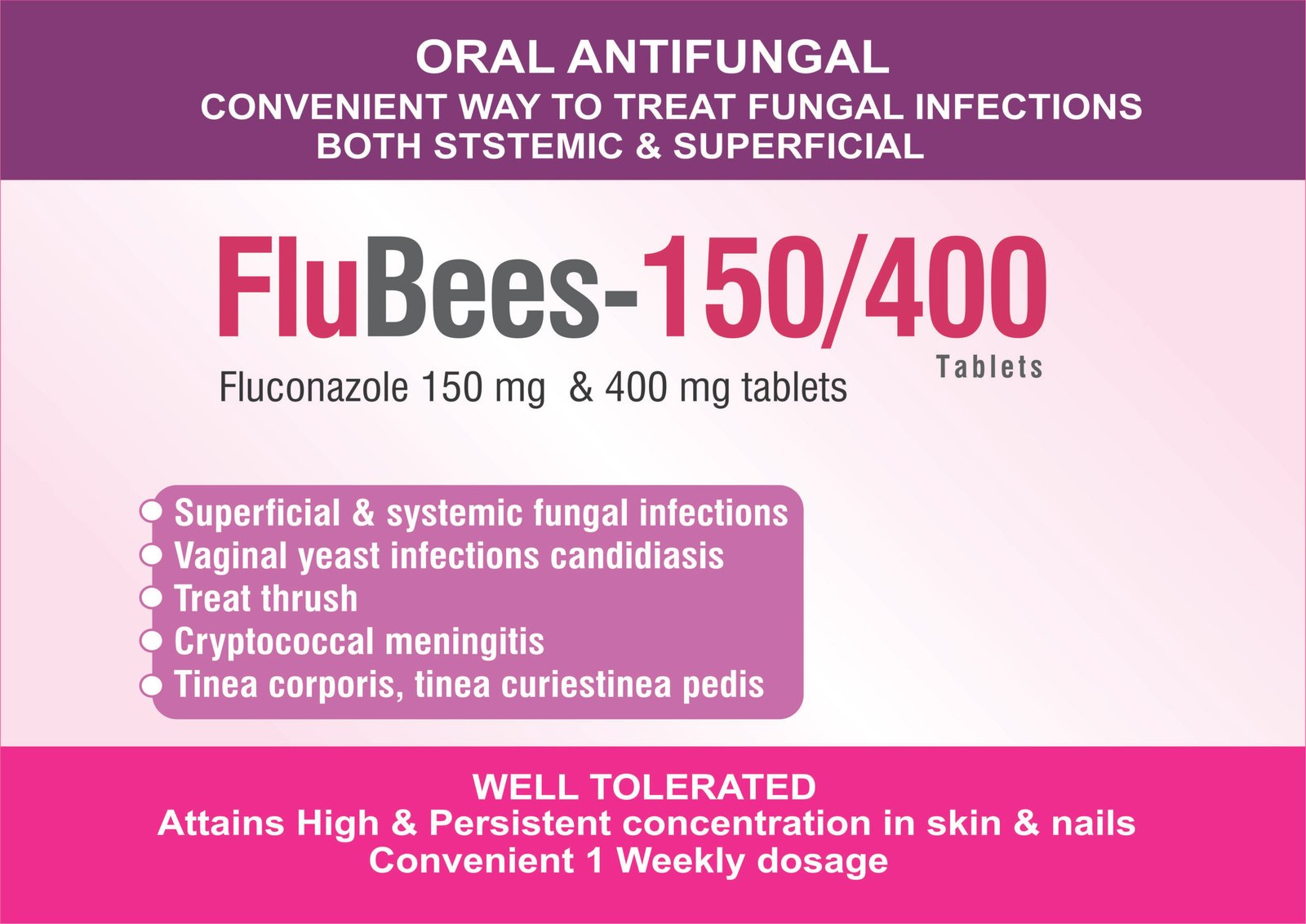
Flubees-150
Product Composition
Packaging Details
Product Description
FLUBEES-150 Tablets
Fluconazole IP 150 mg
FLUBEES-150 is a prescription antifungal tablet containing Fluconazole IP 150 mg. Fluconazole is a triazole antifungal medicine that inhibits fungal ergosterol synthesis and is used against susceptible Candida and other fungal infections.
The product artwork specifies an uncoated tablet, 150 mg strength, and a 10 × 5 × 2 tablet pack.
1. Product Information
| Particular | Details |
|---|---|
| Brand Name | FLUBEES-150 |
| Generic Name | Fluconazole |
| Strength | 150 mg |
| Pharmacopoeial Standard | IP |
| Dosage Form | Uncoated Tablet |
| Route | Oral |
| Composition | Fluconazole IP 150 mg |
| Excipients | Q.S. |
| Pack Size | 10 × 5 × 2 Tablets |
| Category | Systemic Triazole Antifungal |
| Prescription Status | Rx |
2. What is FLUBEES-150 Used For?
FLUBEES-150 contains fluconazole, an antifungal medicine used for susceptible fungal infections.
Depending on the diagnosis, fluconazole may be used for:
- Vaginal candidiasis
- Oropharyngeal candidiasis
- Esophageal candidiasis
- Certain Candida urinary tract infections
- Certain systemic Candida infections
- Cryptococcal infections, including cryptococcal meningitis
- Other susceptible fungal infections according to approved indications
Fluconazole’s approved uses include vaginal, oropharyngeal and esophageal candidiasis and cryptococcal meningitis; additional Candida infections may also respond to treatment.
3. How Does Fluconazole Work?
Fluconazole belongs to the triazole class of antifungal medicines.
It inhibits fungal lanosterol 14-alpha-demethylase, an enzyme involved in the biosynthesis of ergosterol.
Ergosterol is an essential component of the fungal cell membrane.
Mechanism of Action
Fluconazole
↓
Inhibits fungal 14-alpha-demethylase
↓
Reduced ergosterol synthesis
↓
Altered fungal cell membrane integrity
↓
Inhibition of fungal growth
This mechanism provides antifungal activity against susceptible organisms.
4. Therapeutic Role of FLUBEES-150
Fluconazole may be used when an oral systemic antifungal is clinically appropriate.
Its therapeutic applications include:
Vaginal Candidiasis
Fluconazole 150 mg is an established oral regimen for uncomplicated vaginal candidiasis in appropriate patients. The standard labelled regimen is 150 mg as a single oral dose.
Oropharyngeal Candidiasis
Fluconazole can be used for Candida infection of the mouth and throat, with the dose and duration determined by the treating physician.
Esophageal Candidiasis
Fluconazole is also used for Candida infection involving the esophagus, generally requiring a longer treatment regimen than uncomplicated vaginal candidiasis.
Other Candida Infections
Fluconazole may be used for selected urinary, peritoneal or systemic Candida infections when the organism is susceptible.
5. Common Clinical Applications
Vaginal Candidiasis
Vaginal candidiasis is commonly associated with:
- Vaginal itching
- Irritation
- Redness
- Abnormal vaginal discharge
- Burning or discomfort
For uncomplicated vaginal candidiasis, fluconazole 150 mg orally as a single dose is a recognized regimen.
However, recurrent, complicated or non-albicans Candida infections may require a different treatment approach.
Oropharyngeal Candidiasis
Also called oral thrush, this infection can cause:
- White plaques in the mouth
- Oral soreness
- Burning
- Difficulty eating
- Altered taste
Fluconazole may be prescribed when systemic treatment is appropriate.
Esophageal Candidiasis
Candida infection of the esophagus can cause:
- Painful swallowing
- Difficulty swallowing
- Retrosternal discomfort
Fluconazole is an established treatment option for susceptible infection.
6. Suggested Use & Dosage
Each FLUBEES-150 tablet contains:
Fluconazole IP — 150 mg
The appropriate dosage depends on the infection.
For uncomplicated vaginal candidiasis
A commonly labelled adult regimen is:
Fluconazole 150 mg orally as a single dose.
For other fungal infections
The dose and duration are not necessarily 150 mg as a single dose. They depend on:
- Site of infection
- Severity
- Causative organism
- Patient response
- Immune status
- Kidney function
- Other medicines being taken
Fluconazole prescribing information specifically states that dosing for infections other than vaginal candidiasis should be based on the infecting organism and the patient’s clinical response.
Therefore, FLUBEES-150 should be used according to the physician’s prescription.
7. How to Take FLUBEES-150
- Swallow the tablet with water.
- It can generally be taken with or without food.
- Take it exactly as prescribed.
- Do not take additional doses without medical advice.
- For multi-dose treatment, complete the prescribed course even if symptoms improve.
Fluconazole has high oral bioavailability, and its oral and intravenous daily doses are generally the same when intravenous treatment is used.
8. Possible Side Effects
Commonly reported adverse effects can include:
- Headache
- Nausea
- Abdominal pain
- Diarrhea
- Indigestion
- Dizziness
- Altered taste
In clinical studies of 150 mg fluconazole for vaginal candidiasis, headache, nausea and abdominal pain were among the most commonly reported treatment-related adverse events.
Most adverse effects are mild, but serious reactions can occur.
9. Important Liver Safety Warning
Fluconazole should be used cautiously in patients with liver dysfunction.
Rare cases of serious hepatic toxicity, including fatal cases, have been reported, particularly in patients with serious underlying illnesses.
Patients should seek medical attention if they develop:
- Unusual fatigue
- Loss of appetite
- Persistent nausea
- Vomiting
- Abdominal discomfort
- Dark urine
- Yellowing of the eyes or skin
Patients who develop abnormal liver function tests during treatment should be monitored for progression of hepatic injury.
10. Heart Rhythm & QT Warning
Fluconazole can prolong the QT interval in susceptible patients.
Rare cases of QT prolongation and torsades de pointes have been reported. Risk can be greater in patients with:
- Structural heart disease
- Electrolyte abnormalities
- Hypokalemia
- Advanced cardiac failure
- Other medicines that prolong the QT interval
Patients with significant cardiac risk factors should inform their physician before treatment.
11. Important Drug Interactions
Fluconazole has clinically significant drug-interaction potential.
It inhibits several cytochrome P450 enzymes, including CYP2C9, CYP2C19 and CYP3A4, and can increase exposure to certain concomitant medicines.
Important interaction categories include:
- Anticoagulants
- Certain antidiabetic medicines
- Certain anticonvulsants
- Some statins
- Certain antiarrhythmic medicines
- Certain benzodiazepines
- Some immunosuppressants
- Certain medicines metabolized by CYP2C9, CYP2C19 or CYP3A4
Particularly important combinations
Some medicines that prolong the QT interval and are metabolized through CYP3A4, including erythromycin, pimozide and quinidine, are contraindicated with fluconazole according to the cited prescribing information.
This is not a complete interaction list.
Patients should provide their complete medication list to the physician or pharmacist before starting treatment.
12. Kidney Function
Fluconazole is largely eliminated through the kidneys.
Therefore, dose adjustment may be required in patients with impaired renal function, particularly when multiple-dose therapy is prescribed.
The appropriate adjustment depends on renal function and the treatment regimen.
Patients with kidney disease should inform their physician before taking FLUBEES-150.
13. Pregnancy
Fluconazole requires particular consideration during pregnancy.
For uncomplicated vaginal candidiasis during pregnancy, systemic oral fluconazole should not be used routinely; treatment recommendations can differ from those for non-pregnant patients.
Patients who are:
- Pregnant
- Planning pregnancy
- Suspect they may be pregnant
should consult their healthcare professional before taking FLUBEES-150.
The product prescribing information also contains warnings concerning potential fetal harm.
14. Breastfeeding
Fluconazole passes into breast milk.
Patients who are breastfeeding should discuss treatment with their healthcare professional, who can consider:
- The mother’s indication
- Dose
- Treatment duration
- Infant age
- Overall benefit-risk considerations
15. Use in Children
The 150 mg tablet should not automatically be used in children simply because the same medicine is used in paediatric patients.
Paediatric dosing is generally based on:
- Age
- Body weight
- Type of infection
- Severity
- Renal function
The appropriate formulation and dose should be selected by a qualified healthcare professional.
16. Elderly Patients
Older adults may have:
- Reduced renal function
- Multiple concomitant medicines
- Increased risk of drug interactions
Renal function and concomitant medications should therefore be considered when prescribing fluconazole.
17. Driving & Operating Machinery
Some patients may experience:
- Dizziness
- Headache
- Rare neurological effects
Patients should use caution when driving or operating machinery until they know how the medicine affects them.
18. When to Seek Immediate Medical Attention
Seek urgent medical attention if the patient develops:
Severe allergic reaction
- Difficulty breathing
- Facial swelling
- Lip or tongue swelling
- Severe rash
Liver-related symptoms
- Yellow eyes or skin
- Dark urine
- Severe fatigue
- Persistent vomiting
- Severe abdominal symptoms
Cardiac symptoms
- Fainting
- Severe palpitations
- Unexplained severe dizziness
Severe skin reaction
Fluconazole has been associated with serious exfoliative skin reactions. A rapidly progressing or severe rash requires immediate medical assessment.
19. Storage
Store FLUBEES-150:
- At the temperature specified on the product label.
- In a cool, dry place.
- Away from excessive heat and moisture.
- Protected from direct sunlight.
- Out of reach of children.
Keep the tablets in their original packaging until use.
20. Key Features of FLUBEES-150
FLUBEES-150 Tablets provide:
- Fluconazole IP 150 mg
- Systemic triazole antifungal
- Oral tablet dosage form
- Uncoated tablet
- Prescription formulation
- 10 × 5 × 2 tablet pack
- Established 150 mg oral regimen for uncomplicated vaginal candidiasis when clinically appropriate
21. Why FLUBEES-150?
FLUBEES-150 provides Fluconazole 150 mg in a convenient oral tablet.
Key pharmacological action
Fluconazole
↓
Inhibits fungal ergosterol synthesis
↓
Disrupts fungal cell-membrane formation
↓
Inhibits susceptible fungal growth
The 150 mg strength has an established role in the treatment of uncomplicated vaginal candidiasis, while other fungal infections require individualized dosing and treatment duration.