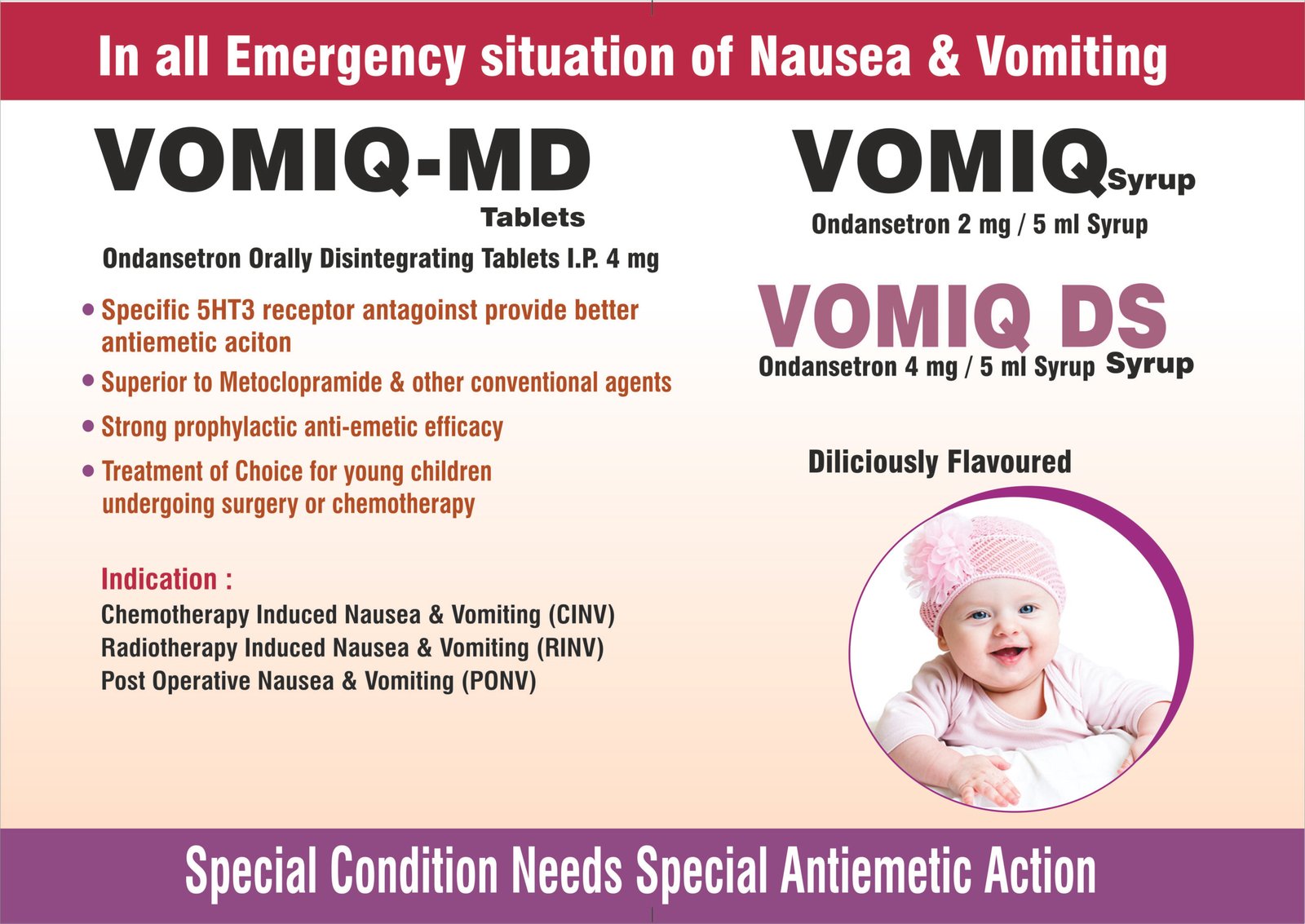
Our Products
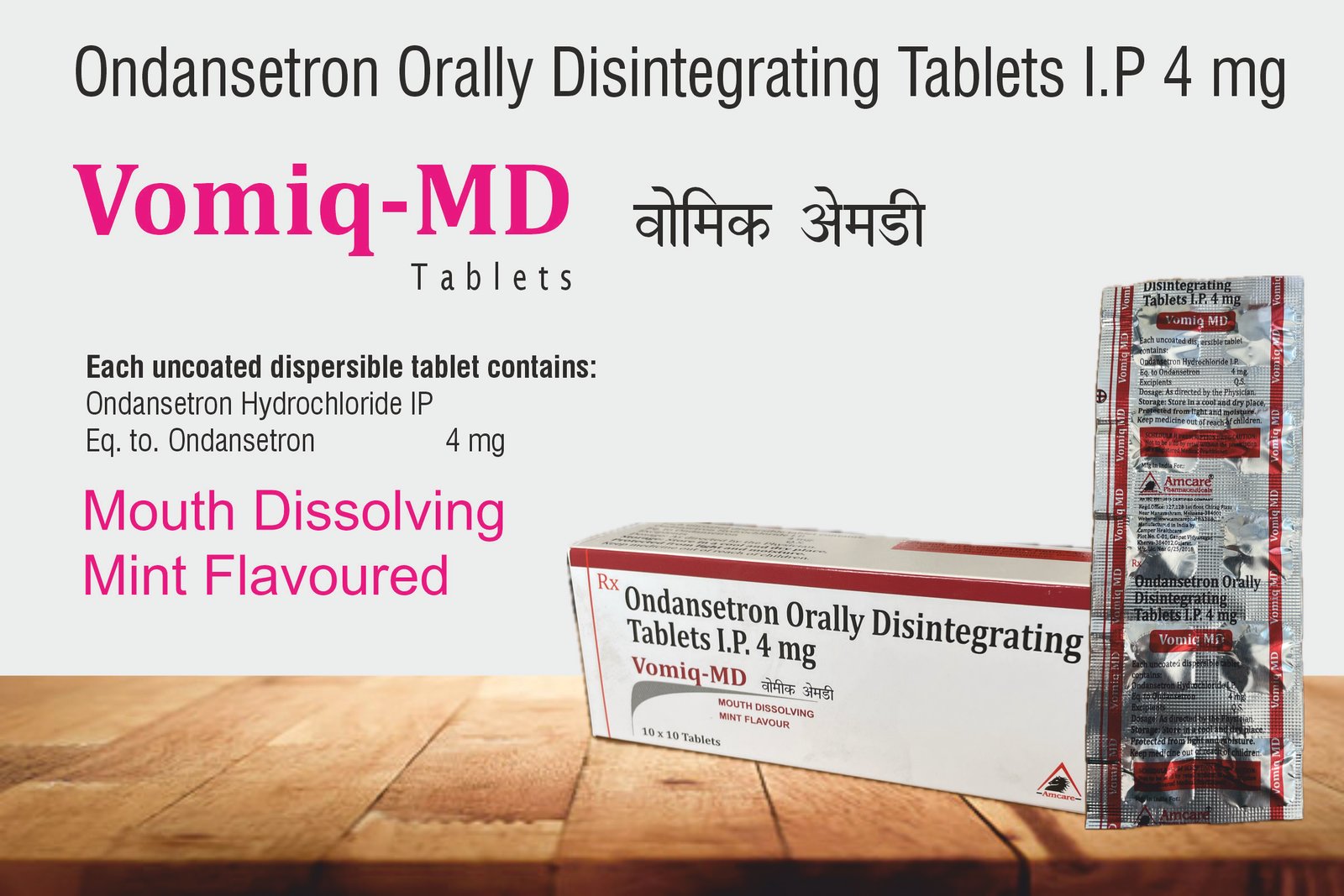
Vomiq-MD
Product Composition
Packaging Details
Product Description
VOMIQ-MD Tablets – Ondansetron 4 mg
VOMIQ-MD contains Ondansetron Hydrochloride IP equivalent to Ondansetron 4 mg in an orally disintegrating/dispersible tablet dosage form. The uploaded artwork specifies a mouth-dissolving, mint-flavoured tablet and a 10 × 10 tablet pack.
Ondansetron is a 5-HT3 receptor antagonist used to prevent and control nausea and vomiting in several clinical settings, particularly chemotherapy-, radiotherapy-, and postoperative-related nausea and vomiting.
1. Product Information
| Particular | Details |
|---|---|
| Brand Name | VOMIQ-MD |
| Generic Name | Ondansetron Orally Disintegrating Tablets IP |
| Strength | Ondansetron 4 mg |
| Active Ingredient | Ondansetron Hydrochloride IP equivalent to Ondansetron 4 mg |
| Dosage Form | Uncoated Dispersible / Orally Disintegrating Tablet |
| Flavour | Mint |
| Route | Oral |
| Therapeutic Category | Antiemetic |
| Drug Class | Selective 5-HT3 receptor antagonist |
| Pack Size | 10 × 10 Tablets |
| Prescription Status | Rx |
| Brand/Company | Amcare |
2. Composition
Each uncoated dispersible tablet contains:
Ondansetron Hydrochloride IP
Equivalent to Ondansetron — 4 mg
Excipients — q.s.
Product characteristics from artwork
- Mouth dissolving
- Mint flavoured
- Orally disintegrating/dispersible dosage form
- Uncoated tablet
3. What is VOMIQ-MD?
VOMIQ-MD is an orally disintegrating formulation of Ondansetron 4 mg.
Ondansetron is an antiemetic medicine that blocks 5-hydroxytryptamine type 3 (5-HT3) receptors involved in the vomiting reflex.
It is used to prevent nausea and vomiting associated with conditions such as:
- Cancer chemotherapy
- Radiotherapy
- Surgery/postoperative recovery
Current prescribing information for ondansetron ODT lists prevention of nausea and vomiting associated with highly and moderately emetogenic chemotherapy, specified radiotherapy regimens, and postoperative nausea/vomiting.
4. Mechanism of Action
Ondansetron is a selective 5-HT3 receptor antagonist.
During certain conditions such as chemotherapy, radiotherapy and surgery, serotonin can be released and activate 5-HT3 receptors involved in the nausea and vomiting pathways.
Simplified mechanism:
Chemotherapy / radiotherapy / surgical stimulus
↓
Serotonin release
↓
Activation of 5-HT3 receptors
↓
Nausea and vomiting signals
↓
Ondansetron blocks 5-HT3 receptors
↓
Reduction in nausea and vomiting
Ondansetron therefore acts primarily by blocking serotonin-mediated signals involved in emesis.
5. Therapeutic Uses
A. Chemotherapy-Induced Nausea and Vomiting
Ondansetron is indicated for prevention of nausea and vomiting associated with:
- Highly emetogenic cancer chemotherapy
- Moderately emetogenic cancer chemotherapy
This includes chemotherapy regimens containing highly emetogenic agents such as cisplatin.
B. Radiotherapy-Induced Nausea and Vomiting
Ondansetron is used for prevention of nausea and vomiting associated with specified radiotherapy regimens, including:
- Total-body irradiation
- Single high-dose abdominal radiation
- Daily abdominal radiation fractions
C. Postoperative Nausea and Vomiting
Ondansetron is also indicated for prevention of postoperative nausea and/or vomiting.
6. Clinical Role
VOMIQ-MD may be particularly useful when an orally disintegrating dosage form is preferred.
The mouth-dissolving presentation can be convenient for patients who:
- Have difficulty swallowing conventional tablets
- Experience nausea around the time of administration
- Prefer a tablet that dissolves in the mouth
- Need a convenient oral dosage form
The dosage form does not eliminate the need for appropriate diagnosis and prescribing.
7. Advantages of the Mouth-Dissolving Form
The artwork specifically identifies VOMIQ-MD as:
“Mouth Dissolving – Mint Flavoured.”
Product characteristics
- Orally disintegrating dosage form
- Convenient administration
- Mint flavour
- No conventional tablet swallowing required
- Useful where swallowing a standard tablet is inconvenient
The actual administration technique should follow the product’s package insert.
8. Dosage and Administration
Important
The 4 mg strength shown on the artwork does not mean that every patient should take 4 mg at every occurrence of nausea or vomiting.
Ondansetron dosing depends on:
- Cause of nausea/vomiting
- Patient age
- Clinical setting
- Chemotherapy regimen
- Radiotherapy regimen
- Surgical procedure
- Hepatic function
- Other medicines being taken
For example, current prescribing information lists different regimens for highly emetogenic chemotherapy, moderately emetogenic chemotherapy, radiotherapy and postoperative nausea/vomiting.
Adult examples from current prescribing information
For moderately emetogenic chemotherapy, the labeled oral/ODT regimen is:
8 mg 30 minutes before chemotherapy, followed by another 8 mg 8 hours later, then 8 mg twice daily for 1–2 days after chemotherapy.
For highly emetogenic chemotherapy, the current label describes a single 24 mg dose 30 minutes before chemotherapy in appropriate adult patients.
For VOMIQ-MD website
Take VOMIQ-MD exactly as prescribed by your physician. The appropriate dose and frequency depend on the cause of nausea or vomiting, age, clinical condition and other patient-specific factors.
Do not self-medicate repeatedly for unexplained or persistent vomiting.
9. How to Take VOMIQ-MD
Because this is a mouth-dissolving/orally disintegrating formulation, it is designed to disintegrate in the mouth.
General instructions
- Remove the tablet carefully from the blister.
- Place the tablet on the tongue.
- Allow it to dissolve/disintegrate.
- Swallow the dissolved material.
Avoid unnecessarily crushing or chewing the tablet.
Follow the specific instructions printed on the final marketed package insert, particularly because blister-handling instructions can vary between ODT formulations.
10. Missed Dose
The response to a missed dose depends on why ondansetron was prescribed.
If prescribed on a scheduled basis:
- Take the missed dose when remembered unless it is nearly time for the next dose.
- Do not double the next dose.
For chemotherapy or radiotherapy-associated nausea, follow the specific schedule provided by the treating physician.
11. Common Side Effects
Possible adverse effects of ondansetron include:
- Headache
- Constipation
- Diarrhoea
- Fatigue
- Malaise
- Dizziness
The most commonly reported adverse effects vary according to the clinical indication. Current labeling identifies headache, fatigue/malaise, constipation and diarrhoea among common reactions in chemotherapy settings.
12. Important Cardiovascular Warning
Ondansetron can cause QT interval prolongation.
Rare post-marketing cases of Torsade de Pointes, a potentially serious ventricular arrhythmia, have been reported.
Extra caution is required in patients with:
- Congenital long-QT syndrome
- Electrolyte abnormalities
- Hypokalaemia
- Hypomagnesaemia
- Congestive heart failure
- Bradyarrhythmias
- Other medicines that prolong the QT interval
ECG monitoring may be appropriate in higher-risk patients.
13. Serotonin Syndrome
Serotonin syndrome has been reported with 5-HT3 antagonists including ondansetron, particularly when used with other serotonergic medicines.
Potential symptoms include:
- Agitation
- Confusion
- Excessive sweating
- Fever
- Tremor
- Muscle rigidity
- Increased reflexes
- Loss of coordination
- Rapid heartbeat
- Changes in blood pressure
Medicines that may contribute include certain:
- SSRIs
- SNRIs
- MAO inhibitors
- Mirtazapine
- Tramadol
- Fentanyl
- Lithium
- Other serotonergic medicines
Patients taking such medicines should inform their physician.
14. Hypersensitivity Reactions
Serious allergic reactions, including:
- Anaphylaxis
- Bronchospasm
- Facial swelling
- Throat swelling
- Severe rash
have been reported.
Ondansetron should be discontinued and appropriate medical treatment initiated if a serious hypersensitivity reaction occurs.
15. Important Gastrointestinal Precaution
Ondansetron can mask symptoms associated with progressive ileus or gastric distension, particularly in patients with abdominal surgery or chemotherapy-related gastrointestinal complications.
Patients with suspected bowel obstruction or significantly reduced bowel activity require appropriate medical assessment.
16. Liver Impairment
Ondansetron exposure increases in patients with severe hepatic impairment.
Current prescribing information recommends:
Do not exceed a total daily dose of 8 mg in patients with severe hepatic impairment.
Patients with significant liver disease should therefore inform their physician before using VOMIQ-MD.
17. Drug Interactions
Ondansetron can interact with other medicines.
Particular attention should be given to medicines that:
- Prolong the QT interval
- Increase the risk of arrhythmias
- Have serotonergic activity
Examples requiring medical review
- Certain antiarrhythmics
- Some antipsychotics
- Certain antidepressants
- Tramadol
- Fentanyl
- Lithium
- Other QT-prolonging medicines
A complete medication list should be reviewed before treatment.
18. Important Contraindication
Ondansetron is contraindicated in patients with known hypersensitivity to:
- Ondansetron
- Any component of the formulation
Concomitant use with apomorphine is contraindicated because of reports of profound hypotension and loss of consciousness.
19. Pregnancy
VOMIQ-MD should be used during pregnancy only after appropriate medical evaluation.
Pregnant patients should inform their physician before taking ondansetron so that the potential benefits and risks can be assessed according to the clinical situation.
20. Breastfeeding
Patients who are breastfeeding should consult their healthcare professional before using VOMIQ-MD.
The physician can assess:
- Reason for treatment
- Dose
- Treatment duration
- Infant age
- Alternative treatment options
21. Pediatric Use
Ondansetron has pediatric dosing regimens for certain approved indications, but dosing depends on:
- Age
- Body weight
- Clinical indication
- Chemotherapy regimen
- Hepatic function
Therefore:
VOMIQ-MD 4 mg should not be given to a child solely on the basis of the adult tablet strength. Pediatric dosing should be physician-directed.
Current prescribing information contains specific pediatric regimens for chemotherapy-associated nausea and vomiting.
22. Elderly Patients
Elderly patients may be more likely to have:
- Cardiac disease
- Electrolyte abnormalities
- Liver dysfunction
- Multiple concomitant medicines
The physician should therefore review the patient’s medical history and medicines before treatment.
23. Driving and Operating Machinery
Ondansetron itself is not generally considered strongly sedating, but individual patients may experience:
- Dizziness
- Weakness
- Fatigue
Patients should avoid driving or operating machinery if they feel impaired.
24. When to Seek Immediate Medical Attention
Seek urgent medical attention if the patient develops:
Severe allergic reaction
- Difficulty breathing
- Facial/throat swelling
- Severe rash
- Wheezing
Serious cardiac symptoms
- Fainting
- Severe palpitations
- Rapid or irregular heartbeat
- Chest discomfort
Possible serotonin syndrome
- Severe agitation
- High fever
- Muscle rigidity
- Tremor
- Confusion
- Seizures
Severe gastrointestinal symptoms
- Significant abdominal swelling
- Severe abdominal pain
- Markedly reduced bowel movements
25. Key Product Features
Ondansetron 4 mg
Contains Ondansetron Hydrochloride IP equivalent to Ondansetron 4 mg.
Orally Disintegrating Formulation
Designed to dissolve/disintegrate in the mouth.
Mint Flavour
The artwork specifically identifies the product as Mint Flavoured.
Convenient Oral Dosage Form
Can be useful where swallowing a conventional tablet is difficult or inconvenient.
5-HT3 Receptor Antagonist
Acts on serotonin-mediated pathways involved in nausea and vomiting.
Multiple Clinical Applications
Ondansetron ODT is indicated for prevention of nausea and vomiting associated with selected chemotherapy, radiotherapy and postoperative settings.
26. Why VOMIQ-MD?
VOMIQ-MD combines Ondansetron 4 mg with a mouth-dissolving dosage form designed for convenient oral administration.
Product highlights
- Ondansetron 4 mg
- 5-HT3 receptor antagonist
- Orally disintegrating tablet
- Mouth-dissolving formulation
- Mint flavour
- Convenient administration
- 10 × 10 tablet pack
- Prescription product
Avoid promotional claims such as “instant cure,” “100% prevention,” “no side effects,” or “guaranteed relief.”