Our Products
ALKABEES
Product Composition
Packaging Details
Product Description
ALKABEES Syrup – Disodium Hydrogen Citrate BP 1.53 g/5 mL
1. Product Overview
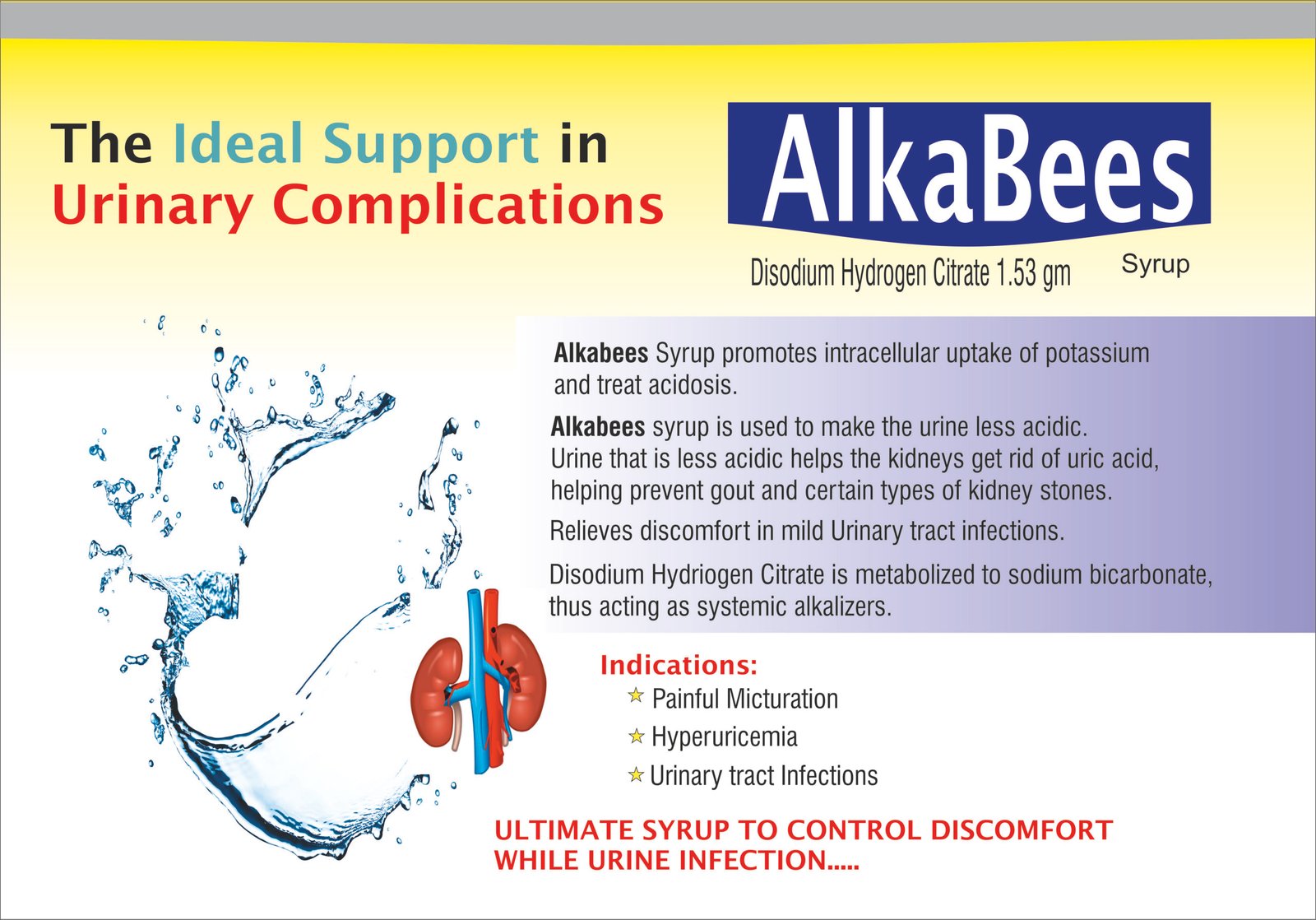
ALKABEES Syrup is a urinary alkalinising preparation containing Disodium Hydrogen Citrate BP 1.53 g per 5 mL. The product is presented as a flavoured syrup and is intended to increase urinary pH, making urine less acidic.
Urinary alkalinisation may be used in selected conditions where increasing urine pH is clinically appropriate, including certain urinary disorders and uric-acid-related stone conditions. Citrate preparations can also influence urinary citrate and calcium chemistry, which is relevant to some forms of kidney-stone management.
Product Details
| Parameter | Details |
|---|---|
| Brand Name | ALKABEES |
| Generic Name | Disodium Hydrogen Citrate Syrup |
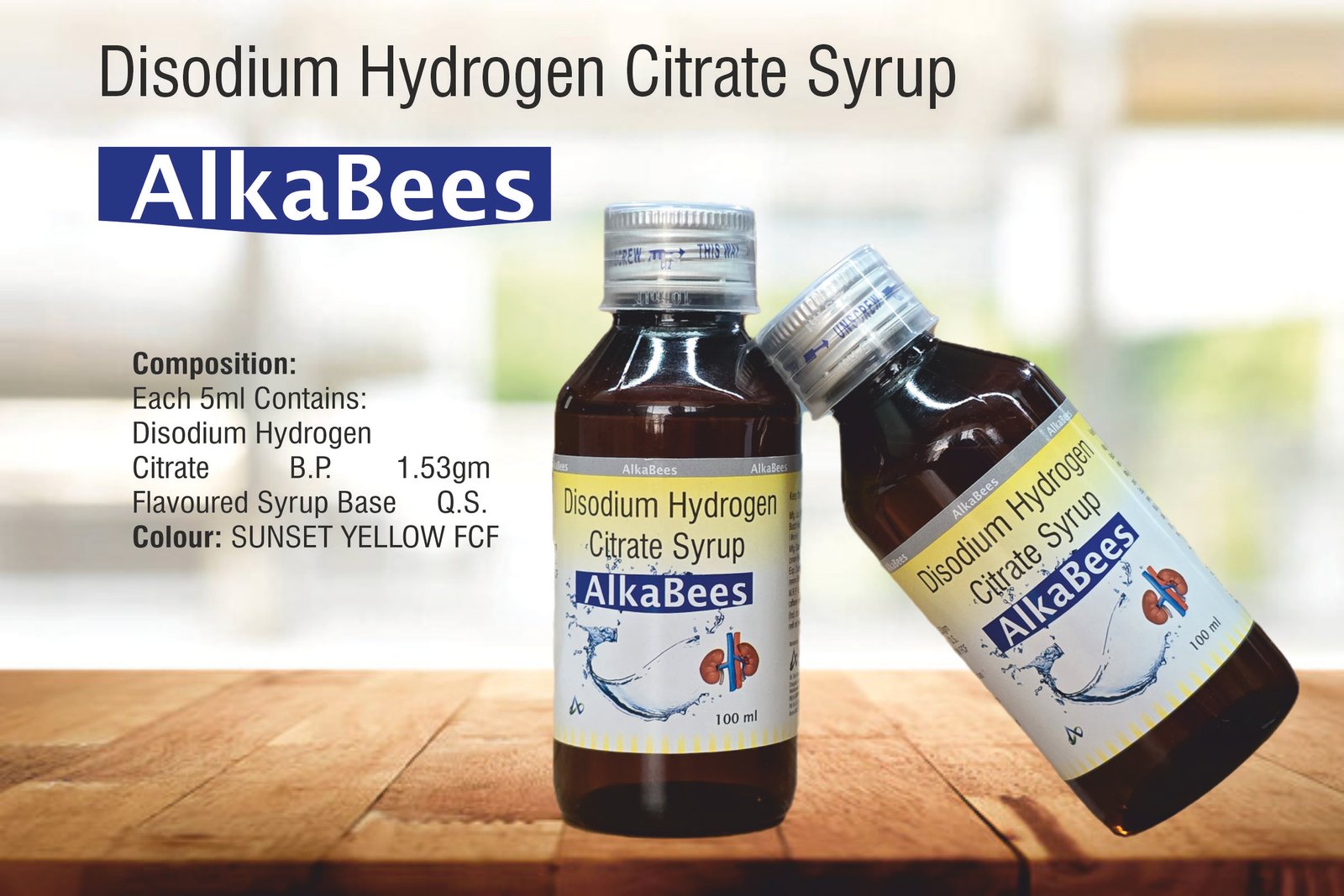
| Composition | Disodium Hydrogen Citrate BP 1.53 g/5 mL |
| Dosage Form | Syrup |
| Therapeutic Class | Urinary Alkaliniser |
| Route | Oral |
| Pack Size | 100 mL |
| Colour | Sunset Yellow FCF |
| Base | Flavoured Syrup Base Q.S. |
| Prescription Status | Follow the product’s approved local labelling/prescription requirements |
2. Composition
Each 5 mL contains:
- Disodium Hydrogen Citrate BP – 1.53 g
- Flavoured Syrup Base – Q.S.
- Colour: Sunset Yellow FCF
The artwork specifically establishes the 1.53 g/5 mL strength and 100 mL pack size.
This strength is also commercially used in other Indian disodium hydrogen citrate syrup products.
3. Therapeutic Category
Urinary Alkaliniser / Urinary pH Modifier
Disodium hydrogen citrate is converted metabolically to bicarbonate, increasing urinary alkalinity. This can make urine less acidic and increase the ionisation/solubility of substances such as uric acid.
4. What is ALKABEES Syrup Used For?
ALKABEES may be prescribed for conditions where urinary alkalinisation is clinically indicated.
Potential clinical applications include:
- Symptomatic management of burning associated with acidic urine
- Selected cases of cystitis/urinary discomfort
- Urethritis and other urinary conditions where alkalinisation is appropriate
- Urolithiasis/kidney stones, particularly selected uric-acid-related conditions
- Hyperuricaemia/uric-acid-related urinary problems
- Increasing urinary pH during selected medical treatments
- Selected acid-base disorders, only under appropriate medical supervision
The exact indication should be based on the patient’s diagnosis and the approved product information rather than marketing the syrup as a general treatment for every UTI or kidney stone. Disodium hydrogen citrate products are commonly described as urinary alkalinisers.
5. How Does Disodium Hydrogen Citrate Work?
Step 1 – Oral administration
After oral administration, disodium hydrogen citrate is absorbed and metabolised.
Step 2 – Formation of bicarbonate
Citrate metabolism contributes to an increase in systemic bicarbonate availability.
Step 3 – Increased urinary alkalinity
The resulting bicarbonate load promotes a more alkaline urine and increases urinary pH.
Step 4 – Changes in urinary solubility
A higher urinary pH can increase the ionisation and solubility of uric acid, helping reduce precipitation of uric acid under appropriate clinical circumstances.
Simple mechanism
Disodium Hydrogen Citrate → Bicarbonate formation → Increased urinary pH → Less acidic urine
6. Role in Kidney Stones
Urinary alkalinisation can have an important role in selected stone disorders.
Citrate is also relevant to urinary calcium chemistry. Citrate can bind calcium and reduce the amount of free calcium available to participate in calcium oxalate/calcium phosphate crystallisation.
However, not every kidney stone should be treated with the same alkalinising strategy. Stone composition, urinary pH, kidney function and metabolic evaluation should guide treatment.
For this reason, ALKABEES should not be promoted as a universal “kidney stone dissolving” syrup.
7. Role in Urinary Discomfort
Increasing urinary pH may reduce irritation associated with acidic urine in selected patients.
Urinary alkalinisation preparations such as sodium citrate are used in some healthcare systems for short-term symptomatic management of lower urinary tract discomfort. However, evidence for symptom benefit in uncomplicated cystitis is limited, and an alkaliniser does not treat the underlying bacterial infection.
Therefore:
ALKABEES is an alkalinising/symptomatic preparation, not an antibiotic.
Patients with suspected UTI may require clinical assessment and antimicrobial treatment when indicated.
8. Suggested Dosage and Administration
The artwork does not specify a dosing schedule, so the website should not present a fixed ALKABEES dosage as if it were confirmed by the product label.
Recommended website wording:
Dosage: Take ALKABEES Syrup in the dose and frequency prescribed by the physician. The dosage may vary according to the indication, age, kidney function and clinical condition.
Published drug references describe adult disodium hydrogen citrate regimens such as 15–30 mL two to three times daily, but these should not automatically be presented as the approved dose for ALKABEES without checking the product’s current prescribing information.
Administration
- For oral use.
- Measure the dose accurately using an appropriate measuring device.
- Follow the prescribed dose and frequency.
- Adequate fluid intake may be advised depending on the underlying condition and patient’s medical status.
- Do not exceed the prescribed quantity.
9. Important Precautions
Special care may be required in patients with:
- Kidney disease or impaired renal function
- Heart disease
- Hypertension
- Oedema/fluid retention
- Sodium-restricted diets
- Metabolic alkalosis
- Electrolyte abnormalities
- Conditions associated with impaired sodium handling
Disodium hydrogen citrate contains a sodium component, so prolonged or inappropriate use can be clinically important in patients who need sodium restriction or who are susceptible to fluid retention. Drug references specifically list hypertension, oedema and renal disease as precautions.
10. Side Effects
Possible adverse effects may include:
Common/Gastrointestinal
- Nausea
- Vomiting
- Stomach discomfort
- Abdominal cramps
- Flatulence
- Diarrhoea
Other effects can occur with excessive or prolonged alkalinisation, including electrolyte disturbances and metabolic alkalosis.
Seek medical attention if
- Severe weakness develops
- Persistent vomiting occurs
- Significant swelling develops
- Breathing difficulty occurs
- Severe abdominal symptoms develop
- Confusion or unusual neurological symptoms occur
11. Contraindications / Situations Requiring Medical Review
ALKABEES should be used only after appropriate medical assessment in patients with:
- Significant renal impairment
- Existing metabolic alkalosis
- Severe electrolyte abnormalities
- Significant sodium retention/fluid overload
- Uncontrolled hypertension
- Conditions requiring strict sodium restriction
The exact contraindications should follow the current approved product information.
12. Drug Interactions
Because urinary alkalinisation can alter urinary pH and electrolyte balance, it can influence the handling of certain medicines.
Potentially relevant interactions include:
- Salicylates
- Certain barbiturates
- Some medicines whose renal elimination is pH-dependent
- Potassium-depleting diuretics
- Corticosteroids or other medicines associated with sodium retention
Published drug references describe changes in elimination or pharmacokinetics for selected medicines following urinary/systemic alkalinisation.
Patients should inform their physician/pharmacist about all prescription medicines, OTC medicines and supplements they use.
13. ALKABEES and UTI
ALKABEES may provide symptomatic urinary alkalinisation, but it should not be positioned as an antibiotic treatment.
For suspected urinary infection, important symptoms include:
- Burning urination
- Frequent urination
- Urgency
- Lower abdominal discomfort
- Fever
- Blood in urine
Fever, flank/back pain, vomiting or systemic illness can indicate a more significant infection requiring medical assessment.
14. ALKABEES and Uric Acid
Uric acid is less soluble in acidic urine.
Increasing urinary pH increases the proportion of uric acid present in the more soluble urate form. This is one reason urinary alkalinisation can be used in selected uric-acid stone conditions.
However, treatment should ideally be guided by:
- Stone type
- Urinary pH
- Renal function
- Serum uric acid
- 24-hour urine findings where appropriate
- Recurrence history
15. Use in Pregnancy and Breastfeeding
Pregnant or breastfeeding patients should not self-medicate with ALKABEES.
Use should be based on a physician’s assessment of the indication, maternal condition, sodium load and available safety information.
16. Use in Children
The appropriate paediatric dose depends on age, indication and clinical condition.
Do not extrapolate the adult dose to children.
The product website should therefore state:
Paediatric use: Use in children only on the advice of a qualified healthcare professional.
Published references provide age-specific dosing for some disodium hydrogen citrate preparations, but those doses should not automatically be attributed to ALKABEES without confirmation from its approved prescribing information.
17. Use in Elderly Patients
Older adults may have a higher likelihood of:
- Reduced renal function
- Cardiovascular disease
- Sodium sensitivity
- Multiple medication use
Therefore, medical supervision is advisable, particularly with repeated or prolonged administration.
18. Kidney Disease
Patients with kidney disease should consult their physician before taking ALKABEES.
The kidneys play an important role in maintaining electrolyte and acid-base balance. Impaired renal function can alter the response to alkalinising agents.
19. Dietary and Lifestyle Considerations
Depending on the underlying condition, healthcare professionals may advise:
- Adequate hydration
- Reduced dietary sodium
- Appropriate management of uric acid
- Dietary modification according to stone type
- Avoidance of unnecessary self-medication
For recurrent kidney stones, dietary recommendations should be tailored to the type of stone and metabolic evaluation.
20. Key Benefits / Therapeutic Role
ALKABEES Syrup provides:
- Urinary alkalinisation
- Increased urinary pH
- Reduction of urinary acidity
- Support in selected uric-acid-related urinary conditions
- Symptomatic urinary alkalinisation when clinically appropriate
- Convenient liquid oral dosage form
- Flavoured syrup formulation
21. Product Features
| Feature | ALKABEES |
|---|---|
| Active ingredient | Disodium Hydrogen Citrate |
| Strength | 1.53 g/5 mL |
| Standard | BP |
| Dosage form | Syrup |
| Therapeutic category | Urinary Alkaliniser |
| Pack | 100 mL |
| Colour | Sunset Yellow FCF |
| Base | Flavoured syrup base |
| Route | Oral |
22. Why ALKABEES?
ALKABEES Syrup provides a convenient liquid formulation of Disodium Hydrogen Citrate BP 1.53 g/5 mL for physician-directed urinary alkalinisation.
Its role is primarily to modify urinary acidity rather than to directly eliminate an infection or physically remove a kidney stone.