Our Products
ALREE-10
Product Composition
Packaging Details
Product Description
ALREE-10 Tablets
Levocetirizine Hydrochloride 10 mg
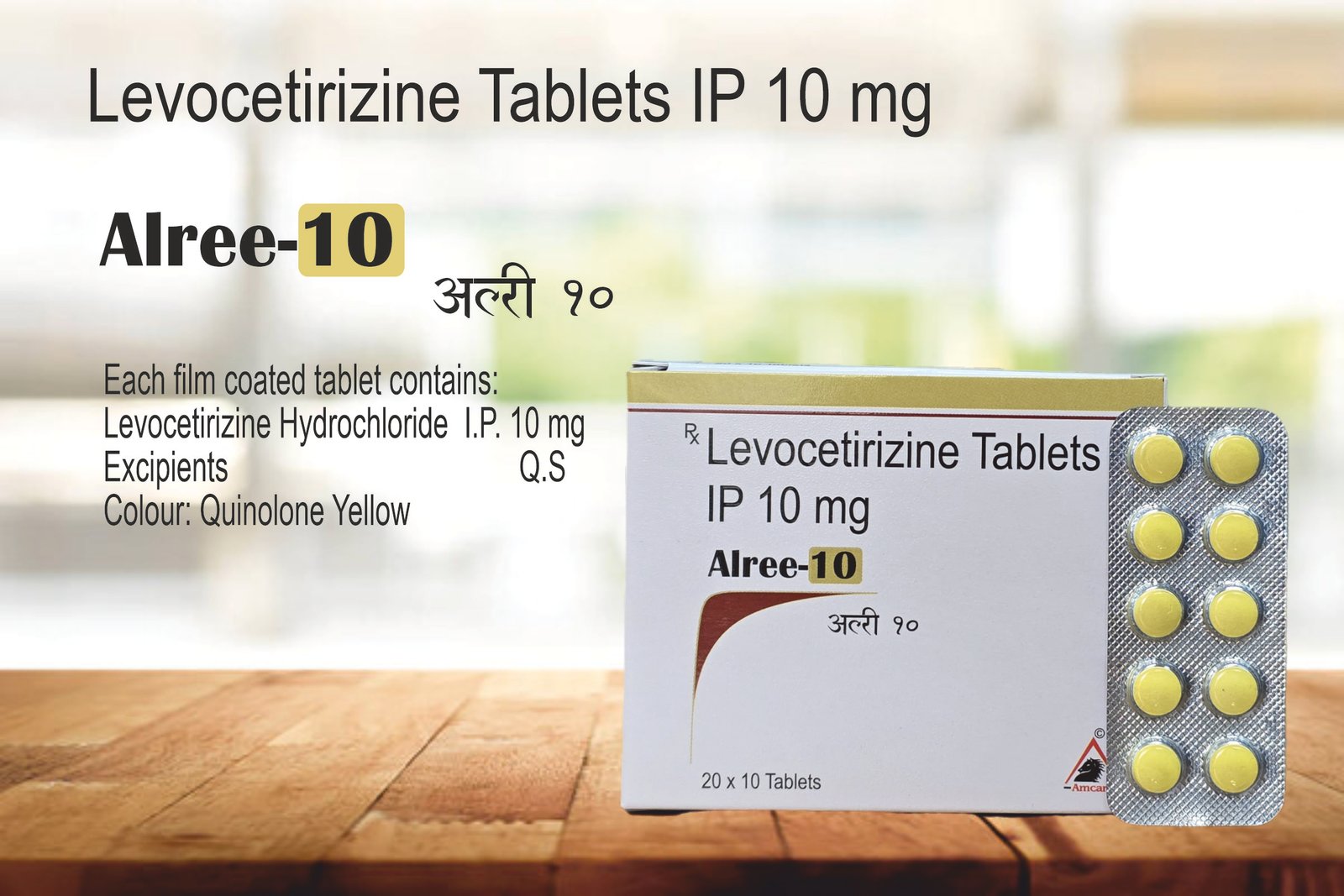
ALREE-10 is an oral antihistamine formulation containing Levocetirizine Hydrochloride IP 10 mg per film-coated tablet, as shown on the supplied artwork. It is intended for symptomatic management of histamine-mediated allergic conditions.
1. Product Information
| Parameter | Details |
|---|---|
| Brand Name | ALREE-10 |
| Generic Name | Levocetirizine Hydrochloride |
| Strength | 10 mg |
| Dosage Form | Film-Coated Tablet |
| Route | Oral |
| Therapeutic Category | Antihistamine / Anti-Allergic |
| Pack Size | 20 × 10 Tablets |
| Prescription Status | Rx, as shown on artwork |
| Colour | Quinoline Yellow |
Composition
Each film-coated tablet contains:
- Levocetirizine Hydrochloride IP — 10 mg
- Excipients — q.s.
- Colour: Quinoline Yellow
2. What is ALREE-10 Used For?
Levocetirizine is a selective H1-antihistamine used for symptomatic relief of allergic conditions.
Depending on the patient’s condition and physician assessment, levocetirizine may be used for symptoms such as:
- Sneezing
- Runny nose
- Nasal itching
- Itchy or watery eyes
- Throat/nasal itching
- Allergic rhinitis
- Seasonal allergic symptoms
- Perennial allergic symptoms
- Allergic skin itching
- Urticaria (hives)
Current professional labeling describes levocetirizine for allergic-rhinitis symptoms and uncomplicated skin manifestations of chronic idiopathic urticaria.
3. Mechanism of Action
Levocetirizine Hydrochloride
Levocetirizine is an H1-histamine receptor antagonist.
During an allergic reaction, allergens can trigger the release of histamine.
Allergen exposure
↓
Histamine release
↓
H1 receptor activation
↓
Sneezing + itching + runny nose + watery eyes
Levocetirizine blocks peripheral H1 receptors and reduces the effects of histamine.
Result
H1 receptor blockade
↓
Reduced histamine-mediated allergic symptoms
↓
Relief from sneezing, itching and rhinorrhea.
4. Therapeutic Benefits
✔ Relief from sneezing
Helps reduce histamine-mediated nasal symptoms.
✔ Helps control runny nose
Reduces histamine-related nasal secretions.
✔ Helps relieve nasal itching
Reduces histamine-mediated itching and irritation.
✔ Helps relieve itchy/watery eyes
Can help control ocular symptoms associated with allergic rhinitis.
✔ Helps control allergic itching
H1-antihistamine activity can reduce histamine-mediated itching.
✔ Support in urticaria
Levocetirizine is used for the uncomplicated skin manifestations of chronic idiopathic urticaria.
5. Common Clinical Applications
| Condition / Symptom | Role |
|---|---|
| Allergic rhinitis | Symptomatic relief |
| Seasonal allergies | Symptomatic relief |
| Perennial allergic rhinitis | Symptomatic relief |
| Sneezing | H1-antihistamine action |
| Runny nose | H1-antihistamine action |
| Nasal itching | H1-antihistamine action |
| Itchy/watery eyes | Symptomatic relief |
| Urticaria / hives | Relief of allergic skin symptoms |
| Allergic itching | Symptomatic relief |
6. Allergic Rhinitis
Allergic rhinitis commonly produces:
- Repeated sneezing
- Runny nose
- Nasal itching
- Nasal irritation
- Itchy eyes
- Watery eyes
Levocetirizine acts primarily on the histamine-mediated component of these symptoms.
It provides symptomatic relief but does not eliminate the underlying allergic tendency or remove the allergen.
7. Urticaria / Hives
Urticaria may present with:
- Raised wheals
- Redness
- Skin itching
- Recurrent allergic skin symptoms
Histamine is an important mediator in many urticarial reactions.
Levocetirizine blocks H1 receptors and can therefore reduce histamine-mediated itching and other uncomplicated skin manifestations of chronic idiopathic urticaria.
8. Suggested Use & Dosage
Important for ALREE-10
The artwork establishes a 10 mg tablet strength, but does not provide a dosing schedule.
Current professional labeling for levocetirizine describes 5 mg once daily in the evening for adults and children 12 years and older, with lower doses and adjustments for specific populations.
Therefore, for ALREE-10, do not state that patients should routinely take one 10 mg tablet daily unless that specific strength and regimen are supported by the product’s current approved Indian prescribing information.
Recommended website wording
Take ALREE-10 Tablets only as directed by the physician.
Administration
- Take orally with water.
- Follow the prescribed dose and duration.
- May be taken with or without food.
- Do not exceed the prescribed dose.
- Do not independently increase the dose if symptoms persist.
9. Side Effects
Possible adverse effects include:
Common
- Drowsiness
- Fatigue
- Headache
- Dry mouth
- Dizziness
Drowsiness and fatigue are recognized adverse effects of levocetirizine.
Other possible effects
- Nausea
- Abdominal discomfort
- Gastrointestinal symptoms
- Skin reactions
Rare but serious
Seek immediate medical attention for:
- Facial swelling
- Lip or tongue swelling
- Difficulty breathing
- Severe allergic reaction
- Severe skin reaction
10. Drowsiness & Driving
Although levocetirizine is a newer-generation antihistamine, drowsiness can occur.
Patients should determine their individual response before:
- Driving
- Operating machinery
- Working at heights
- Performing activities requiring full mental alertness
Current professional labeling specifically advises caution with driving and hazardous activities.
11. Alcohol & CNS Depressants
Alcohol, sedatives and tranquilizers may increase impairment or drowsiness.
Patients should avoid or limit alcohol while taking levocetirizine, particularly if they experience sedation.
12. Precautions & Warnings
Inform the physician before using ALREE-10 if the patient has:
- Kidney disease
- Difficulty urinating
- Enlarged prostate
- Previous allergy to levocetirizine
- Previous allergy to cetirizine
- Significant drowsiness with antihistamines
Because levocetirizine is substantially eliminated through the kidneys, renal function is an important consideration.
13. Contraindications
Levocetirizine should not be used in patients with known hypersensitivity to:
- Levocetirizine
- Cetirizine
- Any component of the formulation
Current professional labeling also contraindicates levocetirizine in patients with end-stage renal disease or those undergoing hemodialysis.
For your final Indian product literature, these details should be checked against the current approved Indian package insert.
14. Drug Interactions
Tell the doctor or pharmacist about all medicines being taken.
Particular attention should be given to:
Alcohol
May increase drowsiness.
Sedatives
May increase CNS depression.
Tranquilizers
May increase impairment.
Other antihistamines
May increase antihistamine-related effects.
Other medicines causing drowsiness
May further impair alertness.
15. Pregnancy & Breastfeeding
Use during pregnancy or breastfeeding should be based on medical advice and an individual risk-benefit assessment.
Patients who are:
- Pregnant
- Planning pregnancy
- Breastfeeding
should inform their healthcare professional before using ALREE-10.
16. Use in Elderly Patients
Elderly patients may have reduced renal function and may therefore require individualized treatment.
They may also be more susceptible to:
- Drowsiness
- Dizziness
- Urinary retention
- Other medication-related effects
Renal function should be considered when determining the appropriate levocetirizine dose.
17. Renal Impairment
This is an important consideration for levocetirizine.
Because the medicine is substantially excreted through the kidneys, patients with reduced renal function may require dose adjustment.
Current professional labeling provides progressively lower dosing recommendations with increasing renal impairment and states that patients with end-stage renal disease or undergoing hemodialysis should not receive levocetirizine.
18. Hepatic Impairment
Hepatic impairment alone generally has less impact on levocetirizine elimination than renal impairment.
However, patients with combined hepatic and renal impairment may require dose adjustment because renal function substantially influences drug clearance.
19. When to Seek Medical Attention
Seek urgent medical attention if the patient develops:
- Difficulty breathing
- Facial, lip or tongue swelling
- Severe allergic reaction
- Severe dizziness
- Severe skin reaction
- Significant difficulty passing urine
- Excessive or unusual sedation
20. Storage
Store ALREE-10 Tablets:
- In a cool, dry place.
- Away from direct sunlight.
- Away from excessive heat and moisture.
- In the original packaging.
- Out of reach of children.
Do not use after the expiry date.
21. Key Product Features
ALREE-10 Tablets
Levocetirizine Hydrochloride 10 mg formulation
- Levocetirizine Hydrochloride IP — 10 mg
- Film-coated tablet
- Oral administration
- Antihistamine / anti-allergic
- Intended for symptomatic management of allergic conditions
- 20 × 10 Tablets
- Rx product as shown on artwork
- Colour: Quinoline Yellow
22. Why Choose ALREE-10?
Levocetirizine-based antihistamine
Levocetirizine is a selective H1-antihistamine used for histamine-mediated allergic symptoms.
Broad allergy symptom coverage
It can provide symptomatic relief across:
Sneezing + Runny Nose + Nasal Itching + Ocular Symptoms + Allergic Itching
Single active ingredient
The formulation contains levocetirizine as its active pharmaceutical ingredient, allowing targeted antihistamine therapy.