Our Products
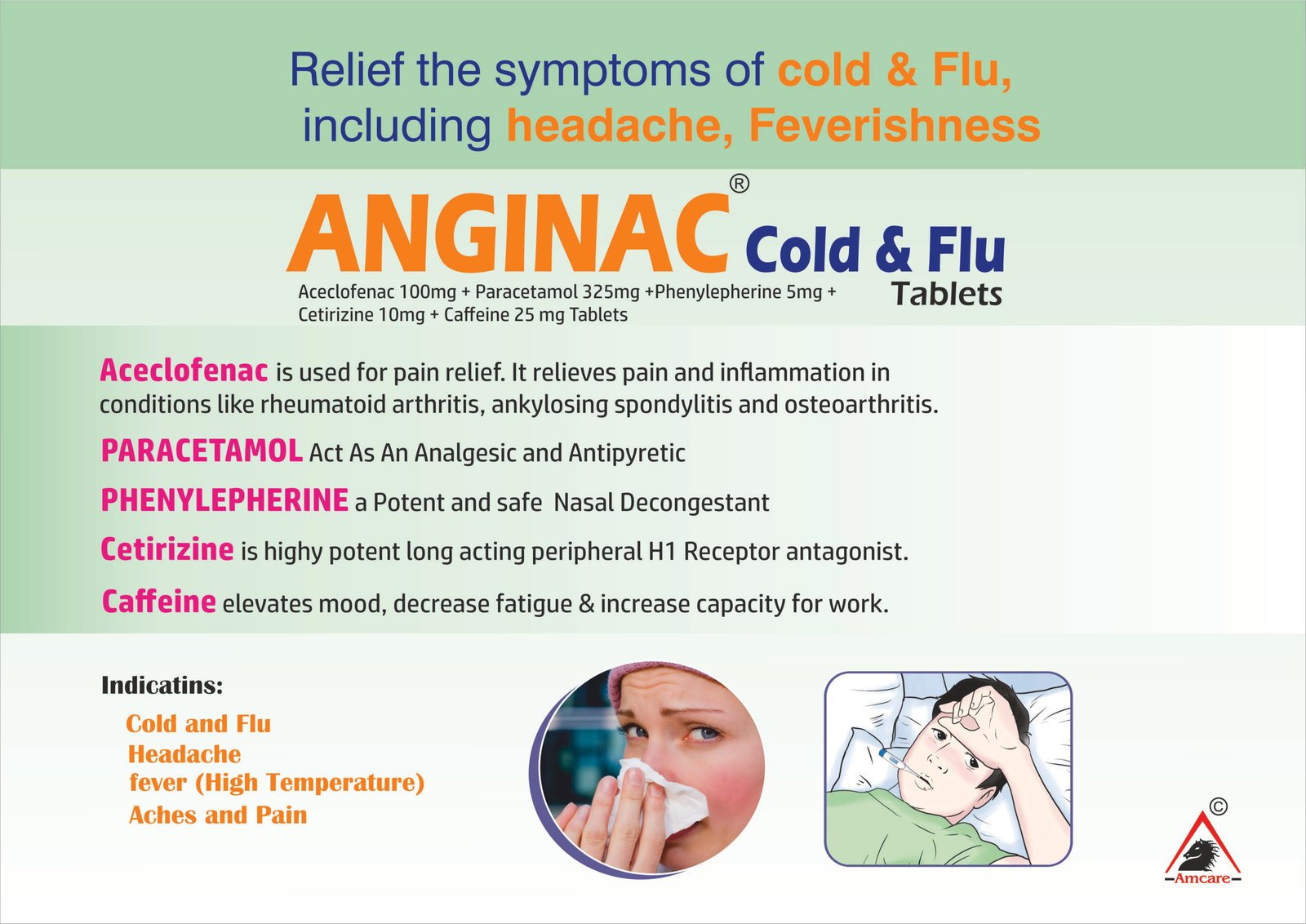
ANGINAC®-Cold& Flu
Product Composition
Packaging Details
Product Description
ANGINAC Cold & Flu Tablets
Aceclofenac 100 mg + Paracetamol 325 mg + Phenylephrine HCl 5 mg + Cetirizine HCl 10 mg + Caffeine 25 mg
ANGINAC Cold & Flu is an uncoated tablet formulation shown on the artwork with five active ingredients intended to address pain, fever and selected cold/allergic nasal symptoms.
1. Product Information
| Parameter | Details |
|---|---|
| Brand Name | ANGINAC Cold & Flu |
| Dosage Form | Uncoated Tablet |
| Route | Oral |
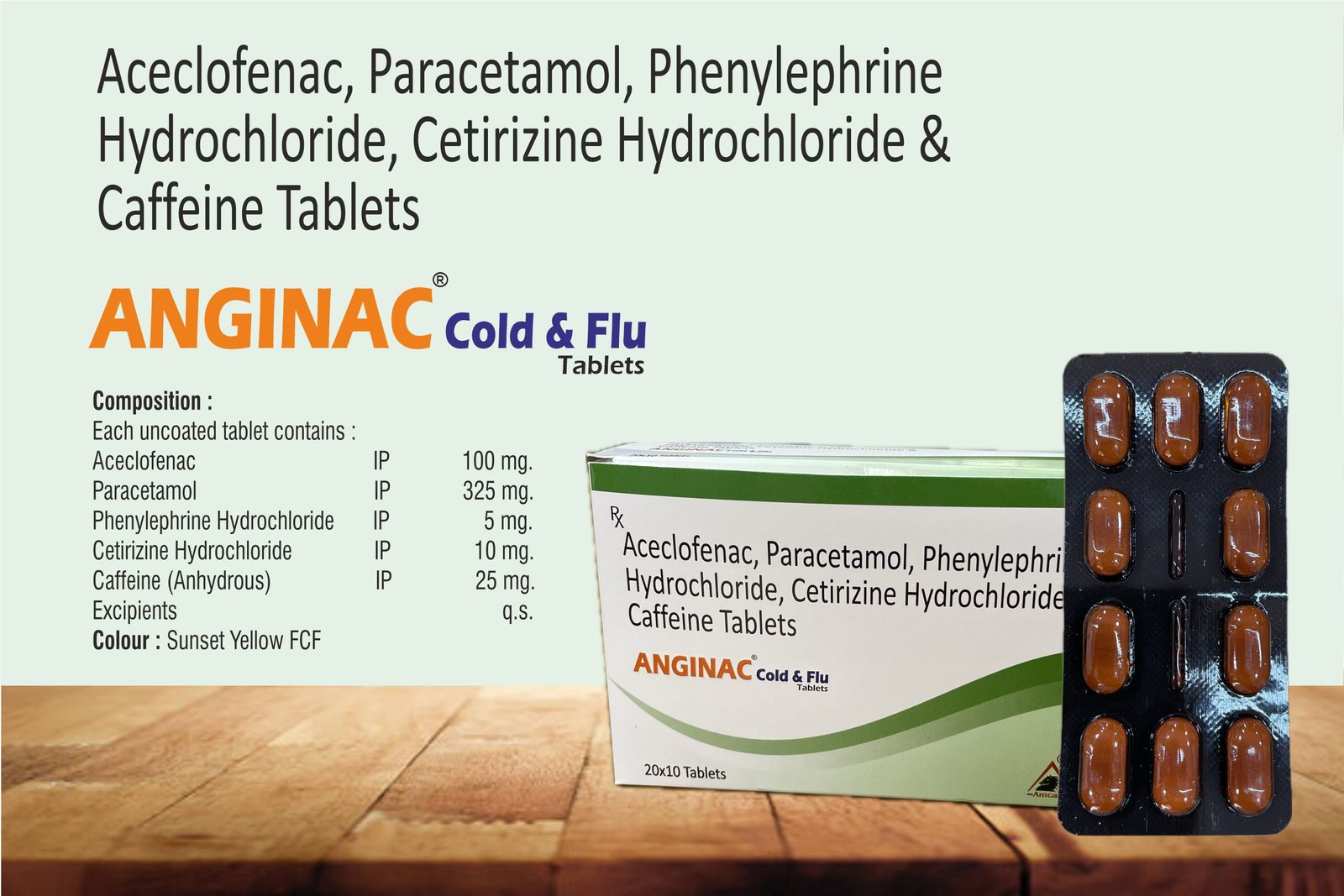
| Composition | Aceclofenac 100 mg + Paracetamol 325 mg + Phenylephrine HCl 5 mg + Cetirizine HCl 10 mg + Caffeine 25 mg |
| Therapeutic Category | Cold & Flu / Analgesic / Antihistamine / Decongestant |
| Pack Size | 20 × 10 Tablets |
| Prescription | Rx, as shown on artwork |
| Colour | Sunset Yellow FCF |
Composition
Each uncoated tablet contains:
- Aceclofenac IP — 100 mg
- Paracetamol IP — 325 mg
- Phenylephrine Hydrochloride IP — 5 mg
- Cetirizine Hydrochloride IP — 10 mg
- Caffeine (Anhydrous) IP — 25 mg
- Excipients — q.s.
- Colour: Sunset Yellow FCF
2. Therapeutic Uses
The individual ingredients have roles in managing different symptoms:
- Aceclofenac: pain and inflammation
- Paracetamol: pain and fever
- Phenylephrine: nasal congestion
- Cetirizine: allergic nasal symptoms such as sneezing and runny nose
- Caffeine: analgesic adjuvant/stimulant component
Combination products with these ingredients are marketed for symptomatic management of common-cold symptoms, including nasal congestion, runny nose, sneezing, headache and body ache.
Potential symptom areas
- Headache associated with cold symptoms
- Body ache
- Fever
- Nasal congestion
- Runny nose
- Sneezing
- Allergy-associated nasal symptoms
- Pain and inflammatory discomfort
Important: The specific approved indication for ANGINAC Cold & Flu should be confirmed against the product’s current regulatory approval and prescribing information.
3. Mechanism of Action
Aceclofenac 100 mg
Aceclofenac is an NSAID (non-steroidal anti-inflammatory drug).
It reduces the production of prostaglandin-related inflammatory mediators, thereby providing:
- Analgesic action
- Anti-inflammatory action
- Reduction of pain associated with inflammation
It contributes primarily to the pain and inflammatory component of the formulation.
Paracetamol 325 mg
Paracetamol is an analgesic and antipyretic.
It acts predominantly through central mechanisms involved in pain and temperature regulation.
Main effects
Analgesic: Helps reduce pain.
Antipyretic: Helps reduce fever.
Together with aceclofenac, it provides two different analgesic components; however, concurrent analgesic exposure also increases the importance of appropriate prescribing.
Phenylephrine Hydrochloride 5 mg
Phenylephrine is an alpha-adrenergic sympathomimetic decongestant.
Its vasoconstrictive activity can reduce swelling of nasal mucosal tissues and is intended to help with nasal stuffiness.
Symptomatic role
Nasal mucosal congestion → reduced mucosal swelling → potential improvement in nasal airflow
However, the evidence surrounding the effectiveness of oral phenylephrine as a nasal decongestant has been questioned, and CDSCO’s FDC reviews have specifically raised this issue.
Cetirizine Hydrochloride 10 mg
Cetirizine is a second-generation H1 antihistamine.
It blocks the effects of histamine and can reduce allergy-associated symptoms such as:
- Sneezing
- Runny nose
- Nasal irritation
- Watery eyes
It therefore contributes primarily to the allergic/nasal symptom component.
Cetirizine can still cause drowsiness in some individuals, although it is generally less sedating than many first-generation antihistamines.
Caffeine 25 mg
Caffeine is included as an analgesic adjuvant in some analgesic formulations.
It may enhance analgesic effects in selected acute-pain situations and acts as a central nervous system stimulant.
The caffeine content should be considered together with dietary caffeine from coffee, tea, energy drinks and other sources.
4. Combined Action
The formulation is designed around several symptom targets:
| Ingredient | Primary role |
|---|---|
| Aceclofenac 100 mg | Analgesic + anti-inflammatory |
| Paracetamol 325 mg | Analgesic + antipyretic |
| Phenylephrine 5 mg | Decongestant |
| Cetirizine 10 mg | Antihistamine |
| Caffeine 25 mg | Analgesic adjuvant |
Overall formulation concept
Pain & inflammation
→ Aceclofenac
Pain & fever
→ Paracetamol
Nasal congestion
→ Phenylephrine
Sneezing/runny nose
→ Cetirizine
Analgesic adjuvant
→ Caffeine
5. Potential Benefits
✔ Pain relief
Aceclofenac and paracetamol provide analgesic activity.
✔ Anti-inflammatory action
Aceclofenac contributes anti-inflammatory activity.
✔ Fever reduction
Paracetamol provides antipyretic activity.
✔ Nasal symptom support
Phenylephrine provides the decongestant component.
✔ Allergy symptom support
Cetirizine helps control histamine-mediated symptoms such as sneezing and runny nose.
✔ Multi-symptom formulation
Several symptomatic components are combined into a single oral dosage form.
6. Common Clinical Symptom Applications
| Symptom | Relevant component |
|---|---|
| Headache | Aceclofenac + Paracetamol |
| Body ache | Aceclofenac + Paracetamol |
| Fever | Paracetamol |
| Inflammatory pain | Aceclofenac |
| Nasal congestion | Phenylephrine |
| Sneezing | Cetirizine |
| Runny nose | Cetirizine |
| Cold-associated discomfort | Combination |
7. Suggested Use & Dosage
The artwork provides the composition but does not specify a dosing schedule.
Therefore, the product page should state:
Take ANGINAC Cold & Flu Tablets only as directed by the physician.
Administration
- Take orally with water.
- Follow the prescribed dose and duration.
- Do not exceed the prescribed dose.
- Avoid taking additional medicines containing paracetamol or other NSAIDs unless advised by a healthcare professional.
- Do not combine with another cold/flu product without checking its ingredients.
8. Important Safety Considerations
Because this formulation contains both aceclofenac and paracetamol, patients should avoid unnecessary duplication with other analgesic medicines.
Aceclofenac-related considerations
NSAIDs can cause:
- Gastric irritation
- Indigestion
- Nausea
- Abdominal discomfort
- Gastritis
- Ulceration or gastrointestinal bleeding
- Kidney-related adverse effects
- Fluid retention
Patients with a history of peptic ulcer, gastrointestinal bleeding, significant kidney disease, cardiovascular disease or NSAID hypersensitivity require medical assessment before use.
Paracetamol-related consideration
Excessive total paracetamol exposure can cause serious liver injury.
Avoid simultaneous use of multiple paracetamol-containing medicines unless specifically directed by a healthcare professional.
9. Cardiovascular Precautions
Phenylephrine may increase blood pressure or produce cardiovascular effects in susceptible individuals.
Medical advice is particularly important in patients with:
- Hypertension
- Heart disease
- Arrhythmia
- Hyperthyroidism
- Other cardiovascular disorders
10. Drowsiness & Driving
Cetirizine may cause drowsiness in some patients.
Until individual sensitivity is known, patients should use caution with:
- Driving
- Operating machinery
- Working at heights
- Activities requiring full alertness
Alcohol may increase impairment.
11. Side Effects
Possible adverse effects may include:
Gastrointestinal
- Nausea
- Vomiting
- Indigestion
- Stomach discomfort
- Heartburn
Nervous system
- Dizziness
- Headache
- Drowsiness
- Restlessness
Cardiovascular
- Palpitations
- Increased blood pressure
Other
- Dry mouth
- Skin rash
- Allergic reactions
Serious symptoms such as gastrointestinal bleeding, severe allergic reaction, breathing difficulty, chest pain or significant liver/kidney symptoms require prompt medical attention.
12. Drug Interactions
Tell the doctor about all medicines being taken.
Particular attention should be given to:
- Other NSAIDs
- Other paracetamol-containing medicines
- Anticoagulants/antiplatelet medicines
- Corticosteroids
- Medicines affecting kidney function
- Antihypertensive medicines
- Other decongestants
- Sedative medicines
- Other antihistamines
- Caffeine-containing medicines/products
- Alcohol
13. Pregnancy & Breastfeeding
Use during pregnancy or breastfeeding should be based on medical advice.
Because the product contains an NSAID, particular caution is required during pregnancy, especially in later pregnancy.
Patients who are pregnant, planning pregnancy or breastfeeding should inform their healthcare professional before using the product.
14. Use in Elderly Patients
Elderly patients may have increased susceptibility to:
- Gastrointestinal adverse effects
- Kidney impairment
- Cardiovascular effects
- Dizziness
- Drug interactions
Appropriate medical supervision is recommended.
15. Liver & Kidney Impairment
Liver
Patients with liver disease should inform their doctor because the formulation contains paracetamol and aceclofenac.
Kidney
Patients with kidney disease or reduced kidney function should use the medicine only under medical supervision because NSAIDs can adversely affect renal function in susceptible patients.
16. When to Seek Immediate Medical Attention
Seek urgent medical attention for:
- Difficulty breathing
- Facial or throat swelling
- Severe allergic reaction
- Black/tarry stools
- Vomiting blood
- Severe abdominal pain
- Chest pain
- Severe palpitations
- Markedly increased blood pressure
- Yellowing of skin or eyes
- Severe or unusual weakness
- Accidental overdose
17. Storage
Store ANGINAC Cold & Flu Tablets:
- In a cool, dry place.
- Away from direct sunlight.
- Away from excessive heat and moisture.
- In the original packaging.
- Out of reach of children.
Do not use after the expiry date.
18. Key Product Features
ANGINAC Cold & Flu Tablets
Five-component symptomatic formulation
- Aceclofenac — 100 mg
- Paracetamol — 325 mg
- Phenylephrine HCl — 5 mg
- Cetirizine HCl — 10 mg
- Caffeine (Anhydrous) — 25 mg
- Uncoated tablet
- Oral administration
- 20 × 10 Tablets
- Rx product as shown on the artwork