Our Products
CHYMOBEES-AP
Product Composition
Packaging Details
Product Description
ChymoBees-AP Tablets – Trypsin-Chymotrypsin 50,000 Armour Units + Aceclofenac 100 mg + Paracetamol 325 mg
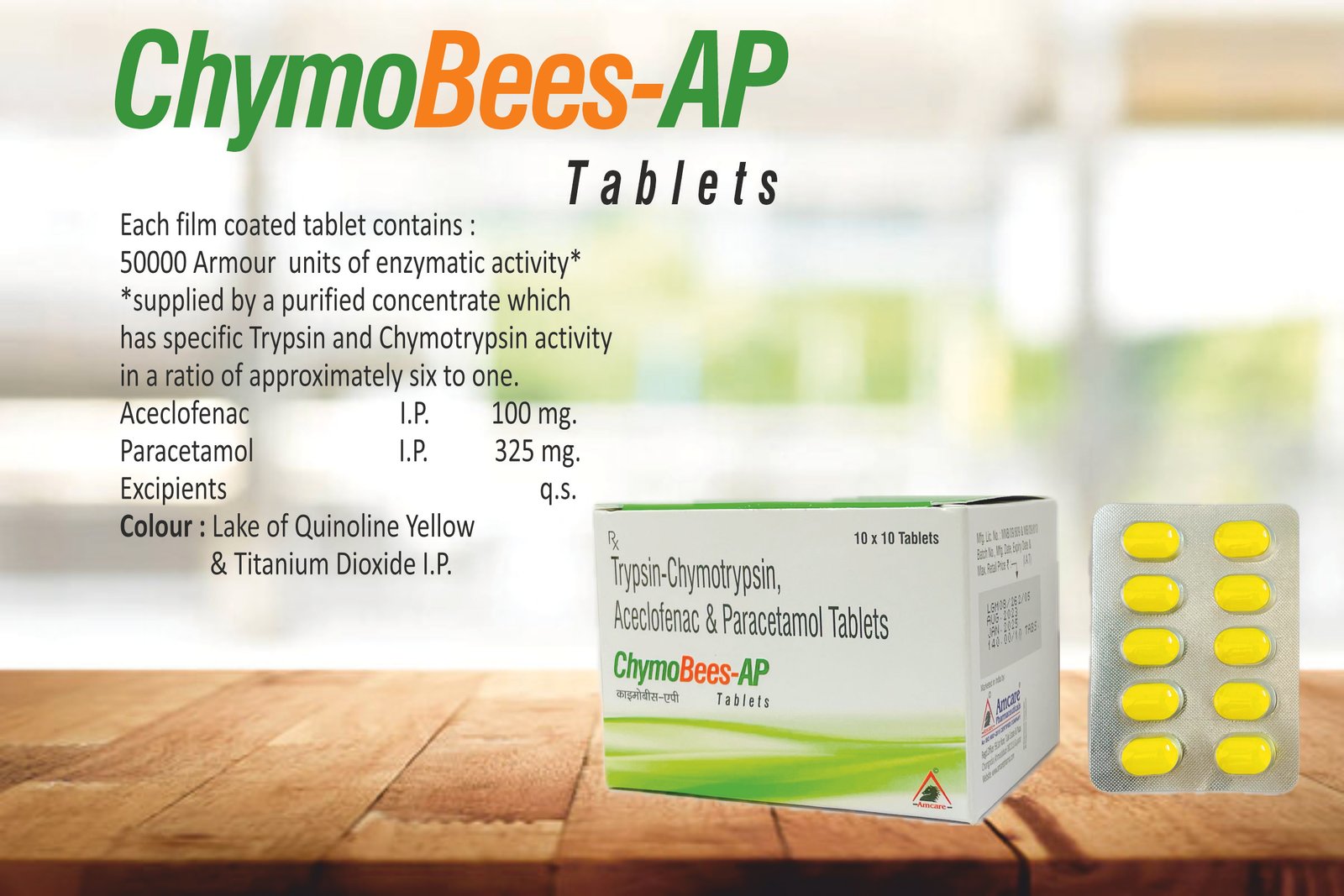
ChymoBees-AP Tablets by Amcare Pharmaceuticals are a fixed-dose combination containing Trypsin-Chymotrypsin enzymatic activity equivalent to 50,000 Armour Units, Aceclofenac IP 100 mg and Paracetamol IP 325 mg.
The formulation combines an NSAID for pain and inflammation, paracetamol for additional analgesic/antipyretic activity, and a proteolytic enzyme combination that has been studied for postoperative inflammatory symptoms such as swelling and discomfort.
The product artwork specifies that the enzyme activity is supplied by a purified concentrate with specific trypsin and chymotrypsin activity in an approximately 6:1 ratio.
Composition of ChymoBees-AP Tablets
| Ingredient | Strength |
|---|---|
| Trypsin-Chymotrypsin | 50,000 Armour Units enzymatic activity |
| Trypsin : Chymotrypsin activity | Approximately 6:1 |
| Aceclofenac IP | 100 mg |
| Paracetamol IP | 325 mg |
| Excipients | q.s. |
| Colour | Lake of Quinoline Yellow & Titanium Dioxide IP |
Brand Name: ChymoBees-AP
Dosage Form: Film-coated tablet
Route: Oral
Pack Size: 10 × 10 Tablets
Company: Amcare Pharmaceuticals
Category: NSAID + Analgesic/Antipyretic + Proteolytic Enzyme
Prescription Status: Prescription medicine
The 50,000 Armour Units/approximately 6:1 trypsin-chymotrypsin specification is also documented for comparable pharmaceutical formulations.
What are ChymoBees-AP Tablets Used For?
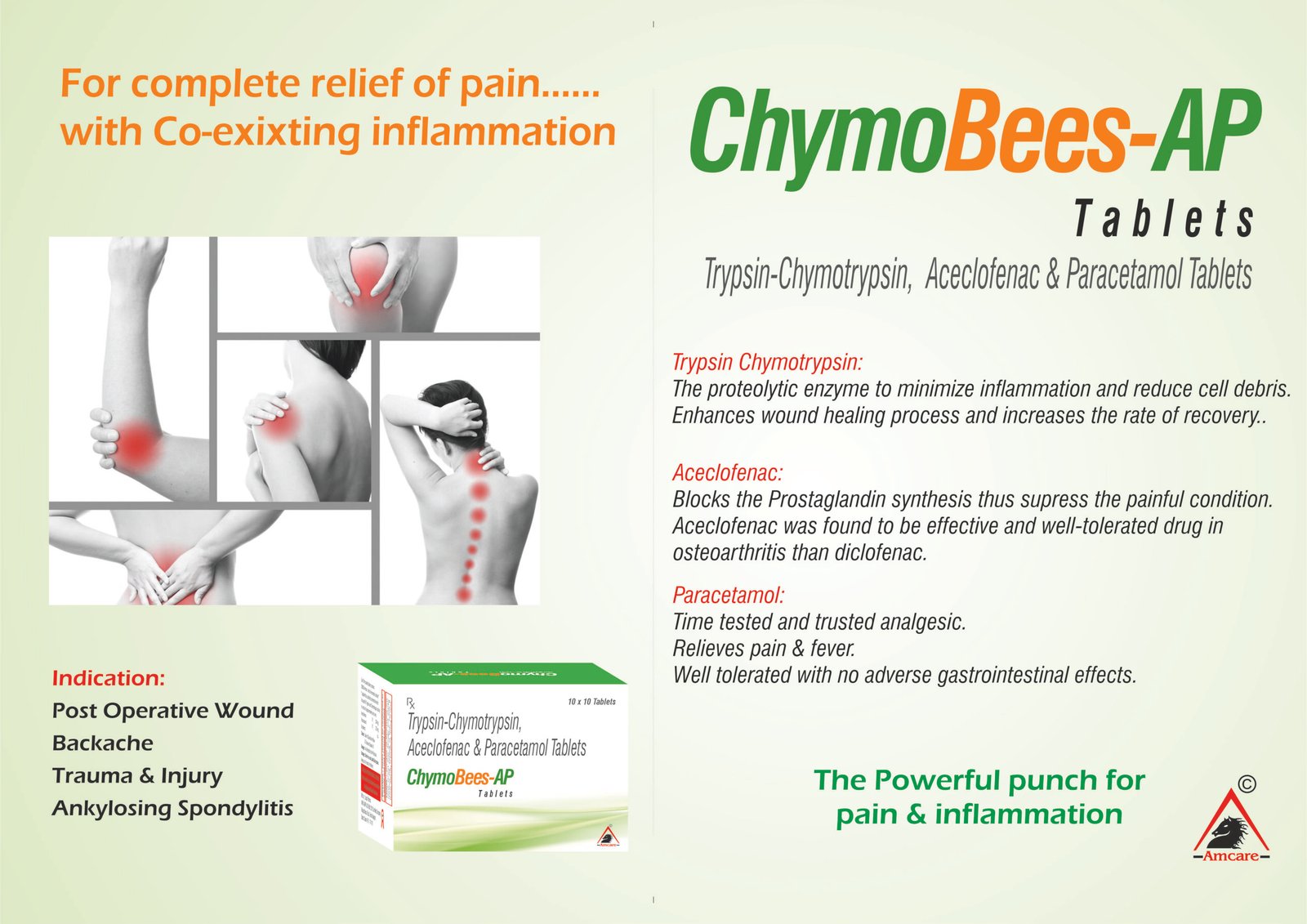
ChymoBees-AP combines medicines with complementary roles in the symptomatic management of pain, inflammation and selected inflammatory/postoperative symptoms.
Physician-directed applications may include:
- Painful musculoskeletal conditions
- Inflammatory joint conditions
- Osteoarthritis-related pain
- Rheumatoid arthritis-related pain
- Ankylosing spondylitis-related symptoms
- Acute musculoskeletal pain
- Selected postoperative pain and swelling
- Dental or oral surgical conditions where an anti-inflammatory enzyme combination is considered appropriate
Aceclofenac is established for symptomatic relief of pain and inflammation associated with osteoarthritis, rheumatoid arthritis and ankylosing spondylitis.
Trypsin-chymotrypsin has been studied in postoperative settings. Clinical studies have reported reductions in postoperative swelling and inflammatory symptoms in selected surgical and dental settings.
The exact indication should be determined by the prescribing physician.
How Does ChymoBees-AP Work?
1. Trypsin-Chymotrypsin – 50,000 Armour Units
Trypsin and chymotrypsin are proteolytic enzymes.
The combination has been investigated for its potential role in reducing inflammatory symptoms and postoperative edema. Clinical research has evaluated trypsin-chymotrypsin after orthopedic and dental surgery, including studies reporting reductions in edema, tenderness and other postoperative symptoms.
The product artwork specifies:
50,000 Armour Units of enzymatic activity
with an approximately:
Trypsin : Chymotrypsin = 6 : 1
This should be described as an enzyme activity measurement, rather than converting it into a milligram quantity.
2. Aceclofenac – 100 mg
Aceclofenac is a non-steroidal anti-inflammatory drug (NSAID).
It reduces prostaglandin production involved in pain and inflammation, providing analgesic and anti-inflammatory effects. Aceclofenac is indicated for symptomatic relief in conditions including osteoarthritis, rheumatoid arthritis and ankylosing spondylitis.
Role of aceclofenac
- Helps reduce inflammatory pain
- Helps reduce inflammation
- Helps relieve joint-related discomfort
- Supports symptomatic management of musculoskeletal conditions
3. Paracetamol – 325 mg
Paracetamol provides analgesic and antipyretic activity.
It can provide additional pain relief alongside aceclofenac.
Because ChymoBees-AP already contains paracetamol, patients should avoid taking additional paracetamol-containing medicines without professional advice.
Combined Action of ChymoBees-AP
The formulation provides three complementary components:
Trypsin-Chymotrypsin → enzyme-based supportive role in inflammatory/postoperative swelling
Aceclofenac → analgesic + anti-inflammatory action
Paracetamol → additional analgesic + antipyretic action
This combination therefore provides a multi-component approach to symptomatic management when all three ingredients are considered appropriate by the physician.
Benefits / Therapeutic Role
1. Pain Relief
Aceclofenac and paracetamol provide complementary analgesic activity.
2. Anti-inflammatory Action
Aceclofenac helps reduce inflammatory activity associated with painful musculoskeletal and joint conditions.
3. Supportive Management of Swelling
Trypsin-chymotrypsin has been studied for postoperative edema and inflammatory symptoms, including following orthopedic and dental procedures.
4. Fixed-Dose Combination
Three pharmacologically different components are incorporated into one oral formulation when the prescriber considers the combination appropriate.
Dosage & Administration
ChymoBees-AP should be taken only according to the prescription of a qualified healthcare professional.
The appropriate dose and treatment duration depend on:
- Underlying diagnosis
- Severity of pain and inflammation
- Age
- Kidney function
- Liver function
- Gastrointestinal history
- Cardiovascular risk
- Other medicines being taken
Aceclofenac alone is commonly prescribed at 100 mg twice daily, but this should not automatically be used as the dosing instruction for ChymoBees-AP, because the product also contains paracetamol and trypsin-chymotrypsin.
Administration
- Take the tablet exactly as prescribed.
- Swallow the tablet with water.
- Do not crush or chew the tablet unless specifically instructed.
- Do not exceed the prescribed dose.
- Do not take another NSAID unless advised by your physician.
Important Paracetamol Precaution
Each ChymoBees-AP tablet contains 325 mg of paracetamol.
Before taking other medicines, check whether they contain:
- Paracetamol
- Acetaminophen
- APAP
Taking multiple paracetamol-containing medicines can unintentionally increase total exposure and cause serious liver injury in overdose.
Possible Side Effects
Possible adverse effects may include:
Aceclofenac-related
- Indigestion
- Nausea
- Vomiting
- Stomach discomfort
- Diarrhea
- Dizziness
- Headache
- Fluid retention
NSAIDs such as aceclofenac can also cause serious gastrointestinal, kidney, liver and cardiovascular adverse effects.
Paracetamol-related
Paracetamol is generally well tolerated at recommended doses, but excessive intake can cause serious liver injury.
Trypsin-Chymotrypsin-related
The clinical evidence for oral trypsin-chymotrypsin is more condition-specific than that for established analgesics. Published studies have evaluated postoperative pain, swelling and wound-related outcomes in selected populations.
Serious Symptoms Requiring Medical Attention
Seek urgent medical attention if the patient develops:
Gastrointestinal symptoms
- Vomiting blood
- Black/tarry stools
- Severe abdominal pain
Allergic symptoms
- Difficulty breathing
- Swelling of the face, lips or throat
- Severe skin rash
Liver-related symptoms
- Yellowing of the skin or eyes
- Dark urine
- Persistent nausea or vomiting
- Severe unexplained fatigue
Kidney-related symptoms
- Markedly reduced urine output
- Significant swelling
Precautions & Warnings
1. Gastrointestinal Risk
Aceclofenac, as an NSAID, can cause gastrointestinal ulceration and bleeding. Risk is higher in some patients, including those with previous ulcer disease and those taking certain interacting medicines.
2. Kidney Function
NSAIDs may affect kidney function, particularly in patients with:
- Existing kidney disease
- Dehydration
- Heart failure
- Older age
- Concurrent medicines affecting renal function
Medical assessment is advisable before prolonged NSAID treatment.
3. Liver Function
Because the formulation contains both aceclofenac and paracetamol, patients with liver disease require appropriate medical assessment.
Excessive paracetamol intake can cause severe liver damage.
4. Cardiovascular Risk
Aceclofenac and other NSAIDs can increase cardiovascular risk, particularly with prolonged treatment. The lowest effective dose for the shortest necessary duration is recommended.
5. Bleeding Risk
Patients taking anticoagulants or antiplatelet medicines should inform their doctor before using the product.
Who Should Avoid or Use ChymoBees-AP With Caution?
Particular medical assessment is important for patients with:
- Previous stomach ulcer or gastrointestinal bleeding
- Kidney disease
- Liver disease
- Heart disease
- High blood pressure
- Heart failure
- NSAID-related asthma or allergy
- Bleeding disorders
- Significant alcohol consumption
- Dehydration
- Previous adverse reactions to NSAIDs
- Concurrent anticoagulant therapy
Drug Interactions
Inform your doctor about all prescription medicines, OTC medicines and supplements.
Particular attention may be required with:
- Other NSAIDs
- Aspirin
- Warfarin and other anticoagulants
- Antiplatelet medicines
- Corticosteroids
- ACE inhibitors
- ARBs
- Diuretics
- Lithium
- Methotrexate
- Other medicines affecting kidney function
- Other paracetamol-containing medicines
Aceclofenac product information describes clinically relevant interactions with several of these medicine groups.
Avoid duplicate paracetamol
Do not combine ChymoBees-AP with another paracetamol-containing medicine unless specifically advised by a healthcare professional.
Pregnancy & Breastfeeding
ChymoBees-AP should be used during pregnancy only following specific medical advice.
Aceclofenac is an NSAID with important pregnancy-related restrictions, particularly later in pregnancy.
Pregnant, planning-pregnancy or breastfeeding patients should inform their doctor before taking this medicine.
Driving & Operating Machinery
Some patients taking analgesic medicines may experience:
- Dizziness
- Headache
- Nausea
- Reduced alertness
If you experience symptoms that affect concentration or coordination, avoid driving or operating machinery and consult your healthcare professional.
Alcohol & ChymoBees-AP
Alcohol should be minimized or avoided unless your doctor advises otherwise.
There are particular concerns regarding:
- Gastrointestinal irritation associated with NSAIDs
- Liver injury risk associated with excessive paracetamol exposure
Patients who regularly consume significant amounts of alcohol should discuss the medicine with their physician.
Storage
Store ChymoBees-AP Tablets:
- In a cool, dry place
- Away from direct sunlight
- Protected from excessive moisture
- In the original packaging
- Out of reach of children
Follow the storage conditions printed on the approved product packaging.
Key Product Features
| Product Feature | Details |
|---|---|
| Brand Name | ChymoBees-AP |
| Trypsin-Chymotrypsin | 50,000 Armour Units |
| Trypsin : Chymotrypsin | Approximately 6:1 |
| Aceclofenac | 100 mg |
| Paracetamol | 325 mg |
| Dosage Form | Film-coated tablet |
| Route | Oral |
| Therapeutic Category | NSAID + Analgesic + Proteolytic Enzyme |
| Primary Role | Pain, inflammation & selected postoperative inflammatory symptoms |
| Pack Size | 10 × 10 Tablets |
| Company | Amcare Pharmaceuticals |
| Prescription Status | Prescription medicine |
Why Choose ChymoBees-AP by Amcare Pharmaceuticals?
ChymoBees-AP combines:
- Trypsin-Chymotrypsin – 50,000 Armour Units
- Aceclofenac IP – 100 mg
- Paracetamol IP – 325 mg
The formulation is designed to provide complementary symptomatic management of pain and inflammation, with the enzyme component providing an additional role in selected inflammatory and postoperative settings.
The enzyme activity is specified as an activity unit rather than a milligram quantity, which is important when describing the product accurately.