Our Products

Gastric OD
Product Composition
Packaging Details
Product Description
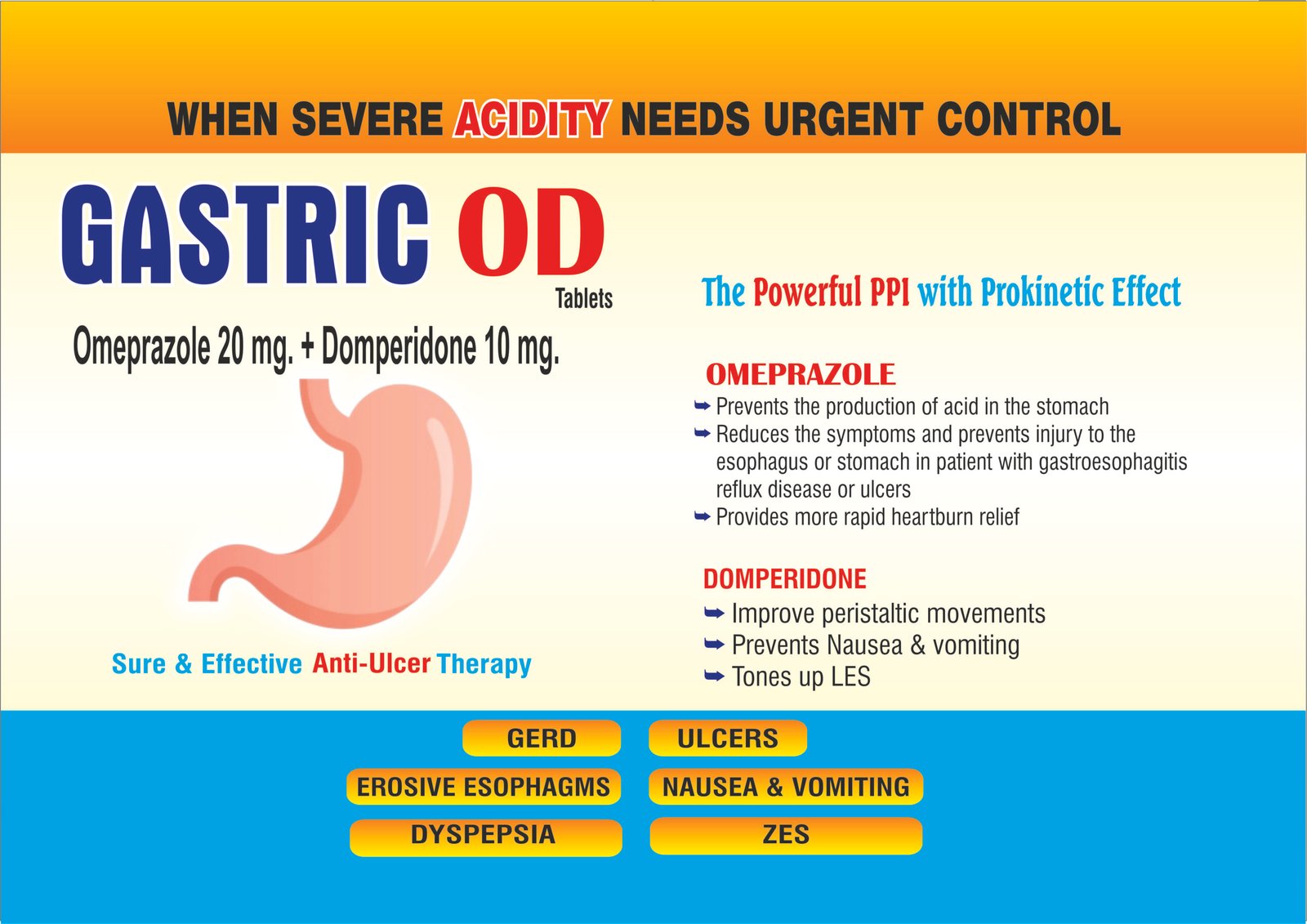
GASTRIC-OD Tablets – Omeprazole Magnesium 20 mg + Domperidone 10 mg
GASTRIC-OD contains Omeprazole Magnesium BP equivalent to Omeprazole 20 mg + Domperidone IP 10 mg in an enteric-coated tablet formulation.
The combination brings together an acid-suppressing proton-pump inhibitor (omeprazole) with a prokinetic/antiemetic agent (domperidone). The uploaded artwork confirms 20 mg omeprazole + 10 mg domperidone, enteric-coated tablets, 20 × 10 tablets, and Rx status.
The exact combination is also listed in CDSCO’s records of permitted FDCs.
1. Product Information
| Particular | Details |
|---|---|
| Brand Name | GASTRIC-OD |
| Generic Name | Omeprazole Magnesium & Domperidone Tablets |
| Omeprazole Strength | Omeprazole Magnesium BP equivalent to Omeprazole 20 mg |
| Domperidone Strength | Domperidone IP 10 mg |
| Dosage Form | Enteric-Coated Tablet |
| Therapeutic Category | Anti-ulcer / Gastrointestinal |
| Drug Classes | Proton Pump Inhibitor + Prokinetic/Antiemetic |
| Route | Oral |
| Pack Size | 20 × 10 Tablets |
| Prescription Status | Rx |
| Brand/Company | Amcare |
2. Composition
Each enteric-coated tablet contains:
Omeprazole Magnesium BP
Equivalent to Omeprazole — 20 mg
Domperidone IP — 10 mg
The enteric coating helps protect the acid-sensitive omeprazole component from degradation in the stomach.
3. What is GASTRIC-OD?
GASTRIC-OD is a combination of:
Omeprazole 20 mg
A proton pump inhibitor (PPI) that reduces gastric acid production.
Domperidone 10 mg
A dopamine D2 receptor antagonist with antiemetic and prokinetic effects.
Together, the two medicines can address acid-related gastrointestinal symptoms while domperidone may help with associated nausea/vomiting and gastrointestinal motility.
The exact indication for this fixed-dose combination should follow the current Indian product approval and prescribing information. CDSCO records list the Omeprazole Magnesium 20 mg + Domperidone 10 mg enteric-coated tablet combination.
4. Mechanism of Action
A. Omeprazole
Omeprazole is a proton pump inhibitor.
It suppresses gastric acid secretion by inhibiting the H+/K+-ATPase proton pump in gastric parietal cells.
Mechanism:
Omeprazole
↓
Inhibits gastric H+/K+-ATPase
↓
Reduced gastric acid secretion
↓
Increased gastric pH
↓
Reduction in acid-related irritation and reflux
Omeprazole is used for conditions including GERD, erosive esophagitis and peptic ulcer disease.
B. Domperidone
Domperidone is primarily a peripheral dopamine D2 receptor antagonist.
It can:
- Enhance upper gastrointestinal motility
- Promote gastric emptying
- Increase lower oesophageal sphincter tone
- Reduce nausea and vomiting through peripheral dopamine receptor blockade
Current regulatory information describes domperidone primarily for short-term relief of nausea and vomiting, using the lowest effective dose for the shortest duration.
5. Combined Action
GASTRIC-OD works through two complementary mechanisms:
Omeprazole
→ Reduces gastric acid
Domperidone
→ Supports gastrointestinal motility and provides antiemetic activity
Overall therapeutic concept
Reduced acid secretion + improved upper GI motility + reduction of nausea/vomiting
This combination may be useful when acid-related gastrointestinal symptoms occur together with symptoms for which domperidone is specifically indicated.
6. Therapeutic Uses
Depending on the approved product indication and physician assessment, the components may be relevant to conditions involving:
- Acid-related dyspeptic symptoms
- Gastroesophageal reflux disease (GERD)
- Heartburn associated with acid reflux
- Acid-related upper gastrointestinal symptoms
- Nausea and vomiting associated with gastrointestinal disorders
- Delayed gastric emptying/motility-related symptoms
Omeprazole itself has established indications including symptomatic GERD, erosive esophagitis, gastric/duodenal ulcer disease and H. pylori eradication regimens when used with appropriate antibiotics.
Important
Do not present every omeprazole indication as an approved indication of GASTRIC-OD. The combination’s specific approved indication should be taken from the current Indian package insert/product licence.
7. Role of Omeprazole in GASTRIC-OD
Omeprazole 20 mg provides the acid-suppressing component.
It can help reduce:
- Gastric acid secretion
- Acid exposure of the oesophagus
- Heartburn
- Acid-related irritation
- Acid-mediated reflux symptoms
Omeprazole is widely used for GERD and peptic ulcer disease.
8. Role of Domperidone in GASTRIC-OD
Domperidone 10 mg provides the prokinetic/antiemetic component.
It may help with:
- Nausea
- Vomiting
- Upper gastrointestinal motility
- Gastric emptying-related symptoms
However, current regulatory reviews have found the evidence for domperidone in long-term dyspepsia and GERD limited compared with its role in short-term nausea and vomiting.
Therefore, it should not be promoted as a general long-term motility treatment without appropriate medical justification.
9. Dosage and Administration
Important
The artwork establishes the strength but does not provide a dosing schedule.
For the website, use:
Take GASTRIC-OD exactly as prescribed by the physician. The dose and duration depend on the patient’s condition, symptoms, response to treatment and clinical assessment.
For omeprazole, administration is generally optimized when taken before food. Current prescribing information for delayed-release omeprazole provides indication-specific dosing regimens.
For domperidone, regulatory information recommends the lowest effective dose for the shortest duration necessary, with oral administration before meals. Current European product information limits adult/adolescent dosing to 10 mg up to three times daily, maximum 30 mg/day, generally for no more than one week for nausea/vomiting.
For GASTRIC-OD
Do not instruct patients to take additional domperidone doses beyond the prescribed combination-tablet regimen.
10. How to Take GASTRIC-OD
Because GASTRIC-OD is an enteric-coated tablet:
- Swallow the tablet whole with water.
- Do not crush it.
- Do not chew it.
- Do not break the enteric-coated tablet unless specifically permitted by the product instructions.
- Follow the physician’s prescribed timing.
For optimal PPI action, omeprazole is generally taken before food.
11. Missed Dose
If a scheduled dose is missed:
- Take it when remembered unless it is close to the next scheduled dose.
- Do not double the dose.
- Resume the normal schedule.
If the medicine was prescribed for a specific treatment course, follow the physician’s instructions.
12. Common Side Effects
Possible adverse effects from omeprazole may include:
- Headache
- Abdominal pain
- Nausea
- Diarrhoea
- Constipation
- Flatulence
Domperidone may also cause:
- Dry mouth
- Headache
- Abdominal discomfort
- Diarrhoea
- Dizziness
The frequency depends on dose, duration and patient factors.
13. Important Cardiac Safety – Domperidone
This is one of the most important safety considerations for GASTRIC-OD.
Domperidone has been associated with:
- QT interval prolongation
- Torsades de pointes
- Serious ventricular arrhythmias
- Sudden cardiac death
The risk is higher in certain populations, including people over 60 years, those receiving more than 30 mg/day, and those taking QT-prolonging medicines or potent CYP3A4 inhibitors.
Domperidone should be avoided/contraindicated in patients with certain:
- Existing QT prolongation
- Significant electrolyte abnormalities
- Bradycardia
- Underlying cardiac disease such as heart failure
- Concomitant QT-prolonging medicines
- Concomitant potent CYP3A4 inhibitors
Seek immediate medical attention for:
- Fainting
- Severe palpitations
- Rapid or irregular heartbeat
- Chest discomfort
- Sudden dizziness associated with cardiac symptoms
14. Liver Precautions
Patients with liver disease should inform their physician before using GASTRIC-OD.
Domperidone is contraindicated in moderate or severe hepatic impairment under current European product information, while omeprazole dosing may also require consideration in significant hepatic impairment.
15. Renal Precautions
Patients with significant kidney disease should inform their physician.
Repeated administration of domperidone in severe renal impairment may require reduced dosing frequency and/or dose adjustment.
16. Drug Interactions
Domperidone
Important interactions can occur with:
- QT-prolonging medicines
- Potent CYP3A4 inhibitors
- Certain antiarrhythmics
- Certain macrolide antibiotics
- Certain antifungal medicines
- Other medicines affecting cardiac rhythm
Co-administration with QT-prolonging medicines and potent CYP3A4 inhibitors is specifically contraindicated in the cited regulatory product information.
Omeprazole
Omeprazole can interact with several medicines.
Important examples include:
- Clopidogrel
- Warfarin
- Phenytoin
- Diazepam
- Certain antiretroviral medicines
- Methotrexate at high doses
- Medicines whose absorption depends on gastric acidity
Current omeprazole prescribing information specifically includes warnings regarding clopidogrel, hypomagnesemia and other clinically important interactions.
17. Long-Term Omeprazole Considerations
Prolonged PPI therapy should be periodically reviewed.
Long-term PPI use has been associated with clinically relevant considerations including:
- Hypomagnesemia
- Vitamin B12 deficiency
- Increased risk of certain infections
- Bone fracture risk in some patients
- Acute interstitial nephritis
Current prescribing information includes warnings for hypomagnesemia, vitamin B12 deficiency, bone fractures, acute interstitial nephritis and C. difficile-associated diarrhoea.
Therefore:
18. Contraindications / Important Precautions
GASTRIC-OD should not be used without medical assessment in patients with:
- Known hypersensitivity to omeprazole
- Known hypersensitivity to domperidone
- Significant cardiac rhythm disorders
- Known QT prolongation
- Significant electrolyte abnormalities
- Bradycardia
- Certain forms of heart failure
- Concomitant contraindicated QT-prolonging medicines
- Concomitant potent CYP3A4 inhibitors
- Moderate or severe hepatic impairment where domperidone is contraindicated
19. Pregnancy
Pregnant patients should consult their physician before using GASTRIC-OD.
The physician should assess:
- Severity of symptoms
- Need for acid suppression
- Need for domperidone
- Available alternatives
- Pregnancy stage
Do not self-medicate during pregnancy.
20. Breastfeeding
Patients who are breastfeeding should consult a healthcare professional before using GASTRIC-OD.
The decision should consider:
- Maternal indication
- Duration of treatment
- Infant age
- Alternative medicines
- Potential exposure through breast milk
21. Pediatric Use
The uploaded product artwork does not specify pediatric dosing.
Therefore:
GASTRIC-OD should not be given to children solely on the basis of the adult tablet strength. Pediatric use should be specifically prescribed and supervised by a qualified healthcare professional.
22. Elderly Patients
Extra caution is appropriate in elderly patients because domperidone-associated cardiac risk is higher in people over 60 years.
Before prescribing GASTRIC-OD, the clinician should consider:
- Cardiac history
- ECG/QT risk
- Kidney function
- Liver function
- Other medicines
- Electrolyte status
23. Driving and Machinery
Some patients may experience:
- Dizziness
- Headache
- Weakness
Patients should avoid driving or operating machinery if they feel impaired.
24. When to Seek Immediate Medical Attention
Cardiac symptoms
- Fainting
- Severe palpitations
- Rapid/irregular heartbeat
- Severe dizziness
Allergic reaction
- Difficulty breathing
- Facial swelling
- Lip/tongue swelling
- Severe rash
Gastrointestinal warning signs
Seek medical evaluation for:
- Persistent vomiting
- Vomiting blood
- Black/tarry stools
- Severe abdominal pain
- Unexplained weight loss
- Difficulty swallowing
- Recurrent symptoms despite treatment
These symptoms may require evaluation for an underlying condition rather than continued self-treatment.
25. Key Product Features
Omeprazole 20 mg
Provides gastric acid suppression through proton-pump inhibition.
Domperidone 10 mg
Provides peripheral dopamine D2 receptor antagonism with prokinetic and antiemetic effects.
Enteric-Coated Tablet
The dosage form protects the acid-sensitive omeprazole component from gastric degradation.
Combination Therapy
Combines acid suppression with an agent having gastrointestinal motility/antiemetic activity.
Prescription Product
The artwork identifies GASTRIC-OD as Rx, and the product should be used under appropriate medical supervision.
26. Why GASTRIC-OD?
GASTRIC-OD combines two pharmacologically distinct components:
Omeprazole 20 mg
→ Acid suppression
Domperidone 10 mg
→ Prokinetic/antiemetic activity
Product highlights
- Omeprazole Magnesium equivalent to Omeprazole 20 mg
- Domperidone 10 mg
- Enteric-coated tablet
- Oral dosage form
- Prescription product
- Designed for physician-directed gastrointestinal therapy
Avoid claims such as “instant relief,” “100% cure,” “completely safe,” or “no side effects.”