Our Products
Jyuceecaine gel
Product Composition
Packaging Details
Product Description
JYUCEECAINE Gel Suspension
Dried Aluminium Hydroxide Gel 300 mg + Magnesium Trisilicate 150 mg + Magnesium Hydroxide 100 mg + Simethicone 25 mg + Oxetacaine 10 mg per 5 mL
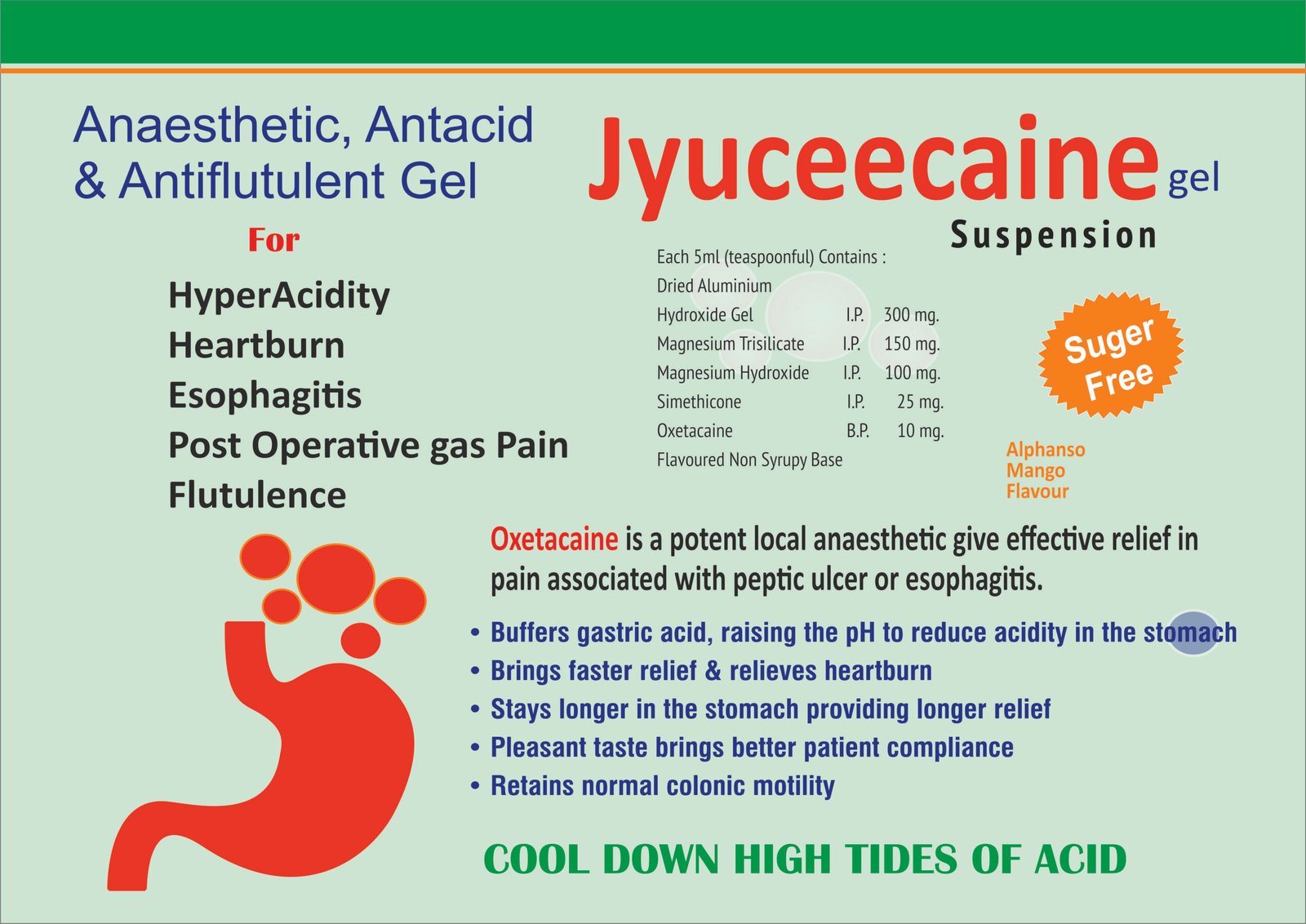
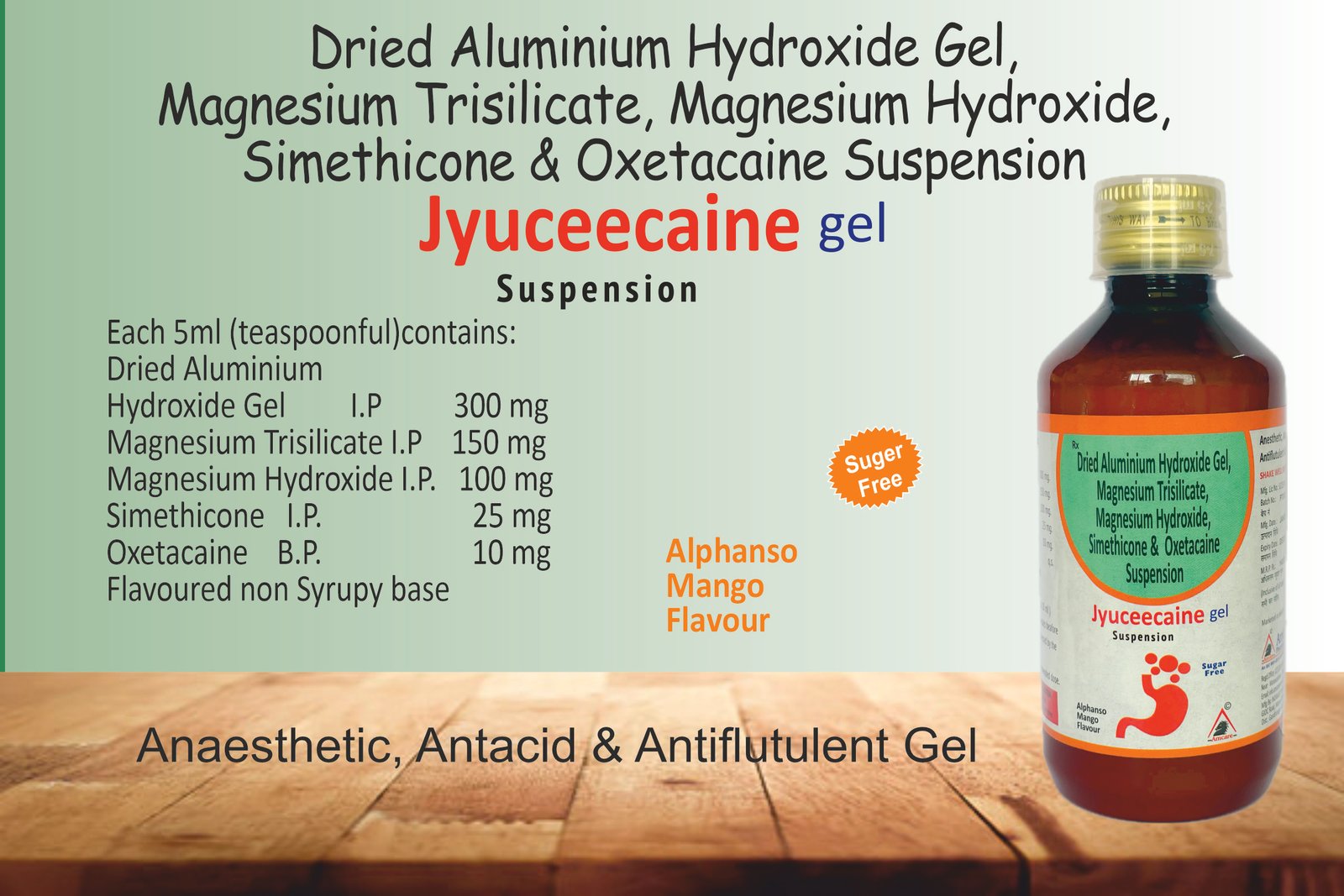
JYUCEECAINE Gel Suspension is an oral gastrointestinal formulation combining antacid, antiflatulent and local anaesthetic actions. The formulation shown in your artwork contains five active ingredients designed to reduce gastric acidity, help relieve gas-related discomfort and provide local relief from burning or painful irritation associated with acid-related gastrointestinal conditions.
The artwork also states Sugar Free, Alphanso Mango Flavour, and identifies the product as an Anaesthetic, Antacid & Antiflatulent Gel.
Amcare’s current product listing shows the same composition and a 170 mL presentation for Jyuceecaine Gel.
1. Product Information
| Parameter | Details |
|---|---|
| Brand Name | JYUCEECAINE Gel |
| Dosage Form | Oral Suspension / Gel |
| Therapeutic Category | Antacid, Antiflatulent & Gastric Anaesthetic |
| Dried Aluminium Hydroxide Gel | 300 mg / 5 mL |
| Magnesium Trisilicate | 150 mg / 5 mL |
| Magnesium Hydroxide | 100 mg / 5 mL |
| Simethicone | 25 mg / 5 mL |
| Oxetacaine | 10 mg / 5 mL |
| Base | Flavoured non-syrupy base |
| Flavour | Alphonso Mango |
| Sugar Status | Sugar Free |
| Pack shown/listed | 170 mL |
| Route | Oral |
The exact 300 mg + 150 mg + 100 mg + 25 mg + 10 mg per 5 mL formulation is also documented in Indian regulatory records for this type of suspension.
2. Composition
Each 5 mL teaspoonful contains:
- Dried Aluminium Hydroxide Gel IP – 300 mg
- Magnesium Trisilicate IP – 150 mg
- Magnesium Hydroxide IP – 100 mg
- Simethicone IP – 25 mg
- Oxetacaine BP – 10 mg
- Flavoured non-syrupy base – q.s.
Product characteristics
- Sugar Free
- Alphonso Mango Flavour
- Oral suspension/gel
- Antacid
- Antiflatulent
- Gastric local anaesthetic
3. What is JYUCEECAINE Gel used for?
JYUCEECAINE may be used for symptomatic relief of acid-related gastrointestinal discomfort, particularly when acidity or gastric irritation is accompanied by gas, bloating or burning/pain.
Potential physician-directed applications include:
- Heartburn
- Hyperacidity
- Acid indigestion
- Sour stomach
- Gastric burning
- Dyspeptic discomfort
- Acid-related epigastric pain
- Gastric irritation
- Gas and bloating associated with indigestion
- Symptomatic relief associated with selected acid-related gastrointestinal conditions
Oxetacaine is used orally, usually in combination with an antacid, for local relief of pain associated with conditions such as peptic ulcer disease or oesophagitis.
The exact approved indication for the JYUCEECAINE brand should follow its current product licence and prescribing information.
4. How JYUCEECAINE Works
JYUCEECAINE contains five active components, each contributing a different pharmacological action.
The formulation provides:
Acid neutralisation + prolonged buffering + gas relief + local anaesthetic action
5. Dried Aluminium Hydroxide Gel – 300 mg
Dried aluminium hydroxide gel is an antacid.
It reacts with gastric hydrochloric acid and helps raise gastric pH, reducing excessive acidity.
Action
Aluminium Hydroxide → neutralises gastric acid → increases gastric pH → reduces acid-related irritation
Aluminium-containing antacids can also have a constipating effect in some individuals.
6. Magnesium Hydroxide – 100 mg
Magnesium hydroxide is another antacid.
It neutralises gastric acid and provides relatively rapid acid-neutralising activity.
Action
Magnesium Hydroxide → reacts with gastric acid → reduces acidity → helps relieve heartburn and acid indigestion
Magnesium salts can have a laxative effect in some patients.
Combining aluminium and magnesium antacids can help balance their differing gastrointestinal effects.
Commercial antacid labels commonly describe aluminium hydroxide and magnesium hydroxide combinations for relief of heartburn, acid indigestion and sour stomach.
7. Magnesium Trisilicate – 150 mg
Magnesium trisilicate is an antacid with relatively prolonged acid-neutralising/buffering activity.
It reacts gradually with gastric acid and contributes to the overall antacid effect of the formulation.
Action
Magnesium Trisilicate → reacts with gastric acid → reduces gastric acidity → contributes to prolonged antacid activity
The combination of aluminium and magnesium-based antacids is intended to provide complementary acid-neutralising effects.
8. Simethicone – 25 mg
Simethicone is an antiflatulent/antifoaming agent.
It works primarily by reducing the surface tension of gas bubbles in the gastrointestinal tract, allowing smaller bubbles to combine and pass more easily.
Action
Simethicone → reduces surface tension of gas bubbles → promotes coalescence and passage of gas → reduces bloating/pressure
Simethicone-containing antacid products are commonly labelled for relief of gas symptoms associated with heartburn, sour stomach and acid indigestion.
9. Oxetacaine – 10 mg
Oxetacaine, also called oxethazaine, is a potent local anaesthetic.
Unlike the antacid ingredients, its primary role is not acid neutralisation.
It acts locally on sensory nerves and can reduce the sensation of burning or pain arising from irritated gastric or oesophageal mucosa.
Action
Oxetacaine → local anaesthetic effect on gastric/oesophageal mucosa → reduced pain/burning sensation
One of the useful characteristics of oxetacaine is its activity in the acidic gastric environment. It has historically been used in antacid preparations for topical relief of pain associated with acid-related conditions.
10. Combined Action
The five ingredients provide complementary actions:
| Ingredient | Primary Role |
|---|---|
| Dried Aluminium Hydroxide Gel | Antacid |
| Magnesium Trisilicate | Antacid / acid buffering |
| Magnesium Hydroxide | Antacid |
| Simethicone | Antiflatulent |
| Oxetacaine | Local gastric anaesthetic |
Overall action
Neutralises excess acid + provides additional buffering + reduces gas/bloating + locally relieves burning/pain
This makes JYUCEECAINE a combination formulation intended for symptomatic gastrointestinal relief.
11. Key Therapeutic Benefits
When appropriately used, JYUCEECAINE may help:
- Neutralise excess gastric acid
- Reduce heartburn
- Relieve acid indigestion
- Reduce sour stomach symptoms
- Relieve gastric burning
- Reduce gas-related pressure and bloating
- Provide local relief from acid-related gastric discomfort
- Provide symptomatic relief from painful gastric irritation
The product should be positioned as symptomatic treatment, not as a cure for the underlying cause of persistent GERD, ulcer disease or other gastrointestinal disorders.
12. Suggested Dosage
The artwork confirms the 5 mL composition, but it does not show a dosage schedule.
Therefore, for the website, I recommend:
Dosage should be taken as directed by the physician. Shake well before use and measure the prescribed quantity using a suitable measuring device.
Some Indian product information for comparable oxetacaine-containing antacid suspensions uses administration after meals and/or at bedtime, but the dosage and frequency can vary with the exact formulation and patient. Therefore, do not copy a generic dose onto the JYUCEECAINE page without confirming the approved product information.
13. How to Take JYUCEECAINE
- Shake the bottle well before each use.
- Measure the prescribed quantity accurately.
- Use the supplied measuring cup/spoon where applicable.
- Do not take more than recommended.
- Follow the physician’s instructions regarding timing in relation to meals.
- Do not use continuously for prolonged periods without medical review.
Comparable antacid suspensions are generally instructed to be shaken before use and measured accurately.
14. Common Side Effects
Possible side effects may include:
Gastrointestinal
- Constipation
- Diarrhoea
- Abdominal discomfort
- Nausea
- Altered bowel habits
- Chalky taste
Other possible effects
- Dry mouth
- Headache
- Dizziness
- Hypersensitivity reactions
The aluminium component may contribute to constipation, while magnesium-containing components may contribute to loose stools or diarrhoea.
15. Important Precautions
Consult a physician before using JYUCEECAINE if the patient has:
- Kidney disease
- Significant electrolyte abnormalities
- A magnesium-restricted diet
- Severe or persistent abdominal pain
- Gastrointestinal bleeding
- Recurrent vomiting
- Difficulty swallowing
- Known allergy to any component
- Long-standing unexplained digestive symptoms
Antacid labels commonly advise medical consultation in patients with kidney disease or on magnesium-restricted diets.
16. Kidney Disease
Patients with impaired kidney function should use aluminium- and magnesium-containing medicines cautiously.
Reduced renal clearance can increase exposure to aluminium or magnesium.
Therefore:
Patients with kidney disease should consult a physician before using JYUCEECAINE.
This is an important website safety statement for aluminium/magnesium antacid products.
17. Drug Interactions
Antacids can interfere with the absorption of certain medicines.
Patients should tell their physician or pharmacist about all medicines they are taking.
Potential interaction concerns include medicines whose absorption is affected by changes in gastrointestinal pH or binding/complex formation with antacid components.
Particular attention may be required with:
- Certain antibiotics
- Iron preparations
- Thyroid medicines
- Bisphosphonates
- Some antifungal medicines
- Certain prescription medicines with pH-dependent absorption
A practical website statement is:
If taking other prescription or OTC medicines, ask your doctor or pharmacist about the appropriate interval between medicines.
Antacid labels specifically warn that antacids can interact with prescription medicines.
18. Pregnancy
If pregnant, planning pregnancy or breastfeeding:
Consult a healthcare professional before using JYUCEECAINE.
Do not recommend routine self-medication during pregnancy without professional advice.
19. Breastfeeding
Consult a doctor before use while breastfeeding.
The healthcare professional can assess the appropriateness of the complete combination rather than considering the antacid ingredients individually.
20. Use in Elderly Patients
Older patients may have:
- Reduced kidney function
- Multiple concomitant medicines
- Greater risk of drug interactions
Therefore, prolonged or repeated use should be medically reviewed.
21. Use in Children
Do not automatically recommend the adult formulation or adult dosing to young children.
Website wording:
Use in children should be only on the advice of a qualified healthcare professional, particularly for prolonged or repeated symptoms.
The exact paediatric dosing for JYUCEECAINE should follow its approved product information.
22. When to Seek Medical Attention
JYUCEECAINE is intended for symptomatic relief and should not delay evaluation of potentially serious disease.
Seek medical attention for:
- Persistent or worsening heartburn
- Difficulty swallowing
- Painful swallowing
- Repeated vomiting
- Vomiting blood
- Black/tarry stools
- Unexplained weight loss
- Severe abdominal pain
- Persistent chest pain
- Symptoms that repeatedly return despite treatment
For comparable antacid products, persistent symptoms beyond approximately two weeks are a reason to seek medical advice rather than continuing self-treatment indefinitely.
23. JYUCEECAINE and Heartburn
Heartburn occurs when acidic stomach contents irritate the oesophagus.
JYUCEECAINE addresses symptoms through several complementary actions:
Antacids
→ neutralise gastric acid
Oxetacaine
→ provides local anaesthetic relief from burning/pain
Simethicone
→ helps relieve gas-related pressure and bloating
Therefore, the formulation can provide multimodal symptomatic relief in appropriately selected patients.
24. JYUCEECAINE and Gas/Bloating
Simethicone is the primary component intended to address gas-related symptoms.
It acts physically on gas bubbles rather than reducing gastric acid.
Result:
Gas bubbles → coalesce → easier passage → reduced pressure/bloating
Simethicone is widely used in antacid/antigas preparations for gas symptoms.
25. Sugar-Free Formulation
The artwork specifically identifies JYUCEECAINE as:
SUGAR FREE
This can be highlighted as a product feature.
However, “sugar free” should not be converted into a claim that the product is suitable for every person with diabetes, because the complete excipient profile and individual clinical circumstances still need consideration.
26. Flavour
Alphonso Mango Flavour
The artwork specifically identifies:
Alphonso Mango Flavour
This can be used as a patient-compliance/product presentation feature without making therapeutic claims.
27. Storage
For the website, use:
- Store in a cool, dry place.
- Protect from excessive heat.
- Keep away from direct sunlight.
- Keep the bottle tightly closed when not in use.
- Keep out of reach of children.
- Do not use after the expiry date.
- Follow the storage conditions printed on the final marketed pack.
Comparable antacid suspensions are generally stored at controlled/room temperature and protected from freezing, but the final JYUCEECAINE label should take precedence.
28. Key Product Features
JYUCEECAINE Gel Suspension
5-in-1 gastrointestinal formulation
- Dried Aluminium Hydroxide Gel 300 mg
- Magnesium Trisilicate 150 mg
- Magnesium Hydroxide 100 mg
- Simethicone 25 mg
- Oxetacaine 10 mg
- Antacid action
- Antiflatulent action
- Local anaesthetic action
- Sugar Free
- Alphonso Mango Flavour
- Oral gel suspension
29. Why Choose JYUCEECAINE?
Multi-action gastrointestinal formulation
JYUCEECAINE combines three functional approaches:
1. Acid neutralisation
Aluminium and magnesium antacids help reduce gastric acidity.
2. Gas relief
Simethicone helps reduce gas-related pressure and bloating.
3. Local pain relief
Oxetacaine provides a local anaesthetic effect on the gastric/oesophageal mucosa.
This combination allows the formulation to address acid, gas and burning/pain symptoms together when clinically appropriate.