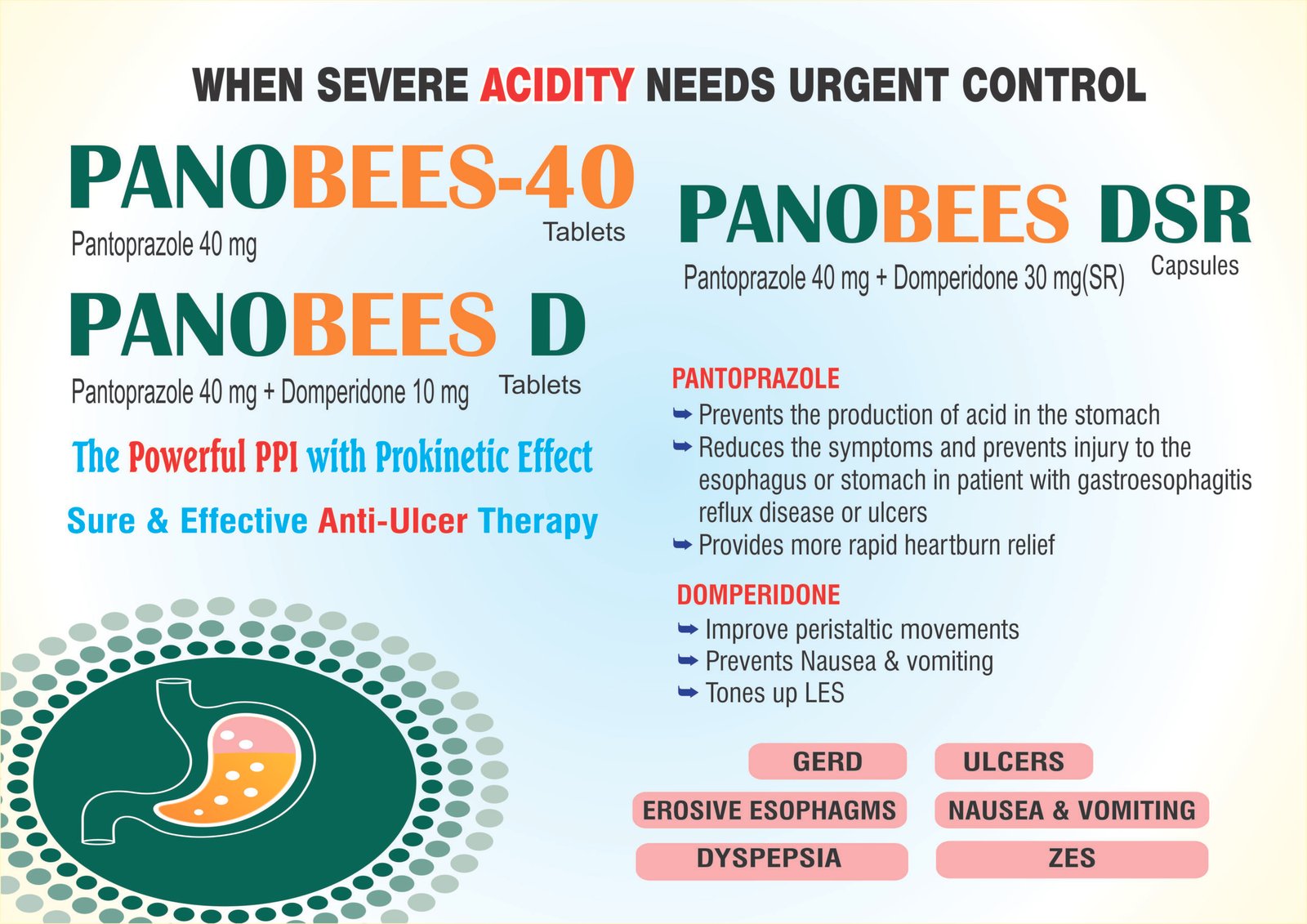
Our Products
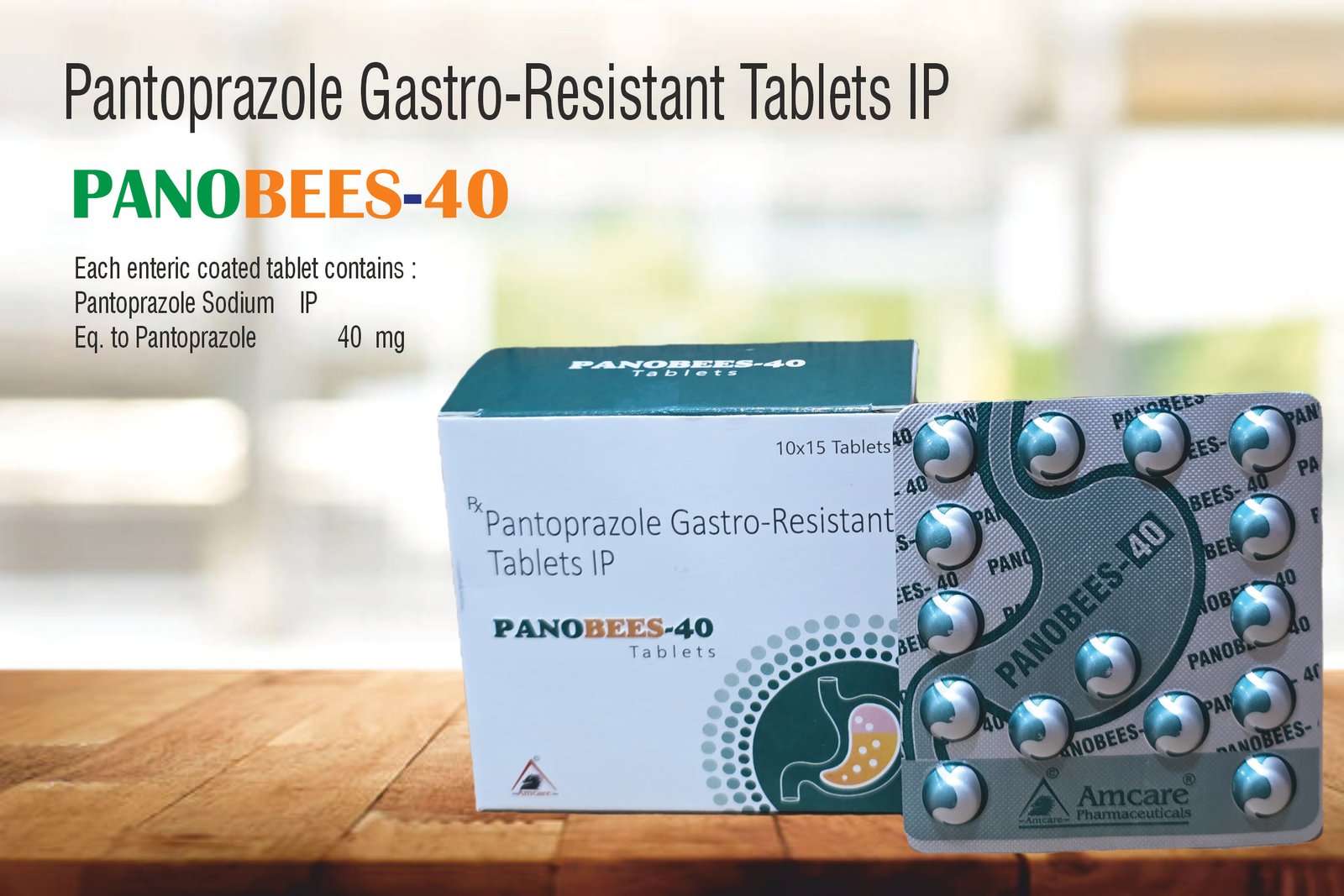
PANOBEES 40
Product Composition
Packaging Details
Product Description
PANOBEES-40 Tablets
Pantoprazole Sodium IP Equivalent to Pantoprazole 40 mg
PANOBEES-40 is a prescription gastro-resistant tablet containing Pantoprazole Sodium IP equivalent to Pantoprazole 40 mg. Pantoprazole is a proton pump inhibitor (PPI) that reduces gastric acid secretion and is used in the management of selected acid-related gastrointestinal conditions, including GERD and erosive esophagitis.
1. Product Information
| Parameter | Details |
|---|---|
| Brand Name | PANOBEES-40 |
| Generic Name | Pantoprazole Sodium |
| Strength | Equivalent to Pantoprazole 40 mg |
| Dosage Form | Gastro-resistant / enteric-coated tablet |
| Route | Oral |
| Therapeutic Category | Proton Pump Inhibitor |
| Pack Size | 10 × 15 Tablets |
| Prescription Status | Rx |
| Therapeutic Area | Gastroenterology |
2. Composition
Each enteric-coated tablet contains:
Pantoprazole Sodium IP
Equivalent to Pantoprazole — 40 mg
Excipients: q.s.
The artwork identifies the product as Pantoprazole Gastro-Resistant Tablets IP.
3. What is PANOBEES-40?
PANOBEES-40 contains Pantoprazole 40 mg, a proton pump inhibitor used to reduce gastric acid production.
Pantoprazole acts on the acid-producing parietal cells of the stomach and inhibits the gastric proton pump responsible for the final stage of acid secretion.
By reducing gastric acid, pantoprazole can help control acid-related symptoms and support healing of acid-related damage to the oesophagus. Pantoprazole delayed-release tablets are indicated for conditions including erosive esophagitis associated with GERD and maintenance of healing in adults with GERD.
4. Mechanism of Action
Pantoprazole – Proton Pump Inhibitor
Pantoprazole is a proton pump inhibitor (PPI).
It inhibits the H⁺/K⁺-ATPase proton pump in gastric parietal cells.
This enzyme represents the final stage of gastric acid secretion.
Pantoprazole
↓
Inhibits H⁺/K⁺-ATPase
↓
Reduces gastric acid secretion
↓
Reduces acid exposure
↓
Supports control and healing of acid-related gastrointestinal conditions
5. Therapeutic Uses
Pantoprazole 40 mg is used in physician-directed treatment of selected acid-related disorders.
Established indications for pantoprazole delayed-release tablets include:
- Erosive esophagitis associated with GERD
- Maintenance of healing of erosive esophagitis
- Pathological hypersecretory conditions
- Zollinger-Ellison syndrome
The exact indication for PANOBEES-40 should follow the current approved Indian prescribing information for the product.
6. PANOBEES-40 for GERD
Gastroesophageal reflux disease (GERD) occurs when gastric contents reflux into the oesophagus and can cause symptoms such as:
- Heartburn
- Acid regurgitation
- Retrosternal discomfort
- Sour taste
- Upper abdominal discomfort
By reducing gastric acid production, pantoprazole can reduce the acidity of refluxed gastric contents and support healing of acid-related oesophageal injury.
Pantoprazole 40 mg is an established dose for short-term treatment of erosive esophagitis associated with GERD in adults.
7. PANOBEES-40 in Erosive Esophagitis
Erosive esophagitis involves inflammation and damage to the oesophageal lining associated with reflux.
Pantoprazole reduces gastric acid secretion, thereby reducing acid exposure of the oesophagus and supporting healing.
For adult erosive esophagitis associated with GERD, current U.S. prescribing information specifies 40 mg once daily for up to 8 weeks, with an additional course considered in selected adults who have not healed after 8 weeks.
For your Indian product page, the patient’s prescribed regimen should follow the applicable local product information.
8. PANOBEES-40 in Hypersecretory Conditions
Pantoprazole is also used for pathological conditions involving excessive gastric acid secretion, including:
Zollinger-Ellison syndrome
This is a condition associated with gastrin-producing tumours that can result in excessive gastric acid secretion.
Pantoprazole can provide potent acid suppression in such conditions.
The dosing regimen for hypersecretory disorders is different from routine GERD treatment and should be individually determined by the physician.
9. Benefits / Therapeutic Role
PANOBEES-40 provides:
Acid suppression
Reduces gastric acid production through proton pump inhibition.
GERD management
Helps control acid-related symptoms and support healing of erosive esophagitis.
Gastro-resistant delivery
The enteric-coated formulation is designed to protect the active drug from degradation in the acidic stomach environment.
40 mg strength
Provides a commonly used therapeutic strength of pantoprazole for physician-directed treatment.
10. Dosage and Administration
The artwork confirms Pantoprazole 40 mg, but does not specify an individual dosing schedule.
Website wording:
Dosage: Take PANOBEES-40 exactly as prescribed by the treating physician. The dose and duration depend on the patient’s diagnosis, severity of symptoms, response to treatment and other clinical factors.
For reference, current pantoprazole delayed-release prescribing information lists 40 mg once daily for up to 8 weeks for adult erosive esophagitis associated with GERD, while other conditions can require different regimens.
Therefore, the dose should not be generalized across all indications.
11. How to Take PANOBEES-40
- Take the tablet orally with water.
- Swallow the tablet whole.
- Do not crush, chew or split the gastro-resistant tablet.
- Follow the dosage schedule prescribed by your doctor.
Current delayed-release pantoprazole labeling instructs patients to swallow the tablet whole and not split, chew or crush it.
12. Missed Dose
If you miss a dose:
- Take it when you remember.
- If it is almost time for the next dose, skip the missed dose.
- Continue with the regular schedule.
- Do not take two doses together to compensate for a missed dose.
13. Common Side Effects
Possible side effects of pantoprazole may include:
- Headache
- Diarrhoea
- Nausea
- Abdominal pain or discomfort
- Flatulence
- Constipation
- Dizziness
Most patients do not experience serious adverse effects, but persistent or severe symptoms should be discussed with a healthcare professional.
14. Important Long-Term Safety Considerations
Long-term PPI therapy should be used when clinically justified and periodically reviewed.
Prolonged acid suppression has been associated with certain risks, including:
- Hypomagnesemia
- Vitamin B12 deficiency in some patients
- Increased risk of certain gastrointestinal infections
- Bone fracture risk in susceptible patients
- Acute interstitial nephritis
Long-term or high-dose PPI therapy may require additional clinical monitoring depending on the patient’s risk factors.
15. Hypomagnesemia
Rare cases of significant low magnesium levels have been reported with prolonged PPI treatment.
Symptoms can include:
- Muscle spasms
- Tremors
- Weakness
- Dizziness
- Abnormal heart rhythm in severe cases
Patients receiving prolonged therapy, particularly those taking other medicines that can lower magnesium, may require medical monitoring.
16. Vitamin B12 Considerations
Long-term suppression of gastric acid may affect the absorption of vitamin B12 in some patients.
Patients receiving prolonged treatment, especially those with additional risk factors for vitamin B12 deficiency, should discuss appropriate monitoring with their healthcare professional.
17. Bone Health
Long-term PPI treatment, particularly at higher doses or with prolonged exposure, has been associated with an increased risk of osteoporosis-related fractures in some studies and regulatory labeling.
Patients with existing osteoporosis or fracture risk should discuss long-term PPI treatment with their physician.
18. Kidney Precautions
Rare cases of acute tubulointerstitial nephritis have been reported with PPIs.
Contact a healthcare professional if symptoms suggestive of kidney problems develop, such as:
- Significant reduction in urine output
- Blood in urine
- Swelling
- Unexplained fatigue
- New kidney-function abnormalities
Patients with existing kidney disease should inform their doctor before treatment.
19. Liver Precautions
Patients with liver disease should inform their healthcare professional before taking PANOBEES-40.
Dose selection and treatment duration may require individual consideration in significant hepatic impairment.
20. Drug Interactions
Tell the doctor about all prescription medicines, OTC medicines and supplements being used.
Pantoprazole can interact with certain medicines through changes in gastric acidity or metabolic pathways.
Particular attention may be required with medicines such as:
- Certain antiretroviral medicines
- Warfarin
- Methotrexate, particularly at high doses
- Digoxin
- Certain medicines requiring acidic gastric conditions for absorption
Rilpivirine
Pantoprazole-containing products are contraindicated with rilpivirine-containing products under the referenced U.S. prescribing information because gastric acid suppression can substantially reduce rilpivirine exposure.
Patients should always provide a complete medication history to their doctor.
21. Contraindications
PANOBEES-40 should not be used in patients with:
- Known hypersensitivity to pantoprazole
- Hypersensitivity to substituted benzimidazoles
- Previous serious allergic reaction to the formulation
Pantoprazole delayed-release labeling also identifies concomitant use with rilpivirine-containing products as a contraindication.
22. Pregnancy
If pregnant, planning pregnancy or trying to conceive, consult a healthcare professional before taking PANOBEES-40.
The medicine should be used during pregnancy only when considered appropriate by the treating clinician.
23. Breastfeeding
Consult a doctor before taking PANOBEES-40 while breastfeeding.
The physician can assess the indication and determine whether pantoprazole is appropriate for the individual patient.
24. Pediatric Use
Pantoprazole delayed-release tablets have established pediatric labeling for certain indications in children 5 years and older, with dosing based partly on body weight.
However, the specific PANOBEES-40 product should not be promoted for pediatric use solely on the basis of the adult 40 mg strength.
Pediatric use should follow the applicable product label and physician’s prescription.
25. Elderly Patients
Pantoprazole can be used in older adults when clinically appropriate.
However, elderly patients may have a greater likelihood of:
- Multiple medicines
- Renal or hepatic impairment
- Long-term PPI exposure
- Nutritional deficiencies
The need for prolonged treatment should therefore be periodically reassessed.
26. Driving and Operating Machinery
Pantoprazole is not generally expected to significantly impair driving ability.
However, if a patient experiences:
- Dizziness
- Visual disturbance
- Weakness
- Other symptoms affecting alertness
they should avoid driving or operating machinery until symptoms resolve.
27. When to Seek Medical Attention
Patients should consult a healthcare professional promptly if they develop:
- Difficulty swallowing
- Painful swallowing
- Persistent vomiting
- Vomiting blood
- Black/tarry stools
- Unexplained weight loss
- Severe or persistent abdominal pain
- Persistent symptoms despite treatment
- Recurrent symptoms after stopping therapy
Seek urgent medical care for:
- Severe allergic reaction
- Difficulty breathing
- Facial or throat swelling
- Severe dizziness or fainting
- Severe muscle spasms or abnormal heartbeat
A symptomatic response to acid suppression does not by itself exclude an underlying serious gastrointestinal condition.
28. Storage
Store PANOBEES-40:
- In a cool, dry place.
- Away from excessive heat and moisture.
- Protected from direct sunlight.
- Out of reach of children.
Keep the tablets in their original packaging until use.
29. Key Features of PANOBEES-40
Pantoprazole 40 mg
A well-established proton pump inhibitor strength.
Gastro-resistant tablet
Designed for appropriate delivery of pantoprazole.
Acid suppression
Inhibits the final stage of gastric acid secretion.
Gastroenterology product
Suitable for physician-directed management of selected acid-related gastrointestinal disorders.
Prescription formulation
The artwork carries the Rx designation.