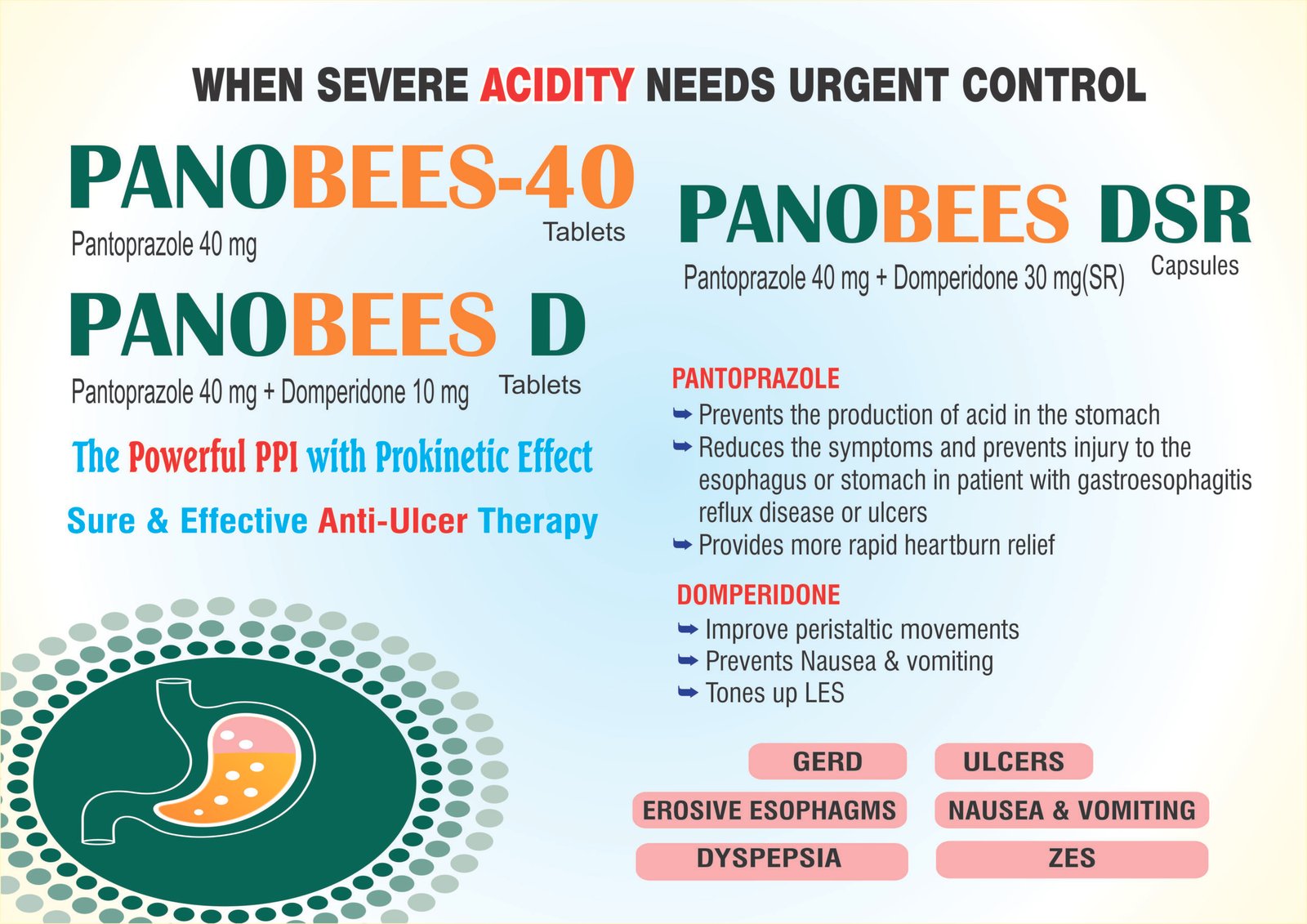
Our Products
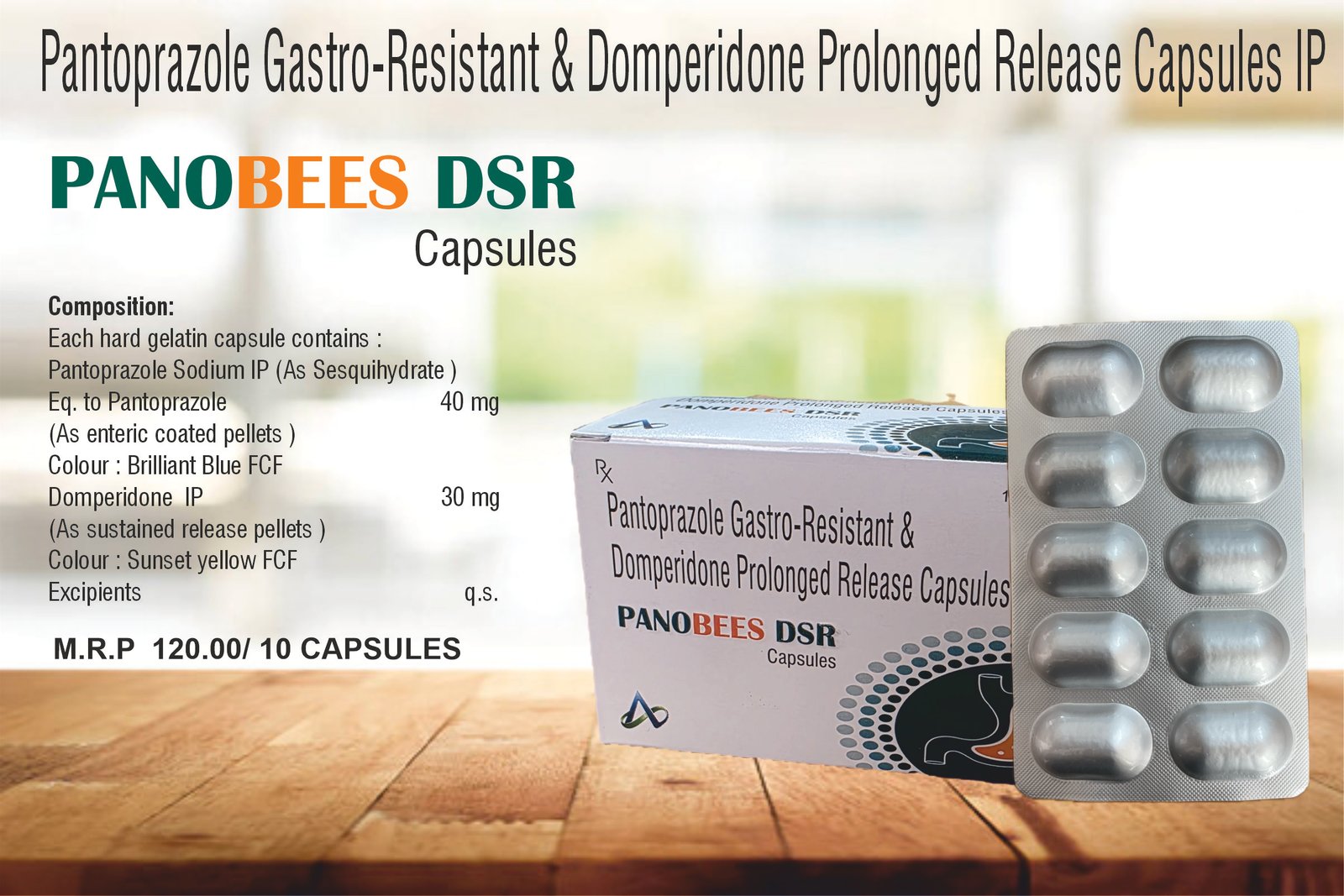
PANOBEES DSR
Product Composition
Packaging Details
Product Description
PANOBEES DSR Capsules
Pantoprazole 40 mg + Domperidone 30 mg Prolonged Release
PANOBEES DSR Capsules are a prescription gastroenterology formulation containing Pantoprazole Sodium IP equivalent to Pantoprazole 40 mg as gastro-resistant pellets and Domperidone IP 30 mg as sustained-release pellets.
The formulation combines gastric acid suppression with peripheral dopamine D₂-receptor antagonist/prokinetic and antiemetic activity.
1. Product Information
| Parameter | Details |
|---|---|
| Brand Name | PANOBEES DSR |
| Generic Name | Pantoprazole + Domperidone |
| Strength | Pantoprazole 40 mg + Domperidone 30 mg |
| Dosage Form | Hard gelatin capsule |
| Pantoprazole Form | Gastro-resistant / enteric-coated pellets |
| Domperidone Form | Sustained-release pellets |
| Route | Oral |
| Category | Prescription medicine |
| Therapeutic Segment | Gastroenterology |
| Manufacturer/Brand | Amcare |
| Pack Size | Verify from approved pack artwork |
2. Composition
Each hard gelatin capsule contains:
Pantoprazole Sodium IP (as Sesquihydrate)
Equivalent to Pantoprazole — 40 mg
(as enteric-coated pellets)
Domperidone IP — 30 mg
(as sustained-release pellets)
Excipients — q.s.
Colours shown on the artwork
- Brilliant Blue FCF
- Sunset Yellow FCF
3. What is PANOBEES DSR?
PANOBEES DSR contains two pharmacologically different components.
Pantoprazole 40 mg
Pantoprazole is a proton pump inhibitor (PPI). It suppresses gastric acid secretion by inhibiting the H⁺/K⁺-ATPase proton pump in gastric parietal cells.
Domperidone 30 mg
Domperidone is a peripheral dopamine D₂-receptor antagonist with prokinetic and antiemetic effects.
The product uses different release technologies:
Pantoprazole → gastro-resistant pellets
Domperidone → sustained-release pellets
This differentiates PANOBEES DSR from a conventional immediate-release combination tablet.
4. Mechanism of Action
Pantoprazole 40 mg
Pantoprazole inhibits the H⁺/K⁺-ATPase proton pump in gastric parietal cells.
This enzyme is responsible for the final step of gastric acid secretion.
Mechanism
Pantoprazole
↓
H⁺/K⁺-ATPase inhibition
↓
Reduced gastric acid secretion
↓
Reduced acid exposure
↓
Support for control and healing of acid-related conditions
Pantoprazole delayed-release formulations have established indications including erosive esophagitis associated with GERD, maintenance of healing of erosive esophagitis, and pathological hypersecretory conditions such as Zollinger-Ellison syndrome.
Domperidone 30 mg
Domperidone blocks peripheral dopamine D₂ receptors.
Its pharmacological effects include:
- Enhancement of upper gastrointestinal motility
- Promotion of gastric emptying
- Peripheral antiemetic activity
- Modulation of upper gastrointestinal function
Because PANOBEES DSR contains domperidone as sustained-release pellets, it should not be assumed to be pharmacologically interchangeable with an immediate-release domperidone tablet.
5. Combined Action
PANOBEES DSR provides two pharmacological actions:
Pantoprazole 40 mg
→ Gastric acid suppression
Domperidone 30 mg sustained release
→ Peripheral dopamine antagonism with prokinetic/antiemetic effects
Overall therapeutic concept
Acid suppression + management of selected associated upper-GI symptoms
The combination should be prescribed only when the physician considers both components appropriate.
6. Therapeutic Uses
Pantoprazole is established for physician-directed treatment of selected acid-related disorders, including:
- Gastroesophageal reflux disease (GERD)
- Erosive esophagitis associated with GERD
- Maintenance of healing of erosive esophagitis
- Pathological hypersecretory conditions
- Zollinger-Ellison syndrome
However, the specific indication for PANOBEES DSR as a fixed-dose prolonged-release combination should be based on its current Indian product licence and approved prescribing information.
Recommended website wording
PANOBEES DSR is intended for physician-directed management of selected gastrointestinal conditions where gastric acid suppression with pantoprazole and an appropriate role for domperidone are clinically considered.
7. Role of Pantoprazole
Pantoprazole provides the acid-suppressive component of the formulation.
It can:
- Reduce gastric acid secretion
- Reduce acid exposure in the oesophagus
- Help control acid-related symptoms
- Support healing of acid-related oesophageal injury
- Maintain healing in appropriate patients
For adult erosive esophagitis associated with GERD, current pantoprazole labeling lists 40 mg once daily for up to 8 weeks; other indications have different regimens.
8. Role of Domperidone
Domperidone provides:
- Peripheral dopamine D₂ receptor blockade
- Prokinetic activity
- Support for upper-GI motility
- Antiemetic activity
However, domperidone requires careful prescribing because regulatory reviews have identified a small increased risk of serious cardiac adverse reactions, particularly in higher-risk patients.
9. Dosage and Administration
The uploaded artwork specifies the strength and release characteristics, but does not provide a dosage schedule.
Recommended product-page wording:
Dosage: Take PANOBEES DSR exactly as prescribed by the treating physician. The dose and duration depend on the patient’s diagnosis, clinical response, concomitant medicines and individual risk factors.
For pantoprazole alone, dosing varies substantially by indication. For example, current labeling lists 40 mg once daily for up to 8 weeks for adult erosive esophagitis associated with GERD, while pathological hypersecretory conditions may require different regimens.
Do not use the pantoprazole-only dosing schedule as the automatic dose for this combination product.
10. How to Take PANOBEES DSR
- Take the capsule orally with water.
- Swallow the capsule whole.
- Do not chew or crush the capsule.
- Do not crush the sustained-release pellets.
- Do not open the capsule and consume the pellets unless specifically permitted by the approved product information.
- Follow the timing instructed by the physician.
Because the capsule contains both gastro-resistant and sustained-release pellets, manipulating the capsule may alter the intended drug-release characteristics.
11. Missed Dose
If a dose is missed:
- Take it when remembered unless the next scheduled dose is close.
- If the next dose is near, skip the missed dose.
- Resume the normal schedule.
- Do not take two doses together.
12. Common Side Effects
Possible adverse effects may include:
Pantoprazole-related
- Headache
- Diarrhoea
- Nausea
- Abdominal discomfort
- Flatulence
- Constipation
- Dizziness
Domperidone-related
- Dry mouth
- Abdominal cramps
- Headache
- Diarrhoea
- Increased prolactin-related effects in some patients
The occurrence and severity of adverse effects vary between individuals.
13. Important Cardiac Safety Warning
Domperidone requires particular caution.
Domperidone has been associated with:
- QT interval prolongation
- Torsades de pointes
- Serious ventricular arrhythmias
- Sudden cardiac death
The risk is particularly relevant in:
- Patients older than 60 years
- Patients receiving higher oral doses
- Patients with underlying cardiac disease
- Patients with electrolyte abnormalities
- Patients taking QT-prolonging medicines
- Patients taking potent CYP3A4 inhibitors
Important for PANOBEES DSR
The capsule contains 30 mg domperidone as a sustained-release formulation.
The EMA’s safety review recommends domperidone at the lowest effective dose for the shortest possible duration, with an adult oral maximum of 30 mg/day under its recommendations.
Therefore, this product should not be presented on the website as an ordinary long-term “acidity” medicine.
14. Domperidone Contraindications and Precautions
Particular caution or avoidance is required in patients with:
- Known QT prolongation
- Significant cardiac conduction abnormalities
- Bradycardia
- Significant electrolyte disturbances
- Certain underlying cardiac diseases
- Congestive heart failure
- Moderate or severe hepatic impairment
- Concomitant use of QT-prolonging medicines
- Concomitant use of potent CYP3A4 inhibitors
15. Drug Interactions
Patients should tell their doctor about all prescription medicines, OTC medicines and supplements.
Important domperidone interactions
Particular attention is required with:
- QT-prolonging medicines
- Certain antiarrhythmics
- Certain macrolide antibiotics
- Certain azole antifungals
- Potent CYP3A4 inhibitors
These combinations may increase domperidone exposure and/or cardiac risk.
16. Pantoprazole Drug Interactions
Pantoprazole may interact with medicines affected by gastric acidity or other pharmacokinetic pathways.
Particular attention may be required with medicines such as:
- Certain antiretroviral medicines
- Warfarin
- High-dose methotrexate
- Digoxin
- Medicines requiring acidic gastric conditions for absorption
A complete medication history should be obtained before treatment.
17. Long-Term Pantoprazole Considerations
Long-term PPI treatment should be used only when clinically justified and periodically reassessed.
Potential concerns associated with prolonged PPI therapy include:
- Hypomagnesemia
- Vitamin B12 deficiency
- Certain gastrointestinal infections
- Bone-fracture risk in susceptible patients
- Acute interstitial nephritis
The need for continued PPI therapy should be periodically reviewed.
18. Liver Precautions
Patients with liver disease should inform their physician before taking PANOBEES DSR.
Domperidone is contraindicated in patients with moderate or severe hepatic impairment under the EMA safety recommendations.
19. Kidney Precautions
Patients with significant renal impairment should inform their physician.
Domperidone’s elimination half-life can be prolonged in severe renal impairment, and repeated dosing may require adjustment of dosing frequency and/or dose.
20. Pregnancy
If pregnant, planning pregnancy or trying to conceive, consult a healthcare professional before taking PANOBEES DSR.
The combination should not be self-medicated during pregnancy.
21. Breastfeeding
Consult a physician before using PANOBEES DSR while breastfeeding.
The clinician should evaluate the indication, duration and potential alternatives.
22. Elderly Patients
Extra caution is appropriate in elderly patients.
Domperidone safety reviews have identified a higher risk of serious cardiac adverse reactions in patients above 60 years of age.
23. Pediatric Use
PANOBEES DSR should not be routinely promoted for pediatric use unless the specific product, formulation, strength and indication are authorized for the relevant pediatric population.
The presence of pantoprazole 40 mg does not by itself establish pediatric suitability for this combination.
24. Driving and Operating Machinery
Patients who experience:
- Dizziness
- Weakness
- Headache
- Other symptoms affecting alertness
should avoid driving or operating machinery until they know how the medicine affects them.
25. When to Seek Medical Attention
Patients should consult a healthcare professional for:
- Persistent or worsening heartburn
- Difficulty swallowing
- Painful swallowing
- Persistent vomiting
- Unexplained weight loss
- Vomiting blood
- Black/tarry stools
- Severe abdominal pain
- Persistent symptoms despite treatment
Seek urgent medical attention for:
- Fainting
- Severe dizziness
- Palpitations
- Rapid or irregular heartbeat
- Difficulty breathing
- Facial/lip/tongue swelling
- Severe allergic reaction
26. Storage
Store PANOBEES DSR:
- In a cool, dry place.
- Protected from excessive moisture.
- Away from direct sunlight and excessive heat.
- Out of reach of children.
Keep the capsules in the original packaging until use.
27. Key Features of PANOBEES DSR
Pantoprazole 40 mg
Provides gastric acid suppression through proton pump inhibition.
Domperidone 30 mg
Provides peripheral dopamine D₂ receptor antagonist activity.
Gastro-resistant pellets
Pantoprazole is presented as enteric-coated/gastro-resistant pellets.
Sustained-release pellets
Domperidone is presented as sustained-release pellets.
Dual-component formulation
Combines acid suppression with a second pharmacological action.
Prescription product
The artwork carries the Rx designation.