Our Products
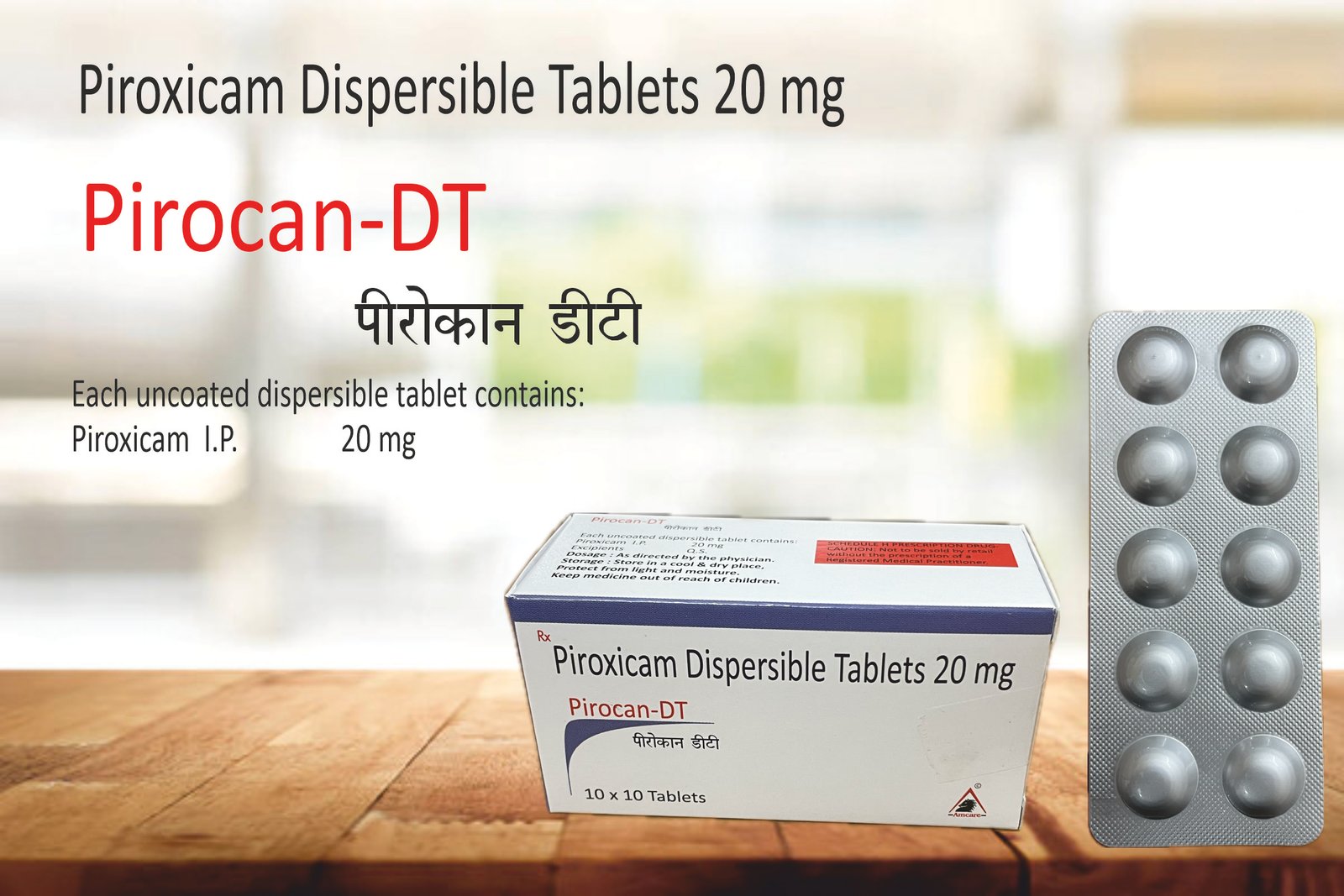
Pirocan-DT
Product Composition
Packaging Details
Product Description
PIROCAN-DT Tablets – Piroxicam 20 mg
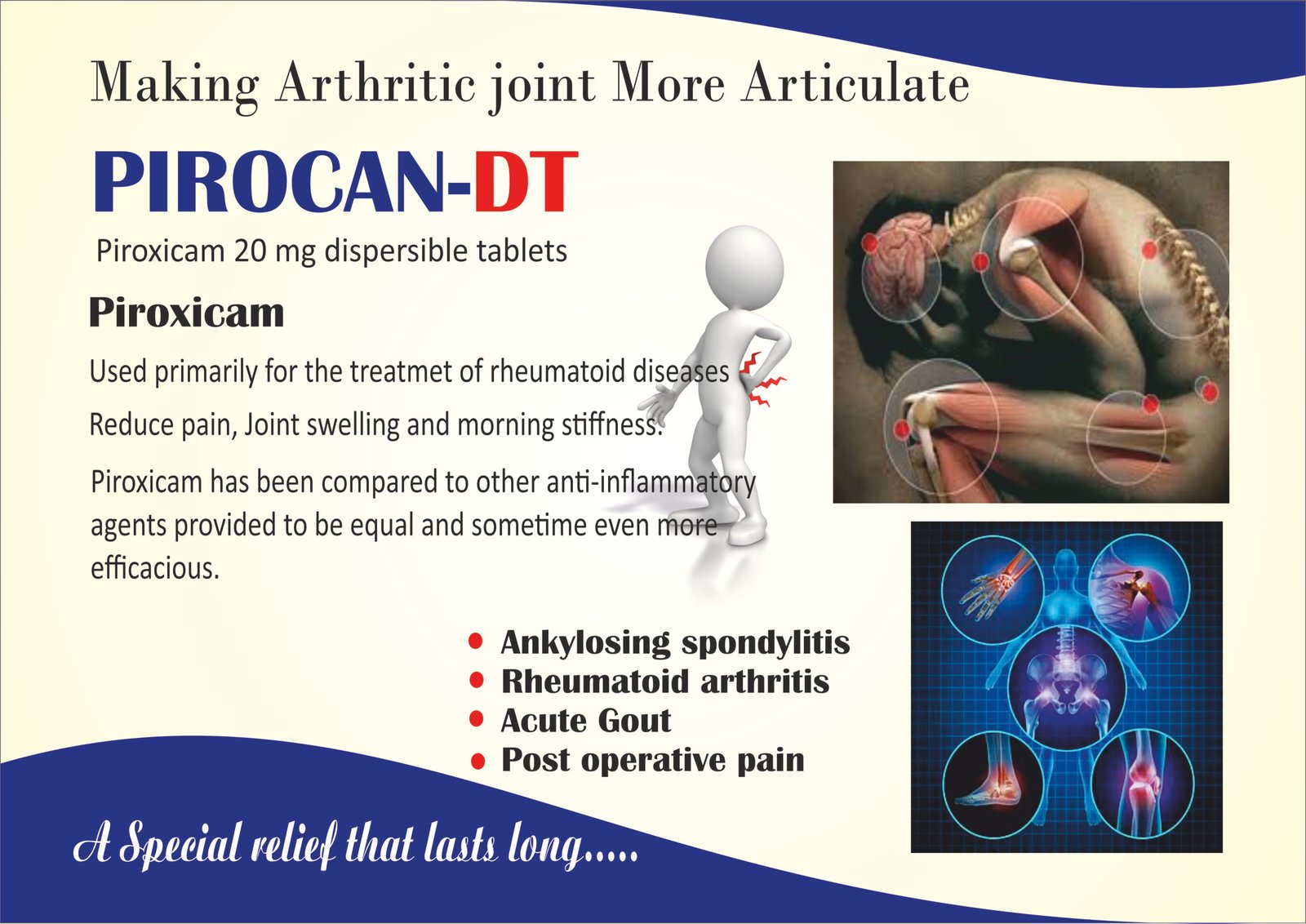
PIROCAN-DT Tablets by Amcare Pharmaceuticals contain Piroxicam IP 20 mg in an uncoated dispersible tablet formulation. Piroxicam is a non-steroidal anti-inflammatory drug (NSAID) used for relief of pain and inflammation associated with conditions such as osteoarthritis and rheumatoid arthritis.
Because piroxicam has important gastrointestinal, cardiovascular and renal safety considerations, it should be used only on the advice of a qualified healthcare professional, at the lowest effective dose and for the shortest appropriate duration.
PIROCAN-DT Tablets Composition
| Ingredient | Quantity per Tablet |
|---|---|
| Piroxicam IP | 20 mg |
| Excipients | q.s. |
Product Strength
Piroxicam 20 mg per uncoated dispersible tablet
Product Details
| Product Information | Details |
|---|---|
| Brand Name | PIROCAN-DT |
| Generic Name | Piroxicam |
| Strength | 20 mg |
| Dosage Form | Uncoated Dispersible Tablet |
| Route | Oral |
| Therapeutic Category | NSAID / Anti-inflammatory / Analgesic |
| Pack Size | 10 × 10 Tablets |
| Company | Amcare Pharmaceuticals |
| Prescription Status | Prescription medicine |
What is PIROCAN-DT Used For?
PIROCAN-DT contains piroxicam, an NSAID that reduces pain and inflammation.
Piroxicam is indicated for relief of the signs and symptoms of:
- Osteoarthritis
- Rheumatoid arthritis
It may therefore be prescribed when inflammatory pain and stiffness are associated with these conditions.
Other Painful Conditions
Although NSAIDs are commonly used for different types of pain, piroxicam should not be promoted as a general-purpose painkiller. Its relatively long duration of action and safety profile mean that treatment should be individualized by a physician.
How Does PIROCAN-DT Work?
Piroxicam belongs to the non-steroidal anti-inflammatory drug (NSAID) class.
It reduces the production of prostaglandins involved in pain and inflammation by inhibiting cyclooxygenase (COX) enzymes.
This can help reduce:
- Pain
- Inflammation
- Joint stiffness
- Swelling associated with inflammatory joint conditions
The therapeutic effect of piroxicam in arthritis can develop over time rather than necessarily providing immediate maximum relief.
PIROCAN-DT for Osteoarthritis
Osteoarthritis can cause:
- Joint pain
- Stiffness
- Reduced mobility
- Inflammation around affected joints
Piroxicam can provide symptomatic relief of the signs and symptoms of osteoarthritis.
It does not cure the underlying structural changes of osteoarthritis.
PIROCAN-DT for Rheumatoid Arthritis
Rheumatoid arthritis is an inflammatory autoimmune joint condition that can cause pain, swelling and stiffness.
Piroxicam may be prescribed to provide symptomatic relief of pain and inflammation associated with rheumatoid arthritis.
It should not be considered a disease-modifying treatment for rheumatoid arthritis.
Dosage and Administration
The dose should be determined by the prescribing physician.
For adult osteoarthritis or rheumatoid arthritis, the current U.S. prescribing information for piroxicam specifies 20 mg once daily, while emphasizing use of the lowest effective dose for the shortest duration consistent with treatment goals.
Since PIROCAN-DT contains 20 mg per tablet, the appropriate number and duration of tablets should be determined by the doctor.
Important
Do not self-medicate with piroxicam 20 mg for routine pain.
Piroxicam has significant gastrointestinal and cardiovascular warnings, so the benefits and risks should be assessed before treatment.
How to Take PIROCAN-DT?
As this is a dispersible tablet, follow the specific instructions supplied with the approved product packaging.
General instructions:
- Take only as prescribed.
- Use the tablet according to the approved dispersible-tablet instructions.
- Do not exceed the prescribed dose.
- Do not combine with another NSAID unless specifically instructed.
- Take with food if advised by your healthcare professional, particularly if you experience stomach irritation.
- Do not use for longer than prescribed.
Side Effects of PIROCAN-DT
Like other NSAIDs, piroxicam can cause side effects.
Common or relatively frequent effects
Possible effects include:
- Indigestion
- Stomach discomfort
- Nausea
- Vomiting
- Diarrhea
- Dizziness
- Headache
- Skin rash
NSAIDs can cause gastrointestinal symptoms including stomach pain, indigestion, nausea and diarrhea.
Serious Side Effects
Piroxicam can cause serious adverse effects, particularly with prolonged use or in people with risk factors.
Seek urgent medical attention if symptoms suggest:
Gastrointestinal bleeding
- Severe stomach pain
- Vomiting blood
- Black, tar-like stools
- Unexplained weakness or pallor
NSAIDs, including piroxicam, can cause ulceration, bleeding and perforation of the gastrointestinal tract, potentially without warning symptoms.
Cardiovascular problems
NSAIDs can increase the risk of serious cardiovascular thrombotic events, including myocardial infarction and stroke.
Kidney problems
Seek medical advice for:
- Reduced urine output
- Swelling of the legs or ankles
- Unexplained shortness of breath
- Blood in urine
Piroxicam can affect renal function, particularly in people with kidney disease, dehydration, heart failure or other risk factors.
Severe allergic reaction
Emergency attention is required for:
- Facial or throat swelling
- Difficulty breathing
- Severe rash
- Sudden wheezing
Precautions and Warnings
PIROCAN-DT should be used cautiously or avoided in certain patients.
Tell your doctor if you have:
- Previous stomach ulcer or gastrointestinal bleeding
- Kidney disease
- Liver disease
- Heart failure
- High blood pressure
- Asthma
- Cardiovascular disease
- Dehydration
- Previous allergic reaction to aspirin or another NSAID
Piroxicam is contraindicated in people with known hypersensitivity to piroxicam and in patients who have experienced asthma, urticaria or other allergic-type reactions after aspirin or other NSAIDs.
PIROCAN-DT and Stomach Safety
One of the most important safety considerations with piroxicam is gastrointestinal toxicity.
NSAIDs can cause:
- Gastritis
- Ulcers
- Gastrointestinal bleeding
- Gastrointestinal perforation
The risk is higher in older patients and those with a previous history of peptic ulcer disease or GI bleeding.
Patients should tell their doctor about any history of ulcers or gastrointestinal bleeding before starting treatment.
PIROCAN-DT and Kidney Function
Piroxicam can affect kidney function, especially in patients who already have:
- Renal impairment
- Heart failure
- Liver impairment
- Dehydration
- Low circulating blood volume
Renal function may need to be monitored in higher-risk patients.
PIROCAN-DT and Blood Pressure
NSAIDs can cause fluid retention and may interfere with the blood-pressure-lowering effect of some antihypertensive medicines.
Patients taking treatment for hypertension should inform their doctor before using piroxicam.
Drug Interactions
Piroxicam can interact with several medicines.
Other NSAIDs
Do not combine piroxicam with another NSAID unless specifically prescribed.
Examples include:
- Ibuprofen
- Diclofenac
- Naproxen
- Aspirin at analgesic doses
- Other piroxicam-containing medicines
Using multiple NSAIDs can increase the risk of adverse effects.
Anticoagulants
Medicines such as warfarin can increase bleeding risk when combined with NSAIDs.
Corticosteroids
Concomitant corticosteroid therapy can increase gastrointestinal risk.
Antihypertensive Medicines
NSAIDs may reduce the effectiveness of some blood-pressure medicines.
Diuretics
Piroxicam may reduce the natriuretic effect of some diuretics and may increase renal risk in susceptible patients.
Digoxin
Concomitant piroxicam can increase serum digoxin concentrations and prolong its half-life, requiring appropriate monitoring.
Always provide your doctor/pharmacist with a complete list of medicines and supplements you take.
PIROCAN-DT During Pregnancy
Piroxicam should not be used casually during pregnancy.
Current prescribing information warns about fetal risks with NSAID use during pregnancy. NSAID use around 20–30 weeks may cause fetal renal dysfunction/oligohydramnios, and use at approximately 30 weeks and later should be avoided because of additional fetal cardiovascular risks.
If you are pregnant, planning pregnancy or trying to conceive, consult your physician before using PIROCAN-DT.
PIROCAN-DT During Breastfeeding
If you are breastfeeding, consult your physician before taking piroxicam.
The physician can determine whether another anti-inflammatory medicine may be more appropriate based on the clinical situation.
PIROCAN-DT and Driving
Piroxicam can cause dizziness or other symptoms that may affect alertness in some individuals.
If you experience dizziness or impaired alertness:
- Do not drive.
- Avoid operating machinery.
- Avoid activities requiring full concentration.
Who Should Avoid Self-Medication with PIROCAN-DT?
PIROCAN-DT should not be self-used by people with unexplained pain.
Particular caution is needed in people with:
- Previous stomach ulcer or bleeding
- Kidney disease
- Severe heart failure
- Significant cardiovascular disease
- NSAID allergy
- Aspirin-sensitive asthma
- Pregnancy
- Concurrent anticoagulant therapy
Piroxicam is contraindicated after CABG surgery and in patients with certain NSAID hypersensitivity reactions.
Key Features of PIROCAN-DT
Piroxicam 20 mg
Each tablet contains Piroxicam IP 20 mg.
Dispersible Tablet
The product is supplied as an uncoated dispersible tablet.
NSAID Formulation
Piroxicam belongs to the non-steroidal anti-inflammatory drug class.
Arthritis Applications
Piroxicam is indicated for symptomatic relief in osteoarthritis and rheumatoid arthritis.
10 × 10 Pack
The supplied artwork shows a 10 × 10 tablet pack.
Why Choose PIROCAN-DT by Amcare Pharmaceuticals?
PIROCAN-DT Tablets provide:
- Piroxicam IP
- 20 mg strength
- Dispersible tablet formulation
- Oral administration
- Convenient 10 × 10 pack
- Physician-directed NSAID therapy
The medicine should be prescribed according to the patient’s diagnosis, risk factors and treatment requirements.