Our Products
Rabocin-LSR
Product Composition
Packaging Details
Product Description
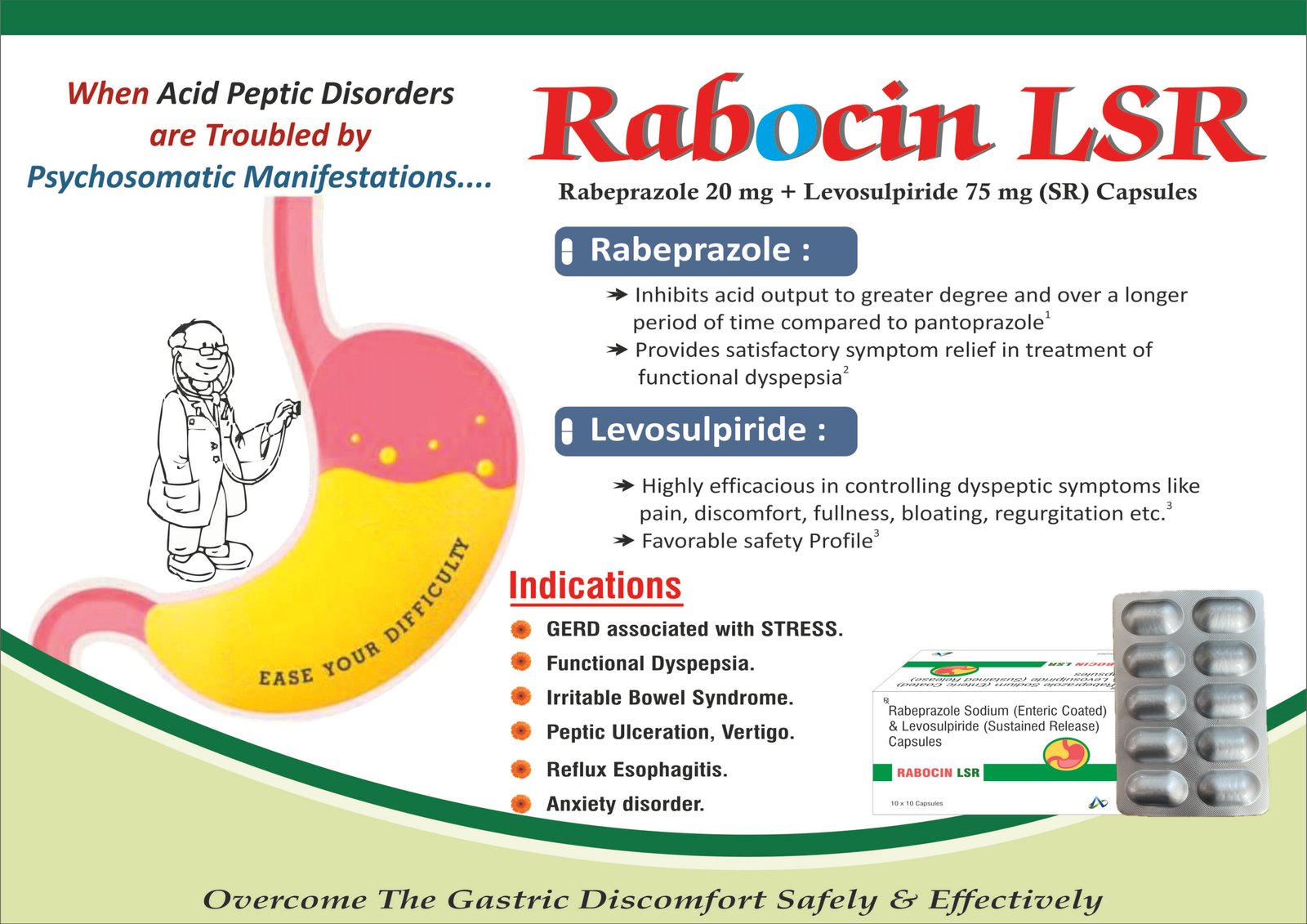
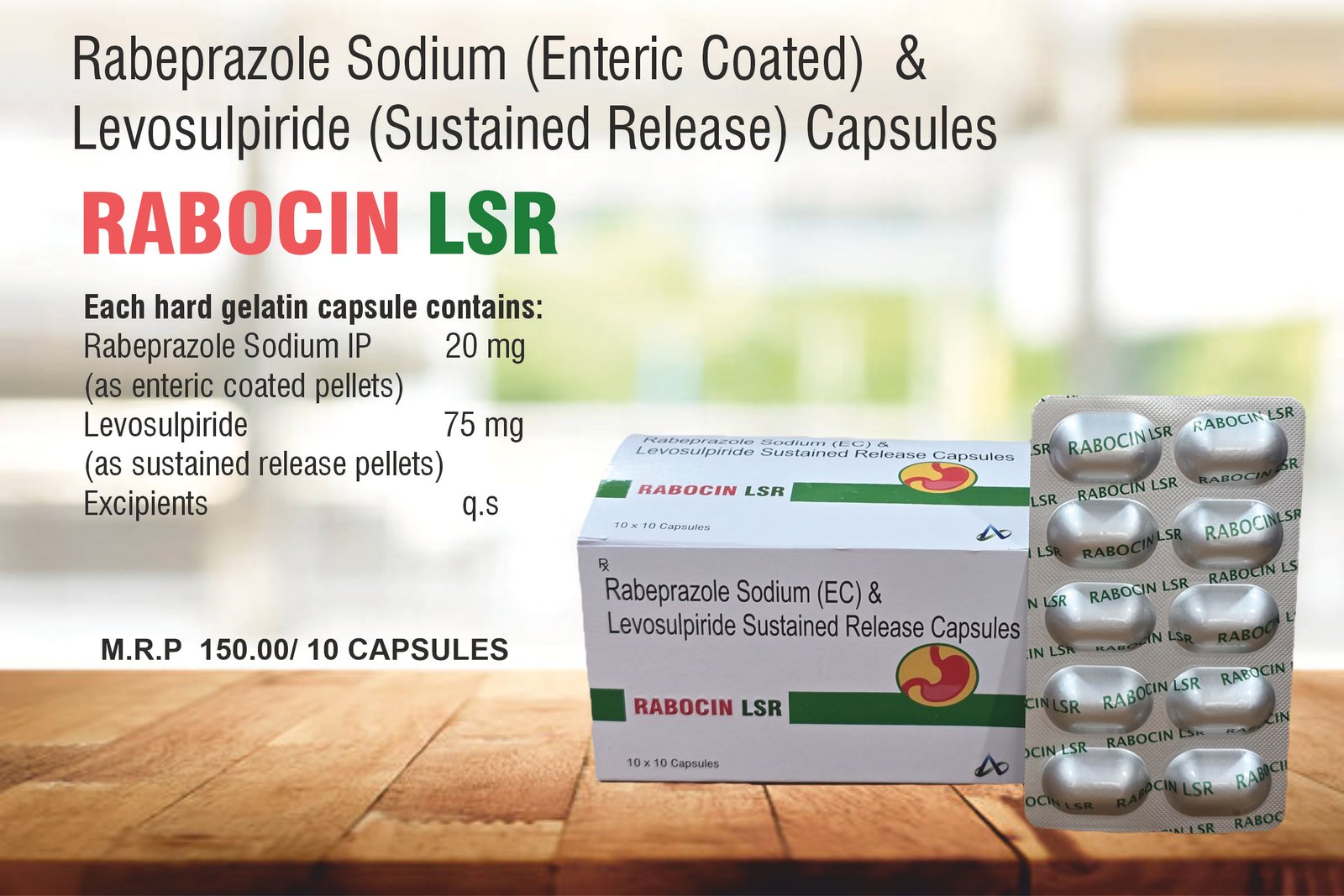
RABOCIN LSR Capsules
Rabeprazole Sodium 20 mg (Enteric Coated) + Levosulpiride 75 mg (Sustained Release)
RABOCIN LSR is a prescription gastrointestinal capsule combining an acid-suppressing proton-pump inhibitor, Rabeprazole Sodium 20 mg, with the prokinetic agent Levosulpiride 75 mg sustained release. The formulation is designed to address acid-related symptoms together with impaired gastrointestinal motility in selected patients.
The uploaded artwork shows 10 × 10 capsules and an Rx prescription marking.
1. Product Information
| Parameter | Details |
|---|---|
| Brand Name | RABOCIN LSR |
| Generic Name | Rabeprazole Sodium + Levosulpiride |
| Dosage Form | Hard Gelatin Capsules |
| Rabeprazole Sodium | 20 mg |
| Rabeprazole Form | Enteric-coated pellets |
| Levosulpiride | 75 mg |
| Levosulpiride Form | Sustained-release pellets |
| Pack Size | 10 × 10 Capsules |
| Prescription Status | Rx |
| Therapeutic Area | Gastrointestinal |
The exact Rabeprazole 20 mg + Levosulpiride 75 mg formulation is documented in CDSCO’s historical FDC records, including the enteric-coated rabeprazole/sustained-release levosulpiride presentation.
2. Composition
Each hard gelatin capsule contains:
- Rabeprazole Sodium IP – 20 mg
- As enteric-coated pellets
- Levosulpiride – 75 mg
- As sustained-release pellets
- Excipients – q.s.
The composition shown on your artwork corresponds to the Rabeprazole 20 mg + Levosulpiride 75 mg sustained-release combination documented in Indian regulatory records.
3. What is RABOCIN LSR used for?
RABOCIN LSR may be prescribed for selected patients with gastrointestinal conditions where acid suppression and improvement of gastric motility are both clinically relevant.
Potential physician-directed applications include:
- Gastroesophageal reflux disease (GERD)
- Acid reflux associated with delayed gastric emptying
- Heartburn associated with acid reflux
- Selected functional dyspepsia
- Upper gastrointestinal symptoms associated with impaired motility
- Selected reflux symptoms inadequately controlled with acid suppression alone
Importantly, the exact indication for the marketed RABOCIN LSR product should follow its current approved product information/licence rather than assuming that every possible indication of either ingredient applies to the combination.
CDSCO records specifically document a Rabeprazole 20 mg + Levosulpiride 75 mg formulation, while current CDSCO guidance makes clear that modified-release dosage forms and new/modified claims are subject to regulatory approval requirements.
4. How RABOCIN LSR Works
Rabeprazole Sodium 20 mg
Rabeprazole is a proton-pump inhibitor (PPI).
It suppresses gastric acid secretion by inhibiting the H⁺/K⁺-ATPase proton pump in gastric parietal cells.
Main action:
Rabeprazole → inhibits gastric proton pump → reduces gastric acid secretion
This helps reduce acid exposure and supports healing of acid-related gastrointestinal mucosal injury.
Rabeprazole 20 mg is used in several acid-related conditions, including symptomatic GERD, erosive/ulcerative GERD and duodenal ulcers, depending on the indication.
5. Levosulpiride 75 mg Sustained Release
Levosulpiride is a dopamine D₂ receptor antagonist with prokinetic activity.
Its gastrointestinal effects are associated with modulation of dopaminergic pathways involved in gastrointestinal motility.
Main action:
Levosulpiride → D₂ receptor antagonism → improved gastrointestinal motility → enhanced gastric emptying
This may be useful when symptoms are associated with impaired gastric motility or functional gastrointestinal disturbances.
Levosulpiride has been studied/used in functional dyspepsia and other gastrointestinal motility disorders, but its dopaminergic activity can also produce adverse effects such as hyperprolactinaemia and extrapyramidal symptoms.
6. Combined Action
RABOCIN LSR provides two complementary pharmacological actions:
① Acid suppression
Rabeprazole 20 mg
Reduces gastric acid secretion.
② Prokinetic action
Levosulpiride 75 mg SR
Supports gastrointestinal motility.
Overall therapeutic concept
Reduced acid production + improved gastrointestinal motility
This combination may therefore be considered by a physician when reflux or upper-GI symptoms involve both acid-related pathology and motility-related symptoms.
7. Key Therapeutic Benefits
When appropriately prescribed, the combination may help with:
- Reduction of excessive gastric acid secretion
- Relief of acid-related reflux symptoms
- Reduction of heartburn associated with acid reflux
- Improvement of gastric motility
- Support of gastric emptying
- Management of selected dyspeptic symptoms
- Management of selected GERD patients who require a prokinetic component
Avoid marketing claims such as “instant relief,” “100% cure,” “permanent cure,” or “best GERD medicine.”
8. Suggested Dosage
Product-specific dosage
The artwork establishes the strength as:
Rabeprazole Sodium 20 mg + Levosulpiride 75 mg SR per capsule.
For the website, I recommend:
Dosage and duration should be determined by the treating physician according to the patient’s diagnosis, age, clinical response and other medicines being taken.
A comparable Indian professional product information document for this exact-strength combination specifies once-daily administration for GERD, but the dosage statement for RABOCIN LSR should ultimately follow Amcare’s approved product information/licence.
9. How to Take RABOCIN LSR
- Take the capsule exactly as prescribed.
- Swallow the capsule whole with water.
- Do not crush, chew or open the capsule, because it contains enteric-coated and sustained-release components.
- If prescribed before food, take it according to the physician’s instructions.
- Do not take additional doses to compensate for a missed dose unless instructed.
Rabeprazole delayed-release formulations are generally swallowed whole; administration requirements can vary by indication.
10. Common Side Effects
Possible adverse effects may include:
Gastrointestinal
- Abdominal discomfort
- Nausea
- Diarrhoea
- Constipation
- Flatulence
- Dry mouth
Neurological
- Headache
- Dizziness
- Drowsiness in some patients
Levosulpiride-related
- Restlessness
- Sedation/drowsiness
- Extrapyramidal symptoms
- Increased prolactin
- Breast tenderness or enlargement
- Galactorrhoea
- Menstrual disturbances
Levosulpiride’s dopamine antagonism has been associated with hyperprolactinaemia and extrapyramidal adverse effects.
11. Important Safety Information
Levosulpiride and prolactin
Because levosulpiride blocks dopamine D₂ receptors, it can increase prolactin levels.
Patients should inform their doctor if they develop:
- Breast discharge
- Breast enlargement
- Menstrual irregularities
- Sexual dysfunction
- Unexplained breast tenderness
Extrapyramidal reactions
Levosulpiride may produce dopamine-blockade-related movement disorders in susceptible individuals.
Seek medical advice if there is:
- Muscle stiffness
- Tremor
- Abnormal involuntary movements
- Unusual facial movements
- Restlessness
- Muscle spasms
12. Who Should Use RABOCIN LSR With Caution?
Tell the doctor before using this medicine if the patient has:
- Liver disease
- Kidney disease
- Parkinsonian disorders or movement disorders
- History of seizures
- Prolactin-dependent disorders
- Breast disorders associated with elevated prolactin
- Gastrointestinal obstruction or bleeding
- Known allergy to PPIs or levosulpiride
- Significant cardiac disease
- A history of serious adverse reactions to prokinetic medicines
13. Drug Interactions
The treating physician should know about all prescription, OTC and herbal medicines being used.
Particular attention may be required with:
- Medicines affecting gastric pH
- Drugs metabolized through CYP pathways
- Medicines affecting dopamine pathways
- Antipsychotic medicines
- Other prokinetic/antiemetic medicines
- Medicines that may cause neurological adverse effects
- Certain medicines whose absorption depends on gastric acidity
Rabeprazole can also affect the absorption or exposure of some medicines because it changes gastric acidity. PPIs have clinically important interaction considerations with certain drugs.
14. Pregnancy and Breastfeeding
Pregnancy
Use during pregnancy only when considered appropriate by the treating physician.
Breastfeeding
The patient should consult the physician before using RABOCIN LSR while breastfeeding.
This is particularly important because the combination contains a dopamine antagonist with systemic effects.
15. Elderly Patients
Older patients may be more susceptible to adverse drug reactions.
The physician may consider:
- Existing medical conditions
- Concomitant medicines
- Kidney and liver function
- Neurological effects
- Risk of movement disorders
16. Liver and Kidney Impairment
Patients with significant hepatic or renal impairment should inform their physician before treatment.
The prescriber may need to determine whether dose modification, alternative therapy or additional monitoring is appropriate.
17. When to Seek Immediate Medical Attention
Stop taking the medicine and seek urgent medical attention for symptoms such as:
- Difficulty breathing
- Facial or throat swelling
- Severe allergic reaction
- Fainting
- Severe involuntary movements
- Severe muscle rigidity
- Persistent abnormal movements
- Gastrointestinal bleeding
- Black/tarry stools
- Vomiting blood
- Severe or persistent abdominal pain
18. Long-Term PPI Considerations
Long-term proton-pump inhibitor treatment should be periodically reviewed by the treating physician.
Depending on duration and patient risk factors, prolonged PPI treatment may be associated with issues such as:
- Low magnesium
- Vitamin B12 deficiency
- Increased fracture risk in susceptible patients
- Certain gastrointestinal infections
- Kidney-related adverse effects
The appropriate duration should therefore be based on the underlying diagnosis rather than continuing treatment indefinitely without review.
19. What RABOCIN LSR Does Not Do
RABOCIN LSR should not be presented as:
❌ A permanent cure for GERD
❌ A substitute for diagnostic evaluation of persistent reflux
❌ A medicine for every type of abdominal pain
❌ A treatment that should be continued indefinitely without medical review
❌ A replacement for emergency treatment of gastrointestinal bleeding
20. Lifestyle Measures for GERD Patients
Alongside prescribed treatment, appropriate patients may benefit from:
- Avoiding very large meals
- Limiting foods that consistently trigger symptoms
- Avoiding lying down immediately after meals
- Maintaining a healthy body weight
- Avoiding smoking
- Limiting alcohol where relevant
- Following an individualized dietary plan
- Taking prescribed medicines consistently
Lifestyle recommendations should be individualized rather than presented as mandatory for every patient.
21. Storage
Store RABOCIN LSR:
- In a cool, dry place
- Away from excessive heat and moisture
- Away from direct sunlight
- Out of reach of children
- In the original packaging
Do not use capsules after the expiry date.
22. Key Product Features
RABOCIN LSR
Dual-action gastrointestinal formulation
- Rabeprazole Sodium 20 mg
- Levosulpiride 75 mg SR
- Enteric-coated rabeprazole pellets
- Sustained-release levosulpiride pellets
- Hard gelatin capsule
- Prescription medicine
- 10 × 10 capsule pack
- Designed for physician-directed GI therapy