Our Products
Relievin
Product Composition
Packaging Details
Product Description
elievin Gel – Complete Product Information
Relievin Gel by Amcare Pharmaceuticals is a topical pain-relief formulation containing Diclofenac Diethylamine, Linseed Oil, Methyl Salicylate and Menthol. It is designed for external application to provide localized symptomatic relief from selected muscle and joint pain.
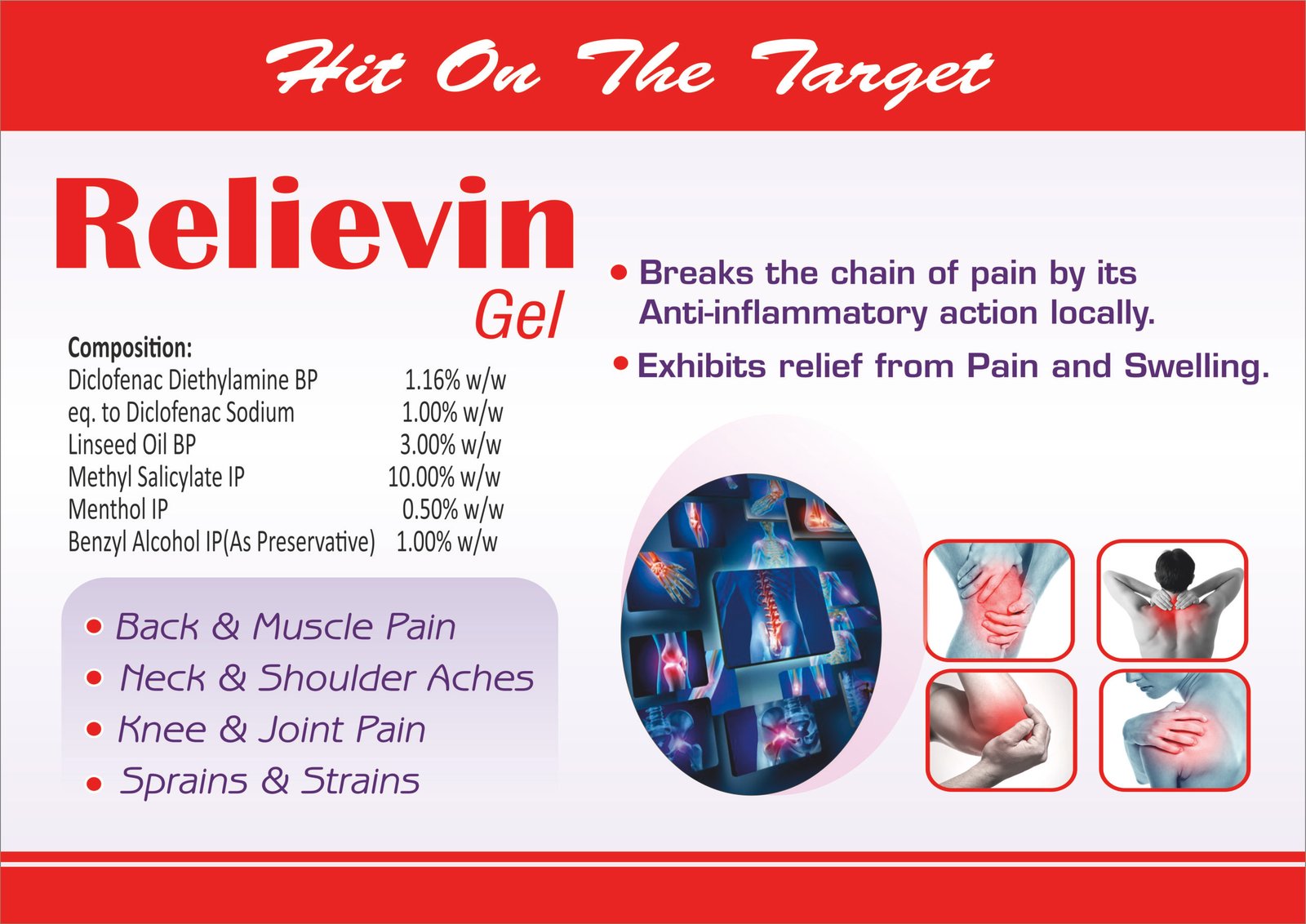
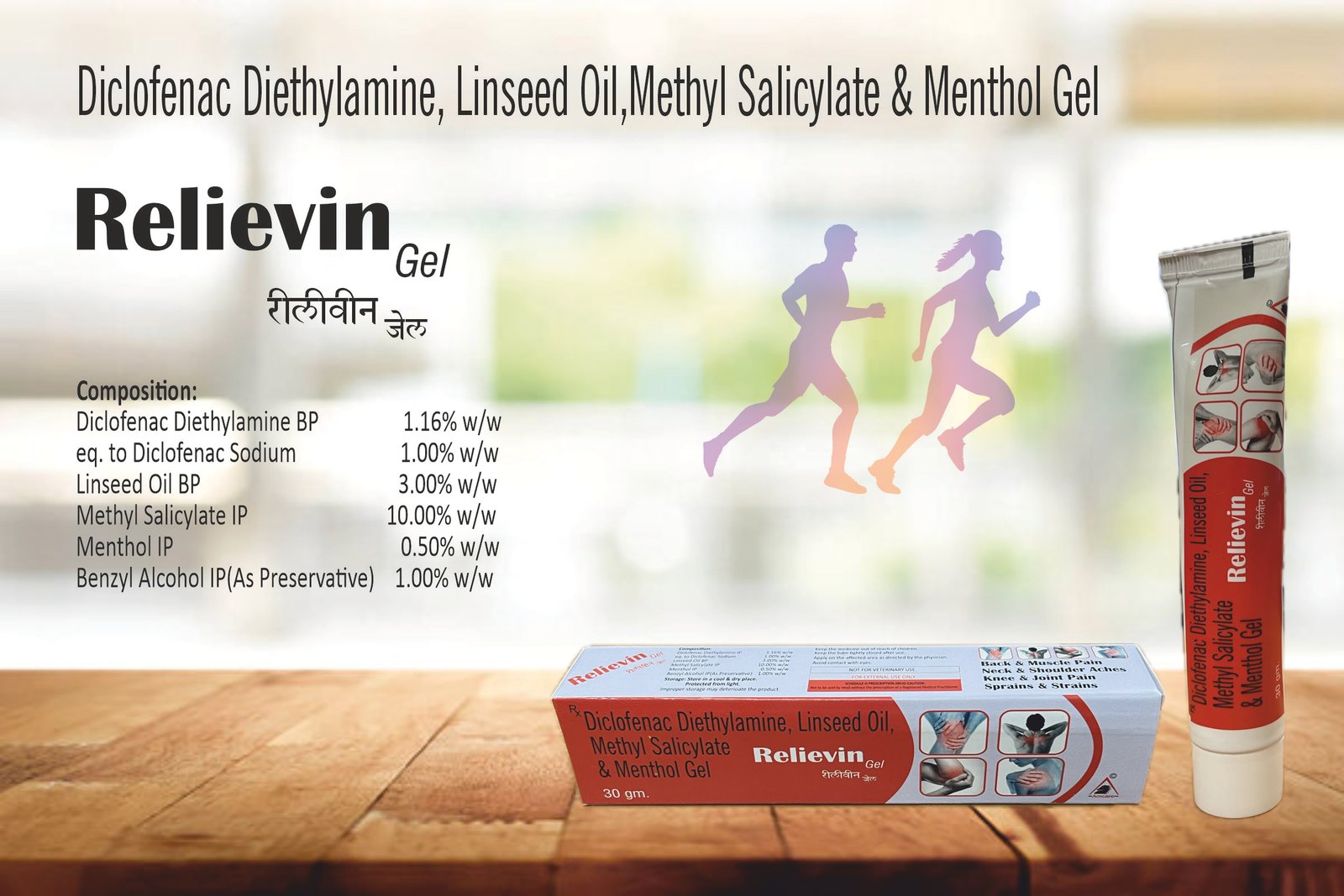
According to the supplied product artwork, Relievin Gel is available in a 30 g pack. The artwork also presents the product for conditions such as muscle pain, neck and shoulder aches, back and joint pain, sprains and strains.
1. Relievin Gel Composition
The following composition is transcribed from the supplied product artwork:
| Ingredient | Standard | Strength |
|---|---|---|
| Diclofenac Diethylamine | BP | 1.16% w/w |
| Equivalent to Diclofenac Sodium | — | 1.00% w/w |
| Linseed Oil | BP | 3.00% w/w |
| Methyl Salicylate | IP | 10.00% w/w |
| Menthol | IP | 0.50% w/w |
| Benzyl Alcohol (as preservative) | IP | 1.00% w/w |
Important: The supplied artwork specifies Menthol 0.50% w/w. This should be used as the product composition unless your approved formulation/package insert specifies otherwise.
2. Product Details
| Product Information | Details |
|---|---|
| Brand Name | Relievin Gel |
| Generic Name | Diclofenac Diethylamine + Linseed Oil + Methyl Salicylate + Menthol |
| Dosage Form | Gel |
| Route | Topical / External application |
| Pack Size | 30 g |
| Category | Topical Analgesic / Anti-inflammatory |
| Company | Amcare Pharmaceuticals |
3. What Is Relievin Gel Used For?
Relievin Gel contains a topical NSAID along with ingredients that provide counterirritant and cooling effects. It may be used for symptomatic relief of selected localized musculoskeletal pain.
Muscle Pain
Relievin Gel may provide temporary relief from localized muscular aches and discomfort.
Neck and Shoulder Pain
The gel may be used for localized neck and shoulder aches associated with muscular or musculoskeletal discomfort.
Back Pain
Topical diclofenac preparations may provide symptomatic relief from certain localized musculoskeletal back pain.
Joint Pain
Diclofenac provides analgesic and anti-inflammatory activity and may be useful for selected painful musculoskeletal joint conditions.
Sprains and Strains
The formulation may be used for symptomatic relief associated with selected minor sprains and strains.
Important: Relievin Gel is intended for external use only and should not be considered a treatment for every type of pain. Persistent, severe or unexplained pain should be medically evaluated.
4. How Does Relievin Gel Work?
The ingredients in Relievin Gel provide complementary actions.
Diclofenac Diethylamine – Anti-inflammatory Action
Diclofenac is a non-steroidal anti-inflammatory drug (NSAID). It inhibits cyclooxygenase enzymes involved in prostaglandin production.
Reduced prostaglandin production can help decrease:
- Pain
- Inflammation
- Local swelling
Methyl Salicylate – Counterirritant Action
Methyl salicylate is used topically to produce a counterirritant effect and provide temporary symptomatic relief from localized muscular and joint discomfort.
Menthol – Cooling Action
Menthol produces a cooling sensation by stimulating cold-sensitive receptors in the skin. This can provide temporary relief from localized discomfort.
Linseed Oil
Linseed oil is incorporated as part of the topical formulation.
Benzyl Alcohol
Benzyl alcohol is included as a preservative according to the supplied product artwork.
5. Relievin Gel for Muscle Pain
Muscle pain can occur due to:
- Physical activity
- Muscle overuse
- Minor strains
- Sports activity
- Musculoskeletal tension
Relievin Gel can provide localized symptomatic relief when used appropriately.
It should be applied only to intact skin and according to the product instructions or healthcare professional’s advice.
6. Relievin Gel for Neck and Shoulder Aches
Neck and shoulder discomfort can be associated with muscular strain, posture, physical activity or other musculoskeletal causes.
Topical diclofenac can help reduce localized pain and inflammation, while menthol and methyl salicylate provide additional sensory relief.
Persistent neck pain, pain following significant trauma, weakness or numbness should be medically evaluated.
7. Relievin Gel for Back and Joint Pain
Topical diclofenac is used for symptomatic relief of certain localized musculoskeletal pain conditions.
Relievin Gel may be considered for appropriate localized pain involving the back or joints.
However, the underlying cause of chronic or severe pain should be diagnosed rather than repeatedly treating symptoms with topical medication.
8. Relievin Gel for Sprains and Strains
Minor sprains and strains can cause:
- Pain
- Swelling
- Tenderness
- Reduced movement
Topical anti-inflammatory treatment may provide symptomatic relief in appropriate cases.
Seek medical evaluation if there is:
- Severe swelling
- Significant bruising
- Deformity
- Inability to bear weight
- Severe or worsening pain
- Suspected fracture
9. Dosage and Administration
The appropriate amount and frequency of application should follow the approved product information or the instructions of a healthcare professional.
General Application Guidance
- Apply to the affected area as directed.
- Use an appropriate amount of gel.
- Gently spread the gel over the painful area.
- Wash hands after application unless the hands are being treated.
- Avoid excessive or prolonged use.
- Do not apply under an occlusive dressing unless specifically instructed.
Do not exceed the recommended frequency or duration of application.
10. How to Apply Relievin Gel
- Ensure the affected area is clean and dry.
- Apply the recommended amount of gel to the painful area.
- Gently spread the gel over the skin.
- Wash your hands after application unless treating the hands.
- Avoid contact with the eyes, mouth and other mucous membranes.
- Allow the product to absorb/dry before covering the area with clothing.
For external use only.
Do not apply to cuts, wounds, infected skin or damaged skin unless specifically instructed by a healthcare professional.
11. Side Effects of Relievin Gel
Possible local side effects may include:
- Skin irritation
- Redness
- Itching
- Burning or stinging
- Dryness
- Rash
- Contact dermatitis
Topical diclofenac may also cause skin sensitivity reactions in some individuals.
Seek Medical Attention If
- Severe irritation develops.
- Significant swelling or blistering occurs.
- A severe allergic reaction occurs.
- The treated area becomes increasingly painful.
- Symptoms persist or worsen.
12. Precautions and Warnings
Before using Relievin Gel, inform your healthcare professional if you have:
- Allergy to diclofenac
- Allergy to aspirin or other NSAIDs
- Previous NSAID-related asthma or allergic reactions
- Sensitivity to salicylates
- Sensitive or damaged skin
- Previous reactions to topical pain-relief preparations
Avoid Application To
- Open wounds
- Cuts
- Abrasions
- Infected skin
- Eyes
- Mouth
- Mucous membranes
Avoid unnecessary exposure of the treated area to strong sunlight if irritation or photosensitivity occurs.
Do not use external heat sources over the treated area unless specifically permitted by the product instructions or healthcare professional.
13. Relievin Gel and Other Medicines
Tell your doctor or pharmacist about other medicines you are using, particularly:
- Other NSAIDs such as diclofenac, ibuprofen or naproxen
- Aspirin
- Anticoagulants
- Other topical pain-relief products
- Other products containing methyl salicylate
Systemic exposure from topical diclofenac is generally lower than from oral administration, but excessive application or use over large areas may increase absorption.
Avoid combining multiple medicated topical products on the same area without medical advice.
14. Relievin Gel During Pregnancy
Consult a healthcare professional before using Relievin Gel during pregnancy.
Diclofenac and other NSAIDs require particular caution during pregnancy, especially later in pregnancy.
Do not self-medicate with Relievin Gel during pregnancy.
15. Relievin Gel During Breastfeeding
Consult your healthcare professional before using Relievin Gel while breastfeeding.
Do not apply the gel to the breast or nipple area where the infant could come into direct contact with the medicine.
16. Who Should Not Use Relievin Gel Without Medical Advice?
Medical advice is particularly important for people with:
- Known allergy to diclofenac or other NSAIDs
- Aspirin-sensitive asthma
- Salicylate sensitivity
- Broken or infected skin
- Severe or unexplained pain
- Significant swelling following injury
- Persistent or recurrent pain
If pain continues despite appropriate use, the underlying condition should be assessed.
17. Key Features of Relievin Gel
1. Diclofenac Diethylamine 1.16% w/w
Provides topical NSAID analgesic and anti-inflammatory activity.
2. Equivalent to Diclofenac Sodium 1%
The formulation provides 1.00% w/w equivalent to diclofenac sodium, as shown on the artwork.
3. Methyl Salicylate 10% w/w
Provides topical counterirritant action.
4. Menthol 0.50% w/w
Provides a cooling sensation and temporary symptomatic relief.
5. Linseed Oil 3% w/w
Included as part of the topical formulation.
6. Convenient Gel Formulation
Designed for easy topical application to localized areas.
7. 30 g Pack
The supplied artwork shows a 30 g tube and carton.
18. Why Choose Relievin Gel by Amcare Pharmaceuticals?
Relievin Gel provides a multi-ingredient topical formulation containing:
- Diclofenac Diethylamine BP 1.16% w/w
- Equivalent to Diclofenac Sodium 1.00% w/w
- Linseed Oil BP 3.00% w/w
- Methyl Salicylate IP 10.00% w/w
- Menthol IP 0.50% w/w
- Benzyl Alcohol IP 1.00% w/w as preservative
- Topical gel formulation
- 30 g pack size
The product artwork highlights use for muscle pain, neck and shoulder aches, back and joint pain, sprains and strains.
Use the product according to its approved labeling and professional medical advice.