Our Products

SpasMefan
Product Composition
Packaging Details
Product Description
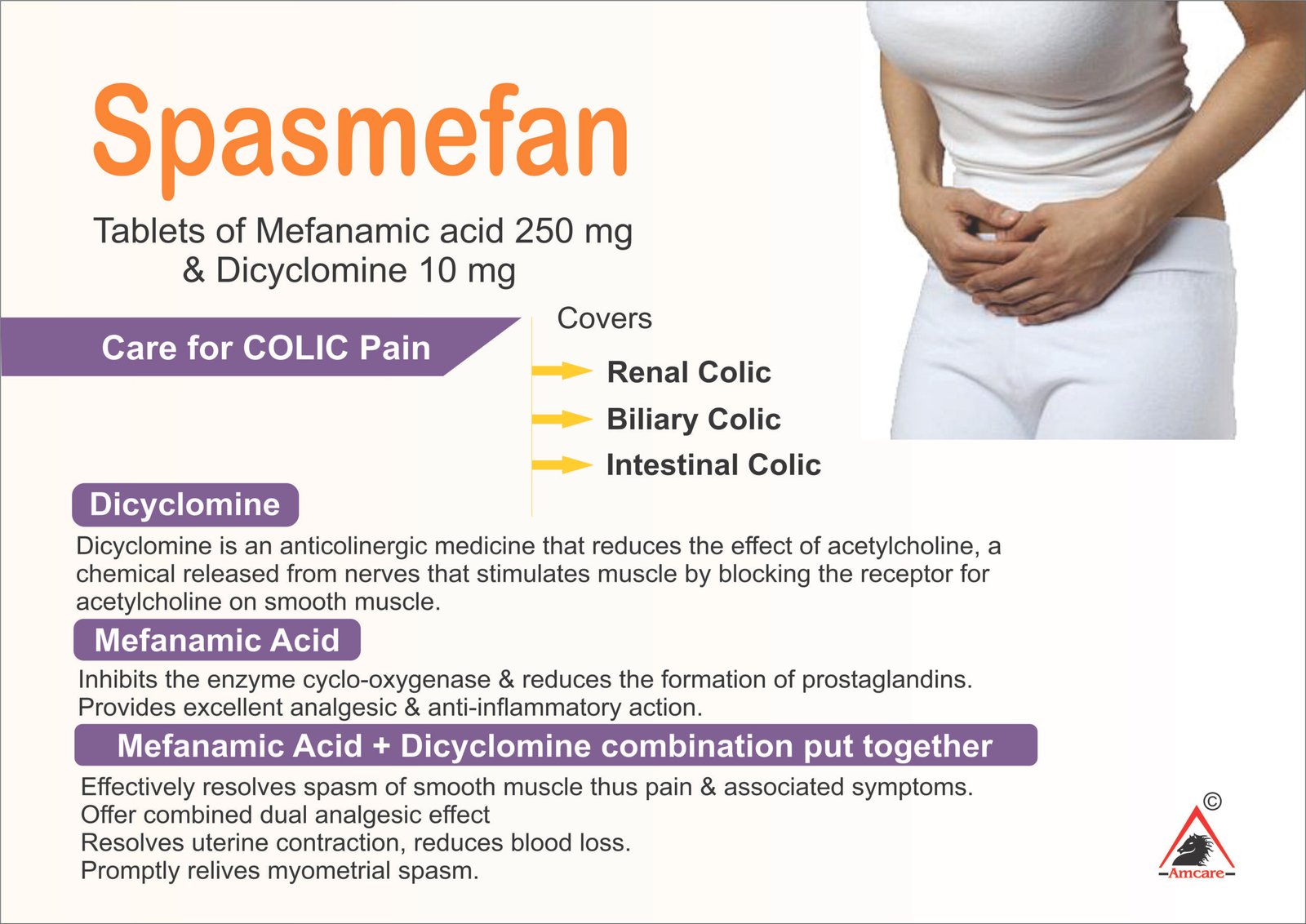
SpasMefan Tablets – Mefenamic Acid 250 mg + Dicyclomine Hydrochloride 10 mg
SpasMefan Tablets contain Mefenamic Acid 250 mg and Dicyclomine Hydrochloride 10 mg per uncoated tablet, exactly as shown on the provided product artwork. The pack shown is 10 × 10 tablets.
This combination brings together an NSAID analgesic (Mefenamic Acid) and an antispasmodic (Dicyclomine Hydrochloride) and is intended for symptomatic management of pain associated with smooth-muscle spasm, where this combination is considered appropriate by the physician.
Composition of SpasMefan Tablets
| Ingredient | Strength per Tablet |
|---|---|
| Mefenamic Acid I.P. | 250 mg |
| Dicyclomine Hydrochloride I.P. | 10 mg |
| Excipients | q.s. |
Product Information
| Particular | Details |
|---|---|
| Brand Name | SpasMefan |
| Mefenamic Acid | 250 mg |
| Dicyclomine Hydrochloride | 10 mg |
| Dosage Form | Uncoated Tablet |
| Route | Oral |
| Pack Size | 10 × 10 Tablets |
| Category | Analgesic & Antispasmodic |
| Prescription Status | Rx |
What are SpasMefan Tablets Used For?
SpasMefan Tablets are formulated for the symptomatic management of pain associated with smooth-muscle spasm.
The combination may be considered in painful spasmodic conditions involving the gastrointestinal or genitourinary tract, depending on the physician’s assessment.
It may be used for symptomatic relief in conditions such as:
- Abdominal cramps associated with smooth-muscle spasm
- Intestinal or gastrointestinal spasmodic pain
- Colicky abdominal discomfort
- Menstrual cramps / dysmenorrhea
- Painful spasmodic conditions where an antispasmodic and analgesic are appropriate
- Other physician-diagnosed spasmodic painful conditions
Mefenamic acid is an NSAID used for pain, while dicyclomine is an anticholinergic antispasmodic indicated for functional bowel/irritable bowel syndrome in its U.S. prescribing information.
The exact indication for SpasMefan should follow the approved Indian product information and prescribing information for your formulation.
How Does SpasMefan Work?
SpasMefan contains two active ingredients with complementary actions.
Mefenamic Acid → Analgesic + Anti-inflammatory action
Dicyclomine Hydrochloride → Antispasmodic action
Combined concept:
Smooth-muscle spasm + Pain
↓
Dicyclomine + Mefenamic Acid
↓
Reduction of spasm-related discomfort + Pain relief
1. Mefenamic Acid – 250 mg
Mefenamic acid belongs to the non-steroidal anti-inflammatory drug (NSAID) class.
It reduces the production of prostaglandins involved in pain and inflammation.
Mefenamic acid provides:
- Analgesic activity
- Anti-inflammatory activity
- Relief of mild-to-moderate pain
- Relief of menstrual pain when appropriately prescribed
Current prescribing information lists mefenamic acid for management of mild-to-moderate pain and primary dysmenorrhea.
Simplified mechanism
Mefenamic Acid → Reduced prostaglandin synthesis → Reduced pain and inflammatory response
2. Dicyclomine Hydrochloride – 10 mg
Dicyclomine hydrochloride is an anticholinergic/antispasmodic medicine.
It reduces smooth-muscle spasm by acting on cholinergic pathways and can reduce excessive gastrointestinal smooth-muscle activity.
Dicyclomine may help reduce:
- Abdominal cramping
- Intestinal spasm
- Smooth-muscle-related discomfort
Its established U.S. indication is the treatment of patients with functional bowel/irritable bowel syndrome.
Simplified action
Dicyclomine → Anticholinergic antispasmodic action → Reduced smooth-muscle spasm → Reduced cramping
Combined Action of SpasMefan
| Component | Primary Role |
|---|---|
| Mefenamic Acid 250 mg | Analgesic + Anti-inflammatory |
| Dicyclomine Hydrochloride 10 mg | Antispasmodic |
Overall formulation
Smooth-muscle spasm
→ Dicyclomine
Pain
→ Mefenamic Acid
Spasmodic pain
→ Combined symptomatic action
Therapeutic Benefits / Role of SpasMefan
1. Pain Relief
Mefenamic acid provides analgesic activity and can help reduce pain associated with selected conditions.
2. Antispasmodic Support
Dicyclomine helps reduce smooth-muscle spasm and associated cramping.
3. Abdominal Cramp Relief
The combination may be used when abdominal pain is associated with spasmodic activity.
4. Menstrual Pain Management
Mefenamic acid is an established NSAID option for primary dysmenorrhea; the combination’s use should follow the physician’s assessment and applicable product approval.
5. Dual-Action Formulation
SpasMefan combines analgesic/anti-inflammatory and antispasmodic actions in a single tablet.
Common Clinical Applications
1. Abdominal Cramps
Abdominal cramping can occur when smooth-muscle contractions contribute to pain.
Dicyclomine provides the antispasmodic component, while mefenamic acid contributes analgesic activity.
2. Intestinal Spasm
Intestinal smooth-muscle spasm can produce:
- Cramping
- Abdominal discomfort
- Intermittent pain
Dicyclomine is used for functional bowel conditions involving intestinal spasm, while the combination may provide additional analgesic activity.
3. Menstrual Cramps
Primary dysmenorrhea commonly involves cramping abdominal/pelvic pain.
Mefenamic acid is an established treatment option for primary dysmenorrhea.
For SpasMefan specifically, the combination should be used according to the physician’s prescription and approved product information.
4. Colicky Pain
Certain forms of colicky discomfort involve smooth-muscle spasm.
An antispasmodic component such as dicyclomine may help reduce spasm, while mefenamic acid provides analgesic activity.
The underlying cause of abdominal or pelvic pain should be appropriately evaluated rather than treating unexplained severe pain solely with an antispasmodic.
Suggested Use
SpasMefan Tablets should be taken according to the prescription of a qualified healthcare professional.
The appropriate dosage and duration depend on:
- Cause and severity of pain
- Patient age
- Medical history
- Kidney function
- Liver function
- Gastrointestinal history
- Cardiovascular risk
- Other medicines being taken
Because the provided artwork does not specify a recommended dosage schedule, an exact number of tablets per day should not be invented for your product page.
Administration
- Take orally with water.
- Follow the dosage prescribed by the physician.
- Use the lowest effective dose for the appropriate duration.
- Do not exceed the prescribed dose.
- Do not combine with another NSAID unless advised by a healthcare professional.
Mefenamic acid prescribing information emphasizes using the lowest effective dose for the shortest appropriate duration because NSAIDs have important cardiovascular and gastrointestinal risks.
Possible Side Effects
Possible side effects may include:
Gastrointestinal
- Nausea
- Vomiting
- Abdominal discomfort
- Indigestion
- Diarrhea
- Constipation
- Heartburn
Dicyclomine-related
- Dry mouth
- Dizziness
- Blurred vision
- Drowsiness
- Constipation
- Difficulty urinating
Dicyclomine can produce anticholinergic effects including dry mouth, blurred vision and drowsiness.
Other
- Headache
- Skin rash
- Increased heart rate
- Edema
Individual response varies.
Important Serious Side Effects
Because SpasMefan contains an NSAID, serious adverse reactions can occur.
These may include:
- Gastrointestinal bleeding
- Gastric or intestinal ulceration
- Gastrointestinal perforation
- Severe allergic reactions
- Kidney injury
- Liver injury
- Cardiovascular thrombotic events
- Severe skin reactions
Mefenamic acid labeling carries warnings for serious cardiovascular and gastrointestinal events.
Precautions & Warnings
1. Gastrointestinal Precautions
Mefenamic acid can increase the risk of:
- Gastric ulceration
- Gastrointestinal bleeding
- Gastrointestinal perforation
The risk may be higher in patients with a history of peptic ulcer disease or gastrointestinal bleeding.
2. Cardiovascular Precautions
NSAIDs, including mefenamic acid, can increase the risk of serious cardiovascular thrombotic events such as myocardial infarction and stroke.
Patients with cardiovascular disease or risk factors require appropriate medical assessment.
3. Kidney Precautions
Mefenamic acid may affect kidney function, particularly in susceptible patients.
Caution may be required in patients with:
- Kidney disease
- Dehydration
- Heart failure
- Hepatic disease
- Older age
- Medicines affecting renal function
The current prescribing information recommends renal monitoring in certain at-risk patients.
4. Liver Precautions
Mefenamic acid has been associated with liver enzyme abnormalities and, rarely, clinically significant liver injury.
Patients with existing liver disease should consult their healthcare professional before use.
5. Dicyclomine-Related Precautions
Dicyclomine has anticholinergic effects and requires particular caution in certain patients.
It is contraindicated in conditions including:
- Glaucoma
- Myasthenia gravis
- Obstructive gastrointestinal disease
- Obstructive uropathy
- Severe ulcerative colitis
- Reflux esophagitis
- Certain cardiovascular conditions
It is also contraindicated in nursing mothers in the cited U.S. prescribing information.
Drowsiness, Dizziness & Driving
Dicyclomine may cause drowsiness or blurred vision.
Patients should use caution when:
- Driving
- Operating machinery
- Working at heights
- Performing tasks requiring visual or mental alertness
The prescribing information specifically advises patients to avoid activities requiring mental alertness if affected by these effects.
Drug & Medicine Interactions
Patients should inform their healthcare professional about all prescription medicines, OTC medicines, supplements and herbal products they are taking.
Particular attention may be required with:
- Other NSAIDs
- Aspirin
- Anticoagulants
- Antiplatelet medicines
- Corticosteroids
- ACE inhibitors
- ARBs
- Diuretics
- Lithium
- Methotrexate
- Medicines affecting kidney function
- Anticholinergic medicines
- Other medicines that can cause drowsiness
Important
Do not combine SpasMefan with another NSAID unless specifically advised by a healthcare professional.
Dicyclomine may also have additive anticholinergic effects when combined with other anticholinergic medicines.
Alcohol
Alcohol should preferably be avoided or limited during treatment unless the healthcare professional advises otherwise.
This is particularly relevant because dicyclomine may cause dizziness or drowsiness, while NSAID use can increase gastrointestinal risk.
Pregnancy & Breastfeeding
Pregnant or breastfeeding women should consult their healthcare professional before taking SpasMefan.
Mefenamic acid, as an NSAID, requires particular consideration during pregnancy. Dicyclomine also has specific restrictions and precautions in pregnancy/lactation.
The decision should be based on the individual clinical situation and applicable prescribing information.
Use in Elderly Patients
Older patients may have an increased risk of adverse effects from NSAIDs and anticholinergic medicines.
Particular attention may be required for:
- Gastrointestinal bleeding
- Kidney function
- Cardiovascular risk
- Dizziness
- Blurred vision
- Confusion
- Urinary retention
- Constipation
Use in Kidney or Liver Disease
Patients with kidney or liver disease should inform their healthcare professional before taking SpasMefan.
The physician may assess:
- Renal function
- Liver function
- Existing medical conditions
- Other medicines
- Overall risk-benefit profile
before prescribing the medicine.
When Should Medical Attention Be Sought?
Patients should seek prompt medical attention if they develop:
- Black or bloody stools
- Vomiting blood
- Severe abdominal pain
- Chest pain
- Difficulty breathing
- Facial or throat swelling
- Severe skin rash
- Yellowing of the skin or eyes
- Significant reduction in urine
- Severe dizziness or fainting
- Difficulty urinating
- Severe blurred vision
- Unusual or severe bleeding
Storage
Store SpasMefan Tablets:
- In a cool, dry place
- Away from direct sunlight
- Protected from excessive heat and moisture
- In the original packaging
- Out of reach of children
Follow the storage conditions printed on the final approved product packaging.
Key Product Features
| Product Feature | Details |
|---|---|
| Brand Name | SpasMefan |
| Mefenamic Acid | 250 mg |
| Dicyclomine Hydrochloride | 10 mg |
| Dosage Form | Uncoated Tablet |
| Route | Oral |
| Therapeutic Category | Analgesic & Antispasmodic |
| NSAID Component | Mefenamic Acid |
| Antispasmodic Component | Dicyclomine Hydrochloride |
| Pack Size | 10 × 10 Tablets |
| Prescription | Rx |
Why Choose SpasMefan Tablets?
SpasMefan combines two pharmacological components in a single oral dosage form:
Mefenamic Acid 250 mg
Provides analgesic and anti-inflammatory activity.
Dicyclomine Hydrochloride 10 mg
Provides antispasmodic activity by reducing smooth-muscle spasm.
Overall formulation:
Pain + Smooth-Muscle Spasm
→ Mefenamic Acid + Dicyclomine
→ Symptomatic relief of spasmodic pain
This combination may be considered when pain and smooth-muscle spasm occur together, according to the physician’s clinical assessment.