Our Products
Temperate®Cold
Product Composition
Packaging Details
Product Description
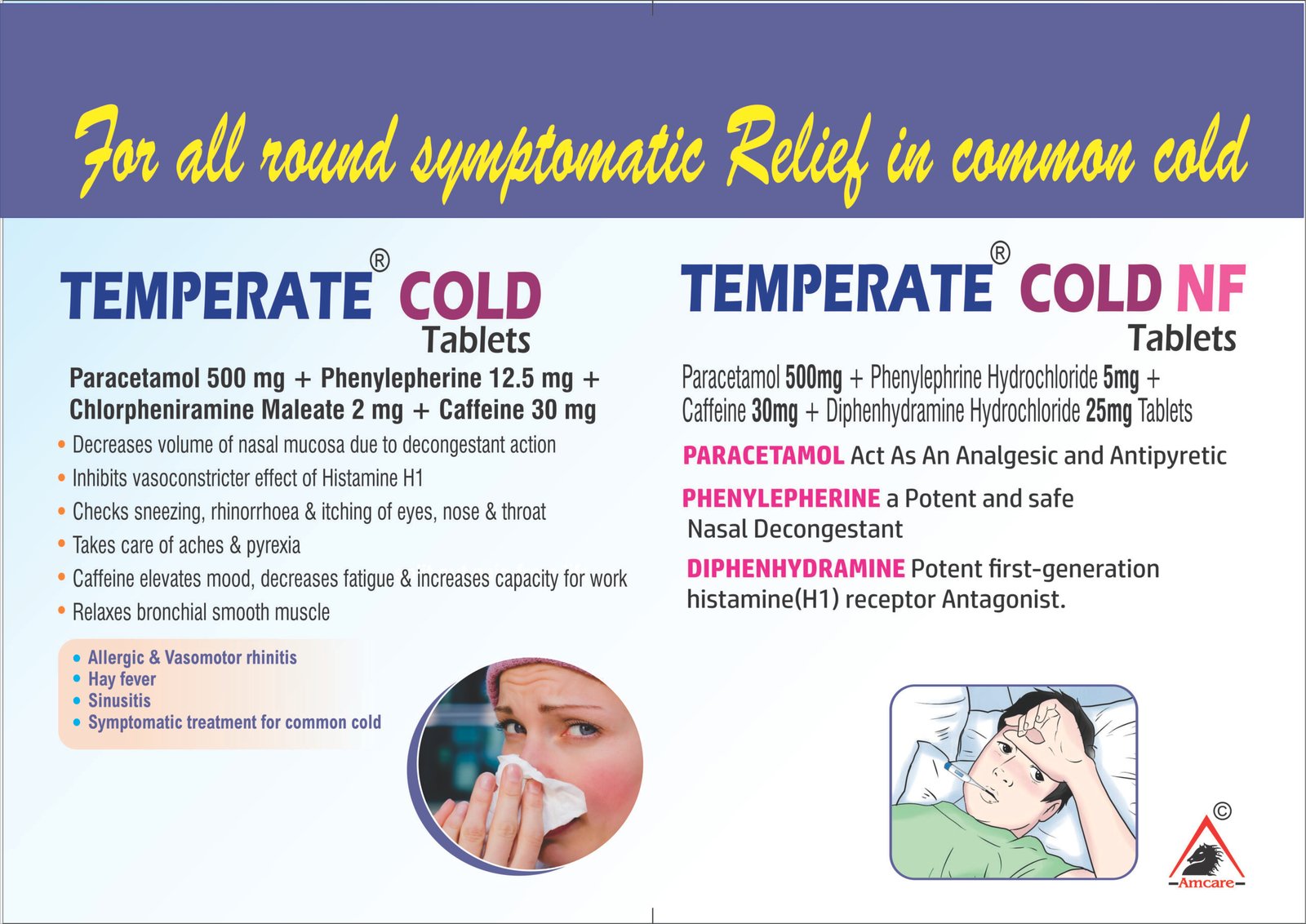
TEMPERATE COLD Tablets
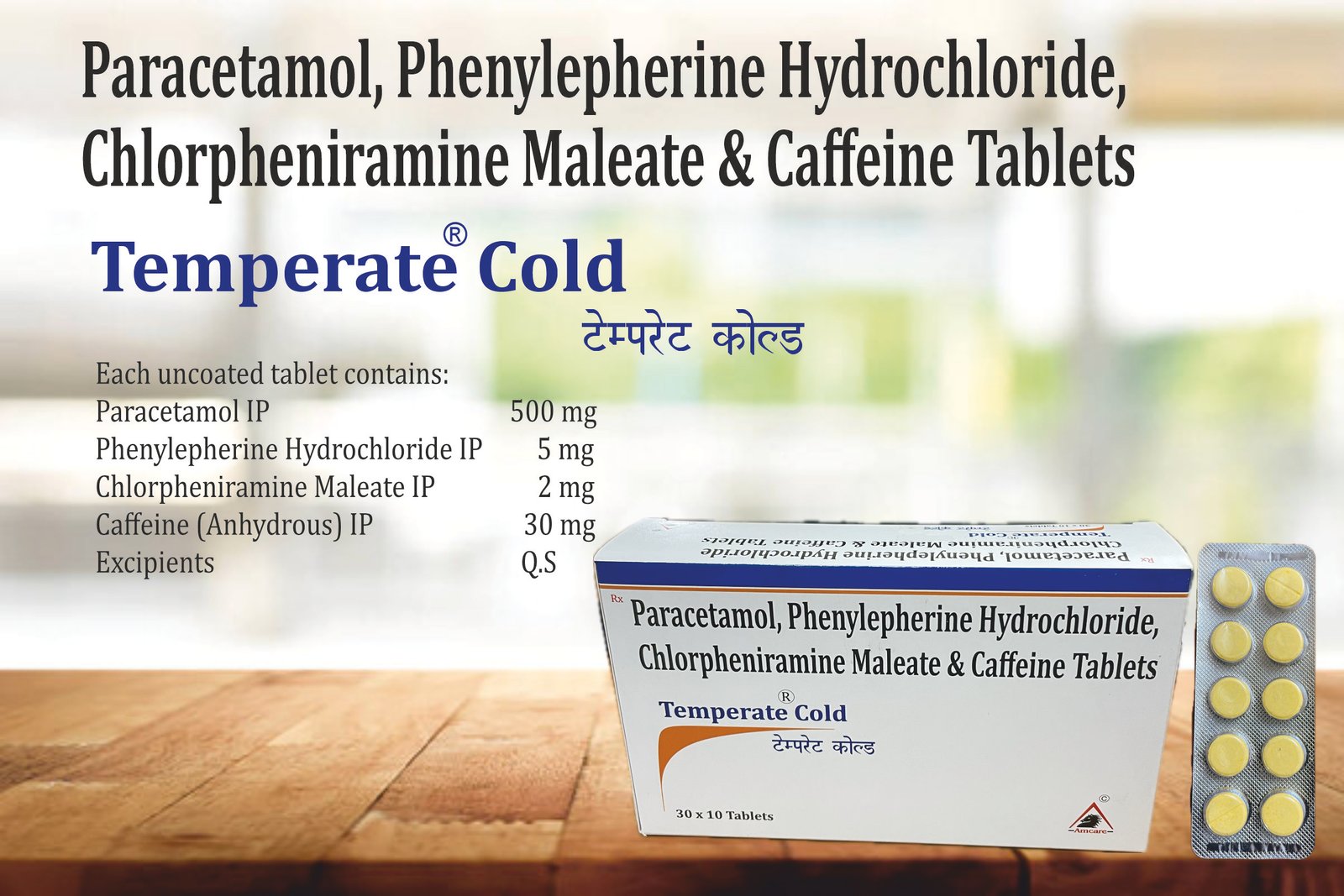
Paracetamol 500 mg + Phenylephrine Hydrochloride 5 mg + Chlorpheniramine Maleate 2 mg + Caffeine (Anhydrous) 30 mg
TEMPERATE COLD is a four-component cold and flu symptomatic formulation containing an analgesic/antipyretic, nasal decongestant, antihistamine and caffeine. The artwork specifies an uncoated tablet containing Paracetamol 500 mg, Phenylephrine HCl 5 mg, Chlorpheniramine Maleate 2 mg and Caffeine (Anhydrous) 30 mg.
1. Product Information
| Parameter | Details |
|---|---|
| Brand Name | TEMPERATE COLD |
| Dosage Form | Uncoated Tablet |
| Route | Oral |
| Therapeutic Category | Cold, Flu & Respiratory Symptomatic Relief |
| Prescription Status | Rx, as shown on artwork |
| Pack Size | 30 × 10 Tablets |
| Composition | Paracetamol 500 mg + Phenylephrine HCl 5 mg + Chlorpheniramine Maleate 2 mg + Caffeine 30 mg |
Composition
Each uncoated tablet contains:
- Paracetamol IP — 500 mg
- Phenylephrine Hydrochloride IP — 5 mg
- Chlorpheniramine Maleate IP — 2 mg
- Caffeine (Anhydrous) IP — 30 mg
- Excipients — q.s.
2. What is TEMPERATE COLD Used For?
TEMPERATE COLD is intended for symptomatic management of selected common-cold and upper-respiratory symptoms, under professional medical direction.
The ingredients address different symptoms:
- Paracetamol → pain and fever
- Phenylephrine → nasal congestion/decongestant component
- Chlorpheniramine → antihistamine component for runny nose and sneezing
- Caffeine → analgesic adjuvant
Depending on the patient’s symptoms and physician assessment, the formulation may be considered for symptoms such as:
- Common-cold-associated headache
- Fever
- Body ache
- Runny nose
- Sneezing
- Nasal congestion
- Sinus-related discomfort
- Upper-respiratory cold symptoms
Clinical research has evaluated combinations containing paracetamol, chlorphenamine and phenylephrine for symptomatic common-cold treatment in adults.
Important: The exact indication for TEMPERATE COLD should follow its current approved product permission, prescribing information and applicable Indian regulatory requirements.
3. Mechanism of Action
A. Paracetamol 500 mg
Paracetamol is an analgesic and antipyretic.
Analgesic action
It acts predominantly through central mechanisms involved in pain processing and helps reduce the perception of pain.
Antipyretic action
It acts centrally to reduce elevated body temperature associated with fever.
Therefore, paracetamol addresses symptoms such as:
- Headache
- Body ache
- Fever
- General discomfort associated with cold and flu
4. Phenylephrine Hydrochloride 5 mg
Phenylephrine is an adrenergic decongestant.
It produces vasoconstrictive effects through alpha-adrenergic receptor activity, which can reduce swelling of the nasal mucosa and thereby contribute to relief of nasal congestion.
Intended symptomatic role
Nasal congestion → reduced nasal mucosal swelling → easier nasal breathing
Important qualification
The effectiveness of oral phenylephrine as a nasal decongestant has been questioned, and this issue has been specifically discussed in CDSCO’s historical FDC evaluations. Therefore, website content should avoid claiming guaranteed or rapid decongestant efficacy.
5. Chlorpheniramine Maleate 2 mg
Chlorpheniramine is a first-generation H1 antihistamine.
It reduces histamine-mediated symptoms and can help control:
- Runny nose
- Sneezing
- Nasal symptoms
- Watery eyes associated with allergic-type symptoms
Because chlorpheniramine can cross the blood-brain barrier, it may cause drowsiness and reduced alertness in some individuals.
6. Caffeine (Anhydrous) 30 mg
Caffeine is included as an analgesic adjuvant.
It may enhance the analgesic effect of certain analgesics in selected acute-pain situations and may counter some of the subjective sedating effects associated with first-generation antihistamines in some patients.
Its presence should not be interpreted as making the product suitable for prolonged or excessive use.
7. Combined Action
TEMPERATE COLD combines four pharmacological components:
| Ingredient | Primary role |
|---|---|
| Paracetamol 500 mg | Pain relief + fever reduction |
| Phenylephrine HCl 5 mg | Decongestant component |
| Chlorpheniramine Maleate 2 mg | Antihistamine; runny nose/sneezing |
| Caffeine 30 mg | Analgesic adjuvant |
Overall concept
Pain + Fever
↓
Paracetamol
Nasal congestion
↓
Phenylephrine
Runny nose + Sneezing
↓
Chlorpheniramine
Analgesic adjuvant
↓
Caffeine
This provides a multi-symptom approach for selected cold/flu presentations.
8. Potential Therapeutic Benefits
✔ Pain and fever relief
Paracetamol provides the principal analgesic and antipyretic activity.
✔ Multi-symptom approach
The formulation addresses several common cold-associated symptoms through different active ingredients.
✔ Nasal symptom support
Phenylephrine provides the decongestant component.
✔ Runny nose and sneezing
Chlorpheniramine provides antihistamine activity.
✔ Analgesic adjuvant
Caffeine may contribute to analgesic enhancement.
✔ Convenient oral dosage form
Four active ingredients are combined into one tablet.
9. Common Clinical Applications
Under appropriate medical supervision, the formulation may be considered for symptomatic treatment involving:
| Symptom/Condition | Ingredient primarily addressing the symptom |
|---|---|
| Fever | Paracetamol |
| Headache | Paracetamol + caffeine |
| Body ache | Paracetamol |
| Runny nose | Chlorpheniramine |
| Sneezing | Chlorpheniramine |
| Nasal congestion | Phenylephrine |
| Cold-associated discomfort | Combination |
| Flu-like symptoms | Combination |
A clinical study of a paracetamol/phenylephrine/chlorphenamine combination reported improvement in overall common-cold symptom scores compared with placebo in adults.
10. Suggested Use & Dosage
The artwork confirms the strength and composition, but it does not state a complete dosing schedule. Therefore, a specific dose frequency should not be invented for the product page.
Administration
- Take orally with water.
- Use only according to the physician’s instructions.
- Do not exceed the prescribed dose.
- Avoid taking another medicine containing paracetamol at the same time unless specifically advised.
- Avoid combining with other cold/flu medicines without checking their ingredients.
Important
Because the product contains multiple pharmacologically active ingredients, it should not be used simply because several cold symptoms are present without considering whether each component is actually required.
This issue has been specifically discussed in CDSCO’s FDC evaluations, including concern about unnecessary exposure to ingredients when patients may require only one or some of them.
11. Drowsiness & Driving Warning
Chlorpheniramine may cause drowsiness or reduced alertness.
Patients should exercise caution with:
- Driving
- Operating machinery
- Working at heights
- Other activities requiring full mental alertness
Alcohol may increase CNS impairment and should be avoided.
12. Side Effects
Possible adverse effects may include:
Paracetamol-related
- Nausea
- Vomiting
- Abdominal discomfort
- Skin rash
Chlorpheniramine-related
- Drowsiness
- Dry mouth
- Dizziness
- Blurred vision
- Constipation
- Difficulty urinating in susceptible individuals
Phenylephrine-related
- Increased blood pressure
- Palpitations
- Nervousness
- Headache
- Tremor
Caffeine-related
- Restlessness
- Nervousness
- Insomnia
- Tremor
- Palpitations
- Gastric discomfort
Not every patient experiences these effects.
13. Important Paracetamol Warning
Do not take TEMPERATE COLD together with another paracetamol/acetaminophen-containing medicine without professional advice.
Accidental duplication of paracetamol-containing cold, fever or pain medicines can result in excessive total exposure and potentially serious liver injury.
Patients with liver disease or significant alcohol consumption require particular caution.
14. Cardiovascular Precautions
Because TEMPERATE COLD contains phenylephrine, caution is particularly important in patients with cardiovascular conditions.
Patients should inform their doctor if they have:
- Hypertension
- Heart disease
- Arrhythmia
- Coronary artery disease
- Hyperthyroidism
- Other cardiovascular disorders
This is particularly relevant to this FDC because the CDSCO January 2024 pathway for specified formulations requires the package insert to include a caution for patients suffering from cardiovascular diseases.
15. Other Precautions
Inform your doctor before use if you have:
- Liver disease
- Kidney disease
- High blood pressure
- Heart disease
- Glaucoma
- Enlarged prostate or difficulty urinating
- Hyperthyroidism
- Alcohol dependence
- Sensitivity to caffeine
- Sleep disorders
- Previous allergy to any component
16. Drug Interactions
Tell your healthcare professional about all medicines you are taking.
Particular caution may be required with:
Other paracetamol-containing products
May cause excessive total paracetamol exposure.
Other antihistamines
May increase antihistamine-related adverse effects and sedation.
Other decongestants
May increase cardiovascular or sympathomimetic effects.
Sedatives and CNS depressants
May increase drowsiness associated with chlorpheniramine.
Alcohol
May increase impairment and may increase concerns associated with sedating antihistamines.
Caffeine-containing products
Excessive additional caffeine may increase nervousness, insomnia or palpitations.
17. Pregnancy & Breastfeeding
Use during pregnancy or breastfeeding should be based on medical advice and an individual risk-benefit assessment.
Patients should inform their healthcare professional if they are:
- Pregnant
- Planning pregnancy
- Breastfeeding
Because this is a multi-ingredient formulation, unnecessary exposure to individual components should be avoided.
18. Use in Children
Important regulatory warning
Current CDSCO information includes an August 2026 notification prohibiting all formulations containing the fixed-dose combination of Chlorpheniramine Maleate and Phenylephrine Hydrochloride in children below four years of age. TEMPERATE COLD contains both of these ingredients.
Therefore:
TEMPERATE COLD should not be promoted or recommended for children below 4 years of age.
For older children, use should follow the current approved product information and a healthcare professional’s direction.
19. Use in Elderly Patients
Elderly patients may be more susceptible to:
- Drowsiness
- Dizziness
- Anticholinergic effects
- Urinary retention
- Blood-pressure effects
- Drug interactions
Medical supervision is therefore particularly important.
20. Liver & Kidney Impairment
Liver impairment
Paracetamol requires particular caution in patients with liver disease or excessive alcohol consumption.
Kidney impairment
Patients with significant renal impairment should consult a healthcare professional before use.
21. When to Seek Medical Attention
Seek medical attention if symptoms are severe, worsening or persistent, particularly if there is:
- Difficulty breathing
- Chest pain
- Severe palpitations
- Very high or persistent fever
- Severe headache
- Facial swelling
- Severe allergic reaction
- Confusion or extreme drowsiness
- Accidental overdose
- Yellowing of the skin or eyes
- Severe or persistent vomiting
If an excessive amount of paracetamol has been taken, urgent medical assessment is required even if the patient initially feels well.
22. Storage
Store TEMPERATE COLD:
- In a cool, dry place.
- Away from direct sunlight.
- Away from excessive heat and moisture.
- In the original packaging.
- Out of reach of children.
Do not use the tablets after the expiry date.
23. Key Product Features
TEMPERATE COLD Tablets
Four-component symptomatic cold formulation
- Paracetamol IP — 500 mg
- Phenylephrine Hydrochloride IP — 5 mg
- Chlorpheniramine Maleate IP — 2 mg
- Caffeine (Anhydrous) IP — 30 mg
- Uncoated tablet
- Oral administration
- Designed for physician-directed symptomatic management of selected cold/flu symptoms
- 30 × 10 tablets pack shown on artwork
24. Product Positioning
Multi-symptom cold support
TEMPERATE COLD combines ingredients addressing different symptom categories:
Analgesic + Antipyretic
Paracetamol
Decongestant
Phenylephrine
Antihistamine
Chlorpheniramine
Analgesic Adjuvant
Caffeine
This makes the product conceptually suited to multi-symptom cold presentations, rather than isolated fever or isolated nasal symptoms.
25. Regulatory Note for Amcare Website
I recommend adding a small internal regulatory check before publishing this particular product page as a promotional pharmaceutical page.
CDSCO’s current FDC resources list approved, prohibited and restricted FDC information, and the agency’s January 2024 notice specifically lists Caffeine 15/30 mg + Paracetamol 500 mg + Phenylephrine 5 mg + Chlorpheniramine 2 mg among compositions for which continued manufacturing/marketing was recommended subject to specified conditions.
The same CDSCO records also show that this class of FDC has undergone substantial regulatory scrutiny, including historical concerns regarding rationality and dosing.
For your final Amcare product catalogue, I would therefore keep the wording “symptomatic relief” rather than making stronger claims such as “cures cold,” “treats infection,” or “fastest decongestion.”