Our Products
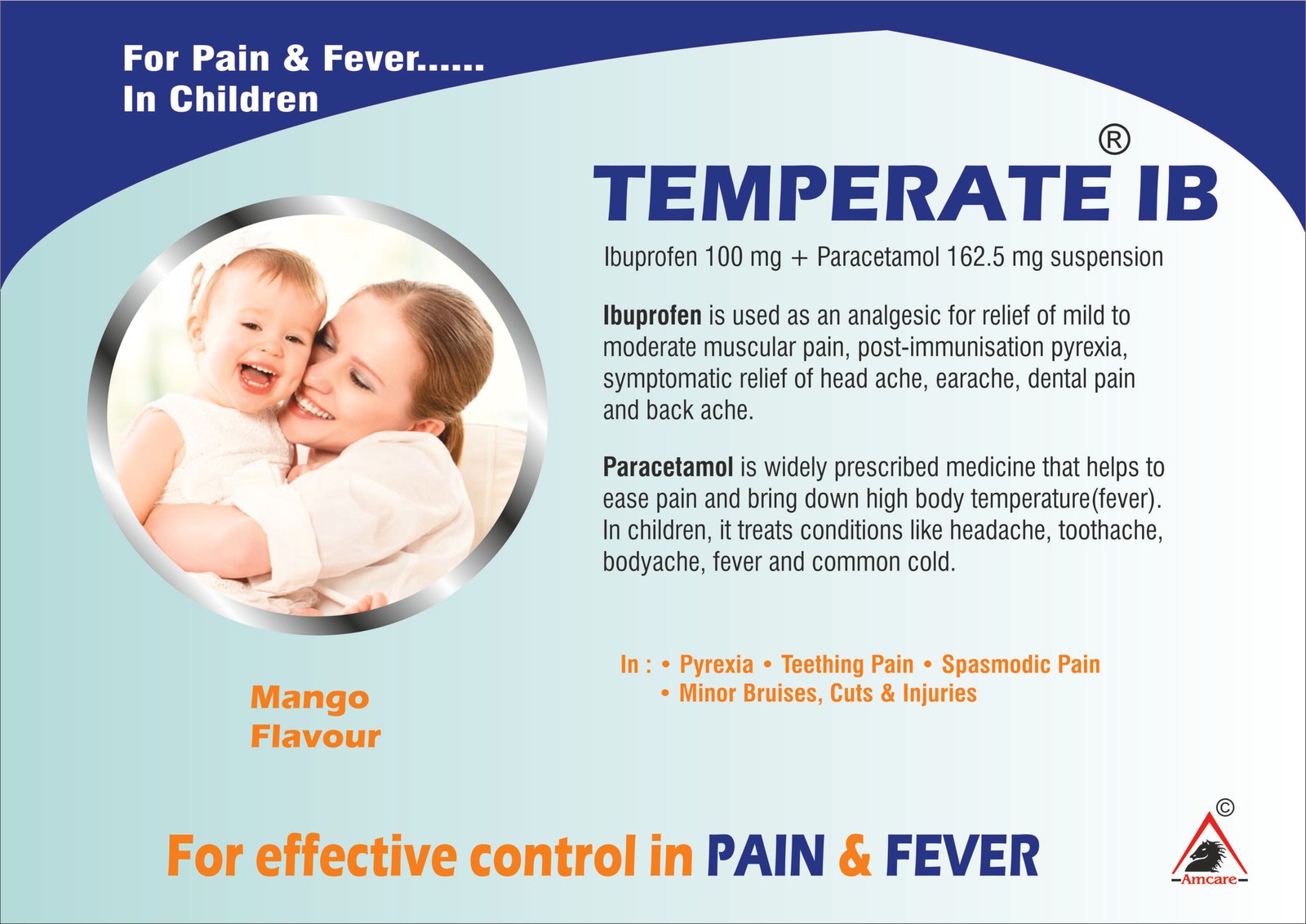
Temperate®IB
Product Composition
Packaging Details
Product Description
TEMPERATE IB Suspension – Complete Product Information
1. Product Overview
TEMPERATE IB Suspension is a combination oral suspension containing Ibuprofen and Paracetamol. As shown in the supplied product artwork, the formulation combines two active ingredients commonly used for pain relief and fever reduction. Ibuprofen belongs to the non-steroidal anti-inflammatory drug (NSAID) class, while Paracetamol is an analgesic and antipyretic medicine.
The product is presented in a mango-flavoured syrup base. Its liquid dosage form is intended for oral administration and may be prescribed for selected pain and fever conditions when a healthcare professional determines that the combination is appropriate.
The two ingredients act through different pharmacological mechanisms. Ibuprofen helps relieve pain, inflammation and fever, whereas Paracetamol helps relieve pain and reduce elevated body temperature. Their combination requires careful attention to dosing, patient suitability and the risks associated with each ingredient, particularly when the product is intended for children.
TEMPERATE IB is a branded formulation from Amcare Pharmaceuticals. The information below is structured for product catalogues, website listings, distributor references and pharmaceutical product documentation.
2. Product Composition and Specifications
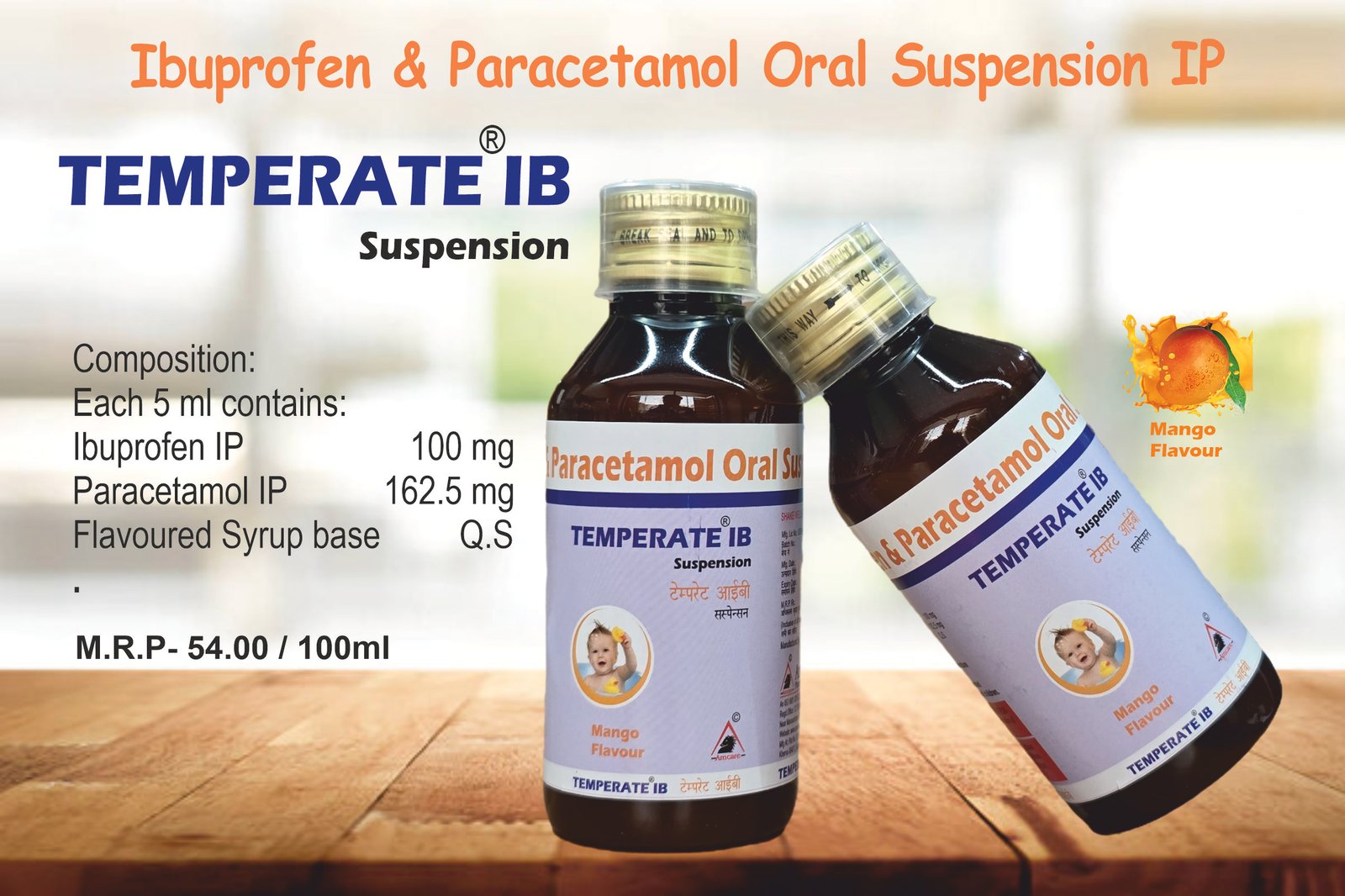
The composition below is transcribed from the supplied product artwork.
|
Parameter |
Product information |
|---|---|
|
Brand name |
TEMPERATE IB |
|
Generic name |
Ibuprofen and Paracetamol Oral Suspension IP |
|
Ibuprofen IP |
100 mg per 5 mL |
|
Paracetamol IP |
162.5 mg per 5 mL |
|
Flavoured syrup base |
Q.S. |
|
Dosage form |
Oral suspension |
|
Flavour |
Mango |
|
Route of administration |
Oral |
|
Therapeutic category |
Analgesic, anti-inflammatory and antipyretic |
|
Company |
Amcare Pharmaceuticals |
Important packaging note: The supplied artwork identifies the composition per 5 mL but does not clearly establish the total bottle volume. Confirm the actual pack size from the approved product label before publishing commercial specifications.
3. Understanding the Active Ingredients
A. Ibuprofen IP – 100 mg per 5 mL
Ibuprofen is a non-steroidal anti-inflammatory drug that helps relieve pain, inflammation and fever. It acts by inhibiting cyclooxygenase enzymes involved in prostaglandin synthesis.
Prostaglandins are chemical mediators involved in pain signalling, inflammatory responses and the body’s temperature-regulating processes. By reducing their production, Ibuprofen helps decrease pain and inflammation and can help lower an elevated body temperature.
Pharmacological role of Ibuprofen:
-
Helps relieve certain types of mild to moderate pain.
-
Helps reduce inflammatory discomfort.
-
Helps lower fever.
-
May be prescribed for selected musculoskeletal and other painful conditions.
-
Provides an anti-inflammatory component alongside Paracetamol’s analgesic and antipyretic action.
Ibuprofen is not suitable for every patient. It may increase the risk of stomach irritation, gastrointestinal bleeding and kidney injury. These risks are particularly important in patients with dehydration, kidney disease, a history of gastrointestinal ulcers or certain other medical conditions.
B. Paracetamol IP – 162.5 mg per 5 mL
Paracetamol, also known as acetaminophen, is an analgesic and antipyretic medicine. It acts primarily through mechanisms in the central nervous system to reduce pain perception and help regulate elevated body temperature.
Unlike conventional NSAIDs, Paracetamol has relatively limited peripheral anti-inflammatory activity at therapeutic doses.
Pharmacological role of Paracetamol:
-
Helps reduce fever.
-
Helps relieve headache and other common types of pain.
-
May relieve discomfort associated with selected acute illnesses.
-
Complements the pain-relieving effects of Ibuprofen through a different mechanism.
Correct dosing is essential because excessive Paracetamol exposure can cause severe liver injury. Care must also be taken to avoid accidentally giving the patient additional medicines containing Paracetamol.
C. Flavoured Syrup Base – Q.S.
The syrup base serves as the vehicle for the active pharmaceutical ingredients and provides the formulation with its liquid consistency. The supplied artwork identifies mango as the flavour.
The exact excipients, sweeteners, preservatives and sugar content should be confirmed from the approved product formulation and package insert.
4. Therapeutic Uses of TEMPERATE IB Suspension
TEMPERATE IB combines an analgesic, anti-inflammatory and antipyretic medicine with another analgesic and antipyretic. Depending on the patient’s clinical condition, a healthcare professional may consider this type of formulation for selected pain and fever conditions.
A. Fever Management
Both Ibuprofen and Paracetamol have antipyretic properties. They help reduce fever through different mechanisms.
TEMPERATE IB may be considered when a clinician determines that the combination is appropriate for the patient’s symptoms and medical history. It should not automatically be used for every episode of fever, especially in children, for whom hydration, the underlying cause of fever and individual risk factors are important.
B. Headache and Pain Relief
The active ingredients may help relieve selected types of headache and other common painful conditions. Ibuprofen contributes anti-inflammatory activity, while Paracetamol helps reduce pain perception.
The appropriate medicine depends on the cause and severity of the pain, the patient’s age and medical history, and any other medicines being taken.
C. Toothache and Dental Discomfort
Ibuprofen’s anti-inflammatory properties may help relieve pain associated with certain dental conditions. Paracetamol provides an additional analgesic mechanism.
Pain caused by dental infection, significant swelling or damage to a tooth may require professional dental treatment. Symptom relief does not eliminate the underlying cause.
D. Body Aches and Musculoskeletal Pain
Ibuprofen may help relieve pain associated with inflammation in selected musculoskeletal conditions. Paracetamol may provide additional pain relief.
However, not every body ache requires a combination medicine. Persistent pain, severe pain or symptoms associated with an injury should be assessed by a healthcare professional.
E. Discomfort Associated with Acute Illness
Fever, headache and general body discomfort can accompany a variety of acute illnesses. The ingredients in TEMPERATE IB may help relieve selected symptoms when appropriately prescribed.
The product does not treat the underlying cause of a viral or bacterial infection and should not replace necessary medical assessment.
Clinical limitation: These are potential uses associated with the active ingredients, not a declaration that every indication is approved for TEMPERATE IB. The product’s approved indications must be verified against its prescribing information.
5. Mechanism of Action
TEMPERATE IB contains two active pharmaceutical ingredients with complementary pharmacological actions.
Ibuprofen: Anti-inflammatory, Analgesic and Antipyretic Action
Ibuprofen inhibits cyclooxygenase enzymes, reducing the synthesis of prostaglandins involved in inflammation, pain and fever.
This mechanism contributes to:
-
Reduced inflammatory pain.
-
Relief of certain painful conditions.
-
Reduction of fever.
-
Decreased sensitivity to pain associated with inflammatory processes.
Ibuprofen’s effects on prostaglandin production also explain some of its adverse effects, including gastrointestinal irritation and potential impairment of kidney function in susceptible patients.
Paracetamol: Analgesic and Antipyretic Action
Paracetamol works predominantly through central mechanisms involved in pain processing and temperature regulation.
Its principal effects include:
-
Reducing pain perception.
-
Helping lower elevated body temperature.
-
Providing analgesia through mechanisms different from those of Ibuprofen.
Paracetamol does not have the same degree of peripheral anti-inflammatory activity as conventional NSAIDs.
Combined Action of TEMPERATE IB
When both medicines are clinically appropriate, their different mechanisms may provide complementary pain relief and fever reduction.
Nevertheless, combining the ingredients does not remove their individual risks. The combination must be used according to the prescribed dose and duration, with attention to the patient’s hydration, kidney function, liver health and other medicines.
6. Key Product Benefits and Highlights
TEMPERATE IB has several formulation characteristics relevant to pharmaceutical product documentation.
-
Dual-ingredient formulation: Contains Ibuprofen and Paracetamol in a single oral suspension.
-
Pain-relieving action: May help relieve selected painful conditions when appropriately prescribed.
-
Fever-reducing action: Both active ingredients have antipyretic properties.
-
Anti-inflammatory activity: Ibuprofen contributes an anti-inflammatory effect.
-
Complementary mechanisms: The ingredients work through different pharmacological pathways.
-
Liquid dosage form: Available as an oral suspension rather than a tablet.
-
Mango flavour: The flavoured syrup base is intended to improve palatability.
-
Defined composition: Each 5 mL contains Ibuprofen 100 mg and Paracetamol 162.5 mg, according to the artwork.
-
Measuring-device compatibility: Can be administered using an appropriate calibrated oral syringe or medicine-measuring device.
-
Branded pharmaceutical presentation: The supplied artwork identifies the product as TEMPERATE IB from Amcare Pharmaceuticals.
These points describe the formulation and its potential role. They do not establish clinical superiority, faster action or better tolerability compared with other products.
7. Dosage and Administration
The dose of TEMPERATE IB must be determined by a qualified healthcare professional using the patient’s age, body weight, symptoms, medical history and the approved product information.
This is particularly important in children because the formulation contains two active medicines with different dosing limits and safety considerations.
General administration guidance
-
Shake the bottle as directed on the approved label before administration.
-
Measure the prescribed quantity with a calibrated oral syringe or appropriate medicine-measuring device.
-
Avoid household teaspoons because their volume can vary.
-
Follow the prescribed frequency and duration of treatment.
-
Do not increase the dose or shorten the interval between doses without medical advice.
-
Check all other medicines for Ibuprofen, Paracetamol or other NSAIDs.
-
Follow the approved instructions concerning administration with food.
-
Seek medical advice if fever or pain persists, worsens or is accompanied by concerning symptoms.
Why the correct dose matters
The stated concentration is:
|
Active ingredient |
Amount in 5 mL |
|---|---|
|
Ibuprofen |
100 mg |
|
Paracetamol |
162.5 mg |
A prescribed volume therefore determines the amount of both medicines received at the same time. This is important because the appropriate dose and dosing interval for each ingredient may differ.
Do not independently calculate a child’s dose from the product strength or use an adult dosing schedule for a child. A healthcare professional must confirm whether this combination is suitable and determine the appropriate regimen.
8. Important Safety Information and Precautions
TEMPERATE IB requires particular care because it combines Ibuprofen, an NSAID, with Paracetamol.
A. Gastrointestinal Safety
Ibuprofen may cause indigestion, stomach pain, gastritis, ulcers and gastrointestinal bleeding. The risk may be higher in patients with a previous history of ulcers or bleeding, in older adults and when certain other medicines are taken.
Seek urgent medical assessment for severe abdominal pain, black stools or blood in vomit.
B. Kidney Function and Dehydration
Ibuprofen can reduce blood flow to the kidneys and may contribute to acute kidney injury in susceptible patients.
The risk can increase when a patient is dehydrated because of:
-
Persistent vomiting.
-
Diarrhoea.
-
Poor fluid intake.
-
Significant fever associated with inadequate hydration.
-
Other conditions causing fluid loss.
Medical advice is especially important before use in a child who is drinking poorly, passing less urine or showing signs of dehydration.
C. Liver Safety
Paracetamol overdose can cause severe liver damage. Early symptoms may be mild or absent, even when a dangerous overdose has occurred.
Avoid giving other Paracetamol-containing medicines unless a healthcare professional has reviewed the total exposure. Patients with liver disease or other relevant risk factors require individual assessment.
D. Avoid Unsupervised NSAID Combinations
Do not combine TEMPERATE IB with Ibuprofen, Diclofenac, Naproxen or another NSAID unless specifically directed by a healthcare professional.
Taking multiple NSAIDs can increase the risk of gastrointestinal bleeding, kidney complications and other adverse effects without necessarily providing an appropriate additional benefit.
E. Allergy and Hypersensitivity
Patients with a known serious allergy to Ibuprofen, Paracetamol or any formulation ingredient should not use the product without appropriate specialist advice.
Anyone who has previously experienced an asthma attack, hives, facial swelling or another serious reaction after taking aspirin or an NSAID should seek medical advice before use.
F. Pregnancy and Breastfeeding
Ibuprofen may be unsuitable during pregnancy, particularly from 20 weeks onward, and NSAIDs should generally be avoided from around 30 weeks because of fetal risks. A healthcare professional should assess the risks and alternatives before use during pregnancy or breastfeeding.
G. Use in Children
Do not assume that TEMPERATE IB is appropriate for every child with fever or pain. The child’s age, weight, hydration, medical history, the approved age restrictions and the suitability of the combination must all be considered.
H. When to Seek Urgent Medical Attention
Seek urgent medical help for:
-
Difficulty breathing or swelling of the face, lips or throat.
-
Blood in vomit or black, tarry stools.
-
Severe abdominal pain.
-
Markedly reduced urine output or other signs of serious kidney problems.
-
Suspected overdose of either ingredient.
-
Severe or rapidly worsening symptoms.
In a suspected Paracetamol overdose, do not wait for symptoms to appear before seeking emergency assessment.
9. Possible Side Effects of TEMPERATE IB Suspension
Not every patient experiences side effects. The potential adverse reactions depend on the individual ingredients, the administered dose, treatment duration and the patient’s medical history.
|
Body system |
Possible adverse effects |
|---|---|
|
Gastrointestinal |
Nausea, vomiting, abdominal discomfort, indigestion and diarrhoea |
|
Skin |
Rash, itching and other allergic skin reactions |
|
Kidney |
Reduced kidney function or acute kidney injury, particularly in susceptible or dehydrated patients |
|
Liver |
Liver injury associated with excessive Paracetamol exposure or other risk factors |
|
Gastrointestinal bleeding |
Ulcers, blood in vomit or black stools associated with NSAID complications |
|
Respiratory or allergic reactions |
Wheezing, facial swelling or breathing difficulty in susceptible individuals |
|
Fluid balance |
Fluid retention or swelling associated with NSAID use in susceptible patients |
This table is not an exhaustive list of possible adverse reactions.
If a serious reaction is suspected, discontinue further administration and obtain urgent medical assessment. Suspected overdose requires immediate medical attention, even when the patient initially appears well.
10. Drug Interactions
Before TEMPERATE IB is prescribed, the healthcare professional or pharmacist should review the patient’s other medicines and relevant medical conditions.
Medicines requiring particular attention
1. Other Paracetamol-containing medicines
Taking additional Paracetamol products may result in excessive total exposure and increase the risk of liver injury.
2. Other NSAIDs
Ibuprofen, Diclofenac, Naproxen and similar medicines can increase gastrointestinal, kidney and other adverse-effect risks when used together.
3. Anticoagulants and antiplatelet medicines
Medicines such as Warfarin and Aspirin may increase bleeding concerns when combined with NSAIDs. The clinical significance depends on the medicine and the patient’s circumstances.
4. Corticosteroids
Some corticosteroids may increase the risk of gastrointestinal ulcers and bleeding when used with NSAIDs.
5. Certain blood pressure medicines and diuretics
NSAIDs may interfere with blood pressure control and increase the risk of kidney complications in susceptible patients, especially during dehydration.
6. Lithium and Methotrexate
Ibuprofen may alter the clearance of these medicines and increase the risk of toxicity in certain circumstances.
7. Alcohol
Excessive alcohol consumption may increase concerns about Paracetamol-related liver injury and aggravate gastrointestinal risks.
Patients should disclose all prescription medicines, over-the-counter products and supplements to their healthcare professional. Do not start or stop a prescribed medicine solely on the basis of this general interaction list.
11. Storage and Handling
TEMPERATE IB should be stored according to the approved product label and package insert.
Recommended general precautions include:
-
Keep the bottle tightly closed when not in use.
-
Protect the product from excessive heat and direct sunlight.
-
Store it at the temperature specified on the approved label.
-
Do not freeze unless expressly permitted by the approved instructions.
-
Keep the medicine out of the reach and sight of children.
-
Check the expiry date before administration.
-
Follow the manufacturer’s directions concerning use after opening.
-
Do not use the product if the bottle is damaged or the suspension shows an unexpected change in appearance.
The exact storage temperature, shelf life and in-use period must be confirmed from the approved product information.
12. Packaging and Commercial Product Information
The supplied TEMPERATE IB artwork shows two brown medicine bottles with printed labels, golden-coloured caps and a mango-flavour graphic.
The product is presented in a format suitable for pharmaceutical product catalogues and distributor reference materials.
|
Packaging parameter |
Details |
|---|---|
|
Brand name |
TEMPERATE IB |
|
Product type |
Oral suspension |
|
Primary packaging |
Bottle |
|
Label design |
White and light-purple background with blue branding and orange text |
|
Flavour identification |
Mango |
|
Ibuprofen strength |
100 mg per 5 mL |
|
Paracetamol strength |
162.5 mg per 5 mL |
|
Secondary packaging |
Confirm against the marketed pack |
|
Pack volume |
Verify from the actual product label |
|
Company branding |
Amcare Pharmaceuticals |
Packaging verification: The supplied artwork does not clearly establish the total bottle volume or current MRP. These details should be taken from the approved marketed pack rather than inferred from the image.
Before publishing the product commercially, ensure that the composition, dosage form, bottle volume, manufacturing and marketing particulars, licence details, batch information, expiry date, warnings and approved claims are consistent with the actual product label.