Our Products
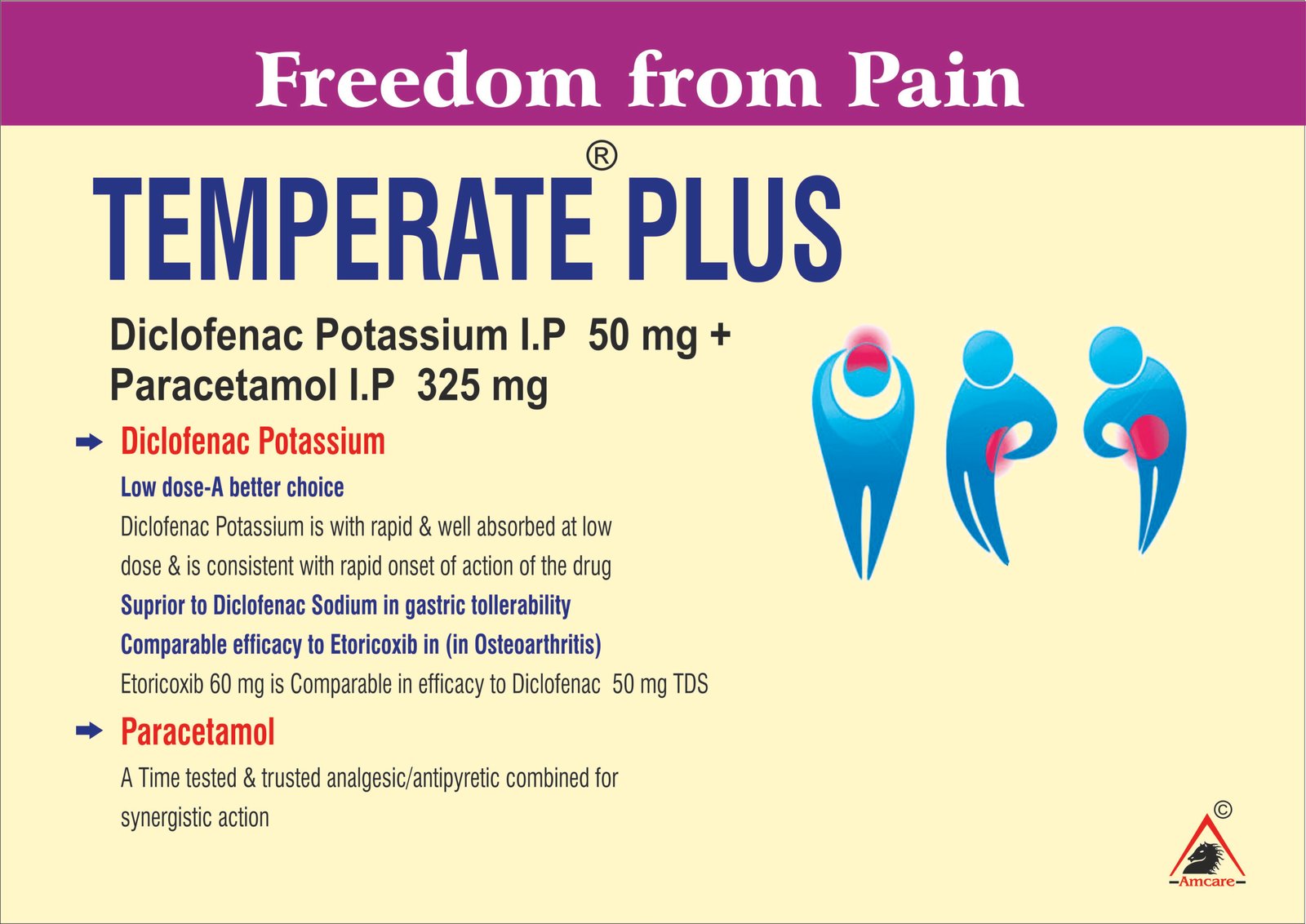
Temperate®Plus
Product Composition
Packaging Details
Product Description
Temperate Plus Tablets – Diclofenac Potassium 100 mg + Paracetamol 325 mg
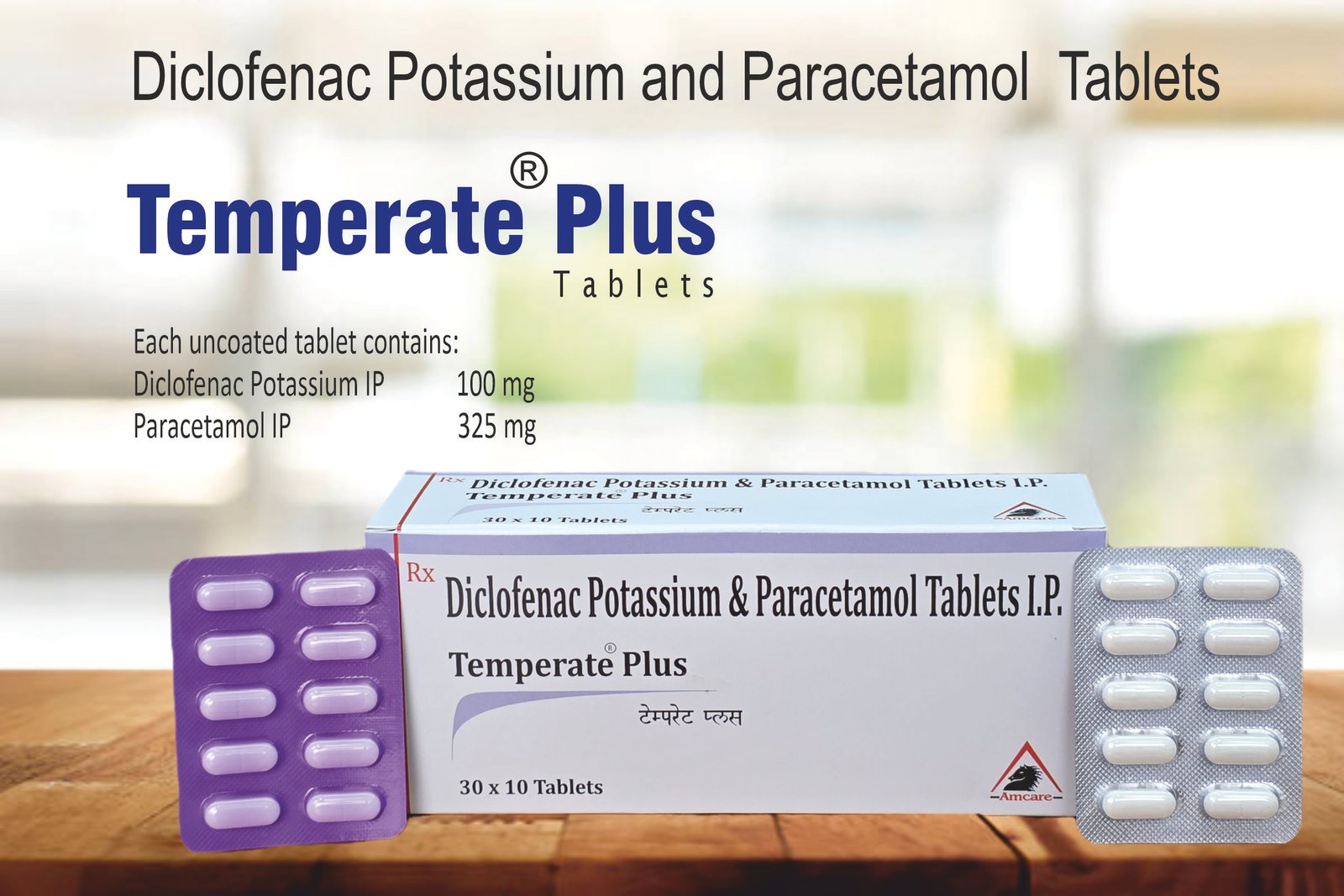
Temperate Plus Tablets are a combination analgesic and anti-inflammatory prescription medicine containing Diclofenac Potassium IP 100 mg and Paracetamol IP 325 mg per uncoated tablet, as shown on the provided product artwork. The pack shown is 30 × 10 tablets.
Composition of Temperate Plus Tablets
| Ingredient | Strength per Tablet |
|---|---|
| Diclofenac Potassium IP | 100 mg |
| Paracetamol IP | 325 mg |
| Excipients | q.s. |
Product Information
| Particular | Details |
|---|---|
| Brand Name | Temperate Plus |
| Generic Composition | Diclofenac Potassium + Paracetamol |
| Diclofenac Potassium | 100 mg |
| Paracetamol | 325 mg |
| Dosage Form | Uncoated Tablet |
| Route | Oral |
| Pack Size | 30 × 10 Tablets |
| Category | Analgesic & Anti-inflammatory |
| Prescription Status | Rx |
What are Temperate Plus Tablets Used For?
Temperate Plus Tablets combine an NSAID, diclofenac potassium, with paracetamol, providing both anti-inflammatory and analgesic/antipyretic actions.
The combination may be prescribed for the short-term management of pain associated with inflammatory or musculoskeletal conditions, depending on the physician’s assessment.
It may be used in conditions involving:
- Musculoskeletal pain
- Joint pain associated with inflammation
- Back pain
- Sprains and strains
- Dental pain
- Post-traumatic pain
- Pain associated with inflammatory conditions
- Other acute painful conditions where an NSAID plus paracetamol combination is considered appropriate
Diclofenac is an NSAID that reduces pain and inflammation, while paracetamol provides analgesic and antipyretic effects.
Temperate Plus should be used according to a healthcare professional’s prescription and should not be positioned as a treatment for the underlying cause of every type of pain.
How Does Temperate Plus Work?
Temperate Plus contains two active pharmaceutical ingredients that work through different but complementary mechanisms.
1. Diclofenac Potassium – 100 mg
Diclofenac potassium belongs to the non-steroidal anti-inflammatory drug (NSAID) class.
It reduces the formation of prostaglandins involved in:
- Pain
- Inflammation
- Swelling
- Fever
By reducing prostaglandin synthesis, diclofenac can help reduce inflammatory pain and improve functional comfort.
Simplified action:
Diclofenac → Reduced prostaglandin synthesis → Reduced inflammation → Reduced pain
2. Paracetamol – 325 mg
Paracetamol, also known as acetaminophen, is an analgesic and antipyretic medicine.
It helps provide relief from pain and reduces fever.
Simplified action:
Paracetamol → Analgesic/antipyretic action → Reduced pain and fever
Paracetamol is widely used for temporary relief of various types of mild-to-moderate pain and fever.
Combined Action of Temperate Plus
The two ingredients provide complementary pharmacological effects:
Diclofenac Potassium
→ Anti-inflammatory
→ Analgesic
→ Helps reduce inflammation-associated pain
Paracetamol
→ Analgesic
→ Antipyretic
→ Helps reduce pain and fever
Combined:
Pain + Inflammation → Diclofenac + Paracetamol → Analgesic and anti-inflammatory effect
This combination can therefore be considered when both pain control and inflammation management are clinically relevant.
Therapeutic Benefits / Role of Temperate Plus
1. Pain Relief
The combination provides analgesic activity that can help relieve acute painful conditions when prescribed appropriately.
2. Anti-inflammatory Support
Diclofenac potassium helps reduce inflammation associated with various musculoskeletal and inflammatory painful conditions.
3. Fever Reduction
Paracetamol has antipyretic activity and can help reduce fever.
4. Musculoskeletal Pain Management
The combination may be prescribed for painful musculoskeletal conditions where an NSAID is appropriate.
5. Dual-Action Formulation
Temperate Plus combines two analgesic components with complementary actions in a single tablet.
Common Clinical Applications
1. Musculoskeletal Pain
Musculoskeletal injuries and inflammatory conditions can cause pain, tenderness and restricted movement.
Diclofenac’s anti-inflammatory activity combined with paracetamol’s analgesic activity can provide symptomatic relief when prescribed appropriately.
2. Joint Pain
Inflammatory joint conditions can result in:
- Pain
- Swelling
- Stiffness
- Reduced mobility
Temperate Plus may be prescribed for symptomatic management of pain associated with inflammation.
It should not be represented as a medicine that cures the underlying joint disease.
3. Back Pain
Acute or short-term inflammatory back pain can sometimes require analgesic and anti-inflammatory treatment.
The combination of diclofenac and paracetamol may be considered by a physician depending on the patient’s condition.
4. Dental Pain
Dental procedures and inflammatory dental conditions may result in acute pain.
Analgesic therapy may be prescribed for short-term pain management.
5. Sprains and Strains
Soft-tissue injuries can cause:
- Pain
- Swelling
- Local inflammation
- Reduced movement
Diclofenac provides anti-inflammatory activity while paracetamol contributes additional analgesic activity.
Suggested Use
Temperate Plus Tablets should be taken strictly according to the dosage prescribed by a qualified healthcare professional.
The appropriate dose and duration depend on:
- Patient age
- Severity and type of pain
- Medical history
- Kidney function
- Liver function
- Gastrointestinal history
- Cardiovascular risk
- Other medicines being taken
Because the provided artwork does not specify a dosing schedule, an exact number of tablets per day should not be invented for the product page.
Administration
- Take orally with water.
- Follow the physician’s prescribed dosage.
- Use the lowest effective dose for the shortest appropriate duration.
- Do not take additional paracetamol-containing medicines without checking the total daily intake.
- Do not combine with another NSAID unless specifically advised by a healthcare professional.
Diclofenac labeling recommends using the lowest effective dose for the shortest duration appropriate to the treatment objective because NSAIDs carry important cardiovascular and gastrointestinal risks.
Possible Side Effects
Temperate Plus may cause adverse effects, particularly because it contains an NSAID.
Possible side effects may include:
- Nausea
- Vomiting
- Indigestion
- Stomach discomfort
- Abdominal pain
- Heartburn
- Diarrhea
- Constipation
- Dizziness
- Headache
- Skin rash
Diclofenac labeling also reports potential gastrointestinal, renal, hepatic, cardiovascular and hypersensitivity adverse effects.
Important Serious Side Effects
Although uncommon, serious reactions can occur with diclofenac-containing medicines.
These may include:
- Gastrointestinal bleeding
- Gastric or intestinal ulceration
- Gastrointestinal perforation
- Severe allergic reactions
- Liver injury
- Kidney injury
- Fluid retention/edema
- Increased blood pressure
- Cardiovascular thrombotic events
- Serious skin reactions
NSAIDs including diclofenac carry important warnings for serious cardiovascular and gastrointestinal events.
Precautions & Warnings
1. Gastrointestinal Precautions
Diclofenac can increase the risk of:
- Gastric ulcer
- Gastrointestinal bleeding
- Ulceration
- Gastrointestinal perforation
The risk can be higher in patients with a previous history of peptic ulcer disease or gastrointestinal bleeding.
Patients with a history of significant gastrointestinal disease should consult their healthcare professional before using the product.
2. Cardiovascular Precautions
NSAIDs can increase the risk of serious cardiovascular thrombotic events, including heart attack and stroke.
This risk may occur relatively early during treatment and can increase with longer use.
Patients with cardiovascular disease or cardiovascular risk factors require appropriate medical assessment.
3. Kidney Precautions
Diclofenac can affect kidney function, particularly in susceptible patients.
Extra caution may be required in patients with:
- Kidney disease
- Dehydration
- Heart failure
- Older age
- Concomitant medicines affecting renal function
4. Liver Precautions
Diclofenac may cause elevations in liver enzymes and, rarely, clinically significant liver injury.
Paracetamol also requires caution because excessive intake can cause serious liver damage.
Paracetamol-Related Precaution
Because Temperate Plus contains Paracetamol 325 mg, patients should be advised not to unknowingly take additional medicines containing paracetamol/acetaminophen.
Excessive total paracetamol intake can cause severe liver damage.
Particular caution is appropriate in patients with:
- Liver disease
- Heavy alcohol consumption
- Multiple paracetamol-containing medicines
- Malnutrition or other conditions affecting liver function
Drug & Medicine Interactions
Patients should inform their healthcare professional about all medicines they are taking.
Particular attention may be required with:
- Other NSAIDs
- Aspirin
- Anticoagulants
- Antiplatelet medicines
- Corticosteroids
- ACE inhibitors
- ARBs
- Diuretics
- Certain medicines affecting kidney function
- Methotrexate
- Lithium
- Digoxin
- Cyclosporine
- Other medicines containing paracetamol
Diclofenac can interact with medicines affecting blood pressure, renal function and bleeding risk, among others.
Important
Do not combine Temperate Plus with another diclofenac-containing medicine or another NSAID unless specifically advised by a healthcare professional.
Also check other medicines for paracetamol/acetaminophen to avoid unintentional excessive intake.
Who Should Take Particular Medical Advice?
Consult a healthcare professional before using Temperate Plus if you have:
- Previous stomach ulcer or GI bleeding
- Kidney disease
- Liver disease
- Heart disease
- High blood pressure
- Asthma triggered by aspirin/NSAIDs
- Bleeding disorders
- Previous allergic reaction to NSAIDs
- History of stroke or cardiovascular disease
- Regular alcohol consumption
- Pregnancy or plans for pregnancy
Pregnancy & Breastfeeding
Pregnant or breastfeeding women should consult a healthcare professional before using Temperate Plus.
Diclofenac and other NSAIDs require particular consideration during pregnancy, especially later in pregnancy.
The decision to use the combination should be based on the individual clinical situation and applicable prescribing information.
Use in Elderly Patients
Elderly patients may have a higher risk of NSAID-related:
- Gastrointestinal complications
- Kidney problems
- Cardiovascular complications
- Fluid retention
Therefore, appropriate medical supervision is recommended.
When Should Medical Attention Be Sought?
Patients should seek prompt medical attention if they develop:
- Black or bloody stools
- Vomiting blood
- Severe abdominal pain
- Chest pain
- Sudden weakness
- Difficulty breathing
- Facial or throat swelling
- Severe skin rash or blistering
- Yellowing of the skin or eyes
- Significant reduction in urine output
These symptoms can indicate potentially serious adverse reactions.
Storage
Store Temperate Plus Tablets:
- In a cool, dry place
- Away from direct sunlight
- Protected from excessive heat and moisture
- In the original packaging
- Out of reach of children
Follow the storage instructions printed on the final approved product packaging.
Key Product Features
| Product Feature | Details |
|---|---|
| Brand Name | Temperate Plus |
| Diclofenac Potassium | 100 mg |
| Paracetamol | 325 mg |
| Dosage Form | Uncoated Tablet |
| Route | Oral |
| Therapeutic Class | Analgesic & Anti-inflammatory |
| NSAID Component | Diclofenac Potassium |
| Analgesic/Antipyretic Component | Paracetamol |
| Pack Size | 30 × 10 Tablets |
| Prescription | Rx |
Why Choose Temperate Plus Tablets?
Temperate Plus combines Diclofenac Potassium and Paracetamol in a single oral dosage form.
The formulation provides:
- Anti-inflammatory action from diclofenac potassium
- Analgesic action from diclofenac and paracetamol
- Antipyretic action from paracetamol
- Convenient combination dosage form
- Application in selected acute painful and inflammatory conditions under medical supervision
The product should be used according to the physician’s prescription, with appropriate consideration of NSAID-related gastrointestinal, cardiovascular, renal and hepatic risks.