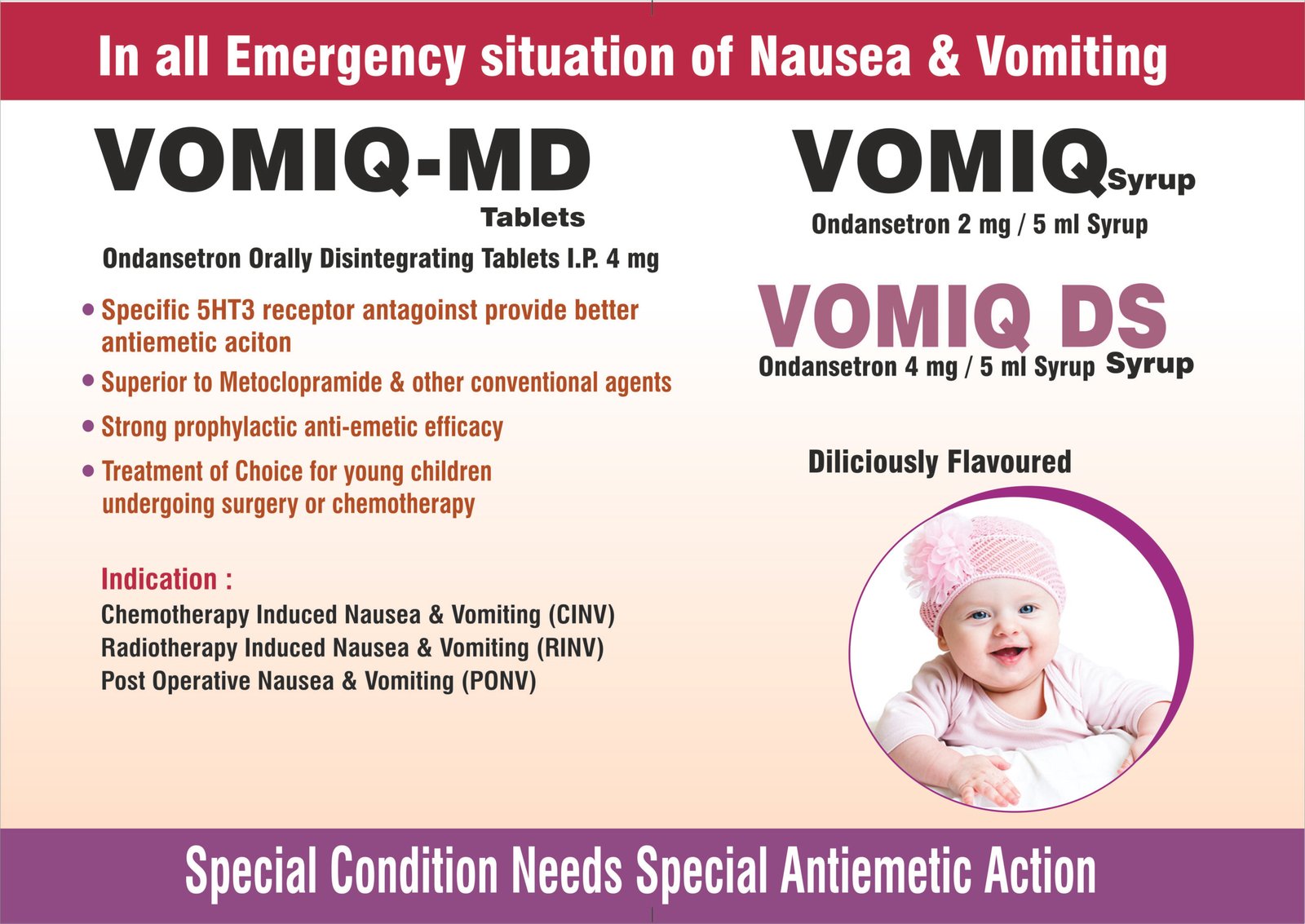
Our Products
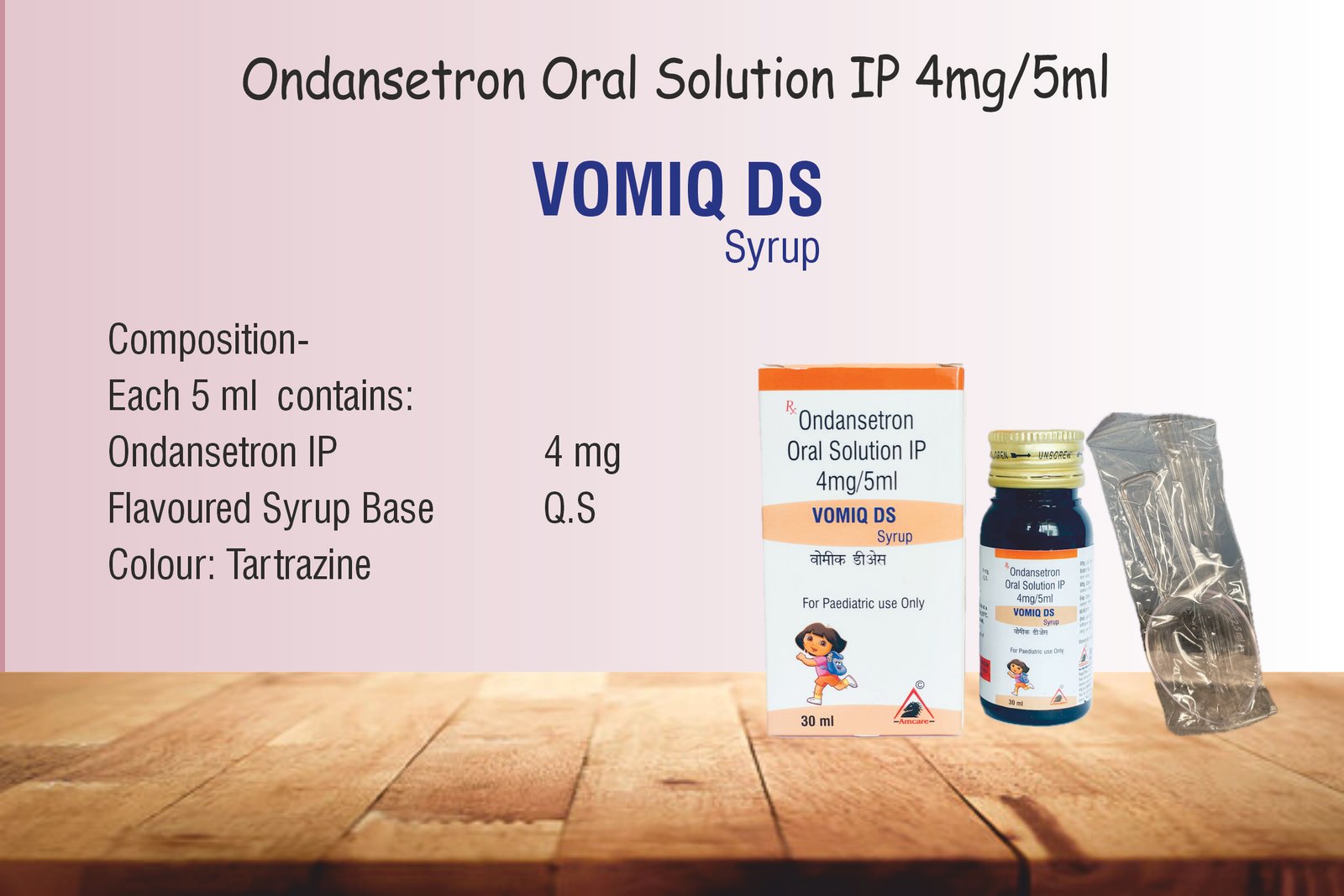
VOMIQ DS
Product Composition
Packaging Details
Product Description
VOMIQ DS Syrup
Ondansetron Oral Solution IP 4 mg/5 mL — For Paediatric Use Only
VOMIQ DS Syrup is a prescription oral ondansetron formulation containing Ondansetron IP 4 mg in each 5 mL. The supplied artwork specifically identifies the product as “For Paediatric Use Only” and shows a 30 mL pack.
Ondansetron is a selective 5-HT₃ receptor antagonist used to prevent and manage nausea and vomiting in selected clinical situations.
1. Product Information
| Parameter | Details |
|---|---|
| Brand Name | VOMIQ DS Syrup |
| Generic Name | Ondansetron |
| Dosage Form | Oral Solution / Syrup |
| Strength | 4 mg/5 mL |
| Active Ingredient | Ondansetron IP |
| Flavoured Syrup Base | q.s. |
| Colour | Tartrazine |
| Pack Size | 30 mL |
| Route | Oral |
| Prescription Status | Rx |
| Intended Population on Artwork | Paediatric Use Only |
| Therapeutic Category | Antiemetic |
| Drug Class | 5-HT₃ receptor antagonist |
The labelled concentration of 4 mg/5 mL corresponds to commercially available ondansetron oral-solution strengths.
2. Composition
Each 5 mL contains:
- Ondansetron IP – 4 mg
- Flavoured Syrup Base – q.s.
- Colour: Tartrazine
Strength equivalents
| Volume | Ondansetron |
|---|---|
| 2.5 mL | 2 mg |
| 5 mL | 4 mg |
| 7.5 mL | 6 mg |
| 10 mL | 8 mg |
These are concentration conversions only and are not dosing recommendations.
3. What is VOMIQ DS used for?
VOMIQ DS contains ondansetron, an antiemetic used to prevent nausea and vomiting in selected clinical settings.
Established ondansetron indications include prevention of:
- Nausea and vomiting associated with moderately emetogenic chemotherapy
- Nausea and vomiting associated with highly emetogenic chemotherapy
- Radiation-associated nausea and vomiting in specified settings
- Postoperative nausea and vomiting
The exact indication for VOMIQ DS in paediatric patients should follow the current approved product information and the treating physician’s prescription.
Important
The artwork specifically states:
FOR PAEDIATRIC USE ONLY
Therefore, your website should not position this particular presentation as an adult product.
4. How Does Ondansetron Work?
Ondansetron is a selective 5-hydroxytryptamine type-3 (5-HT₃) receptor antagonist.
During certain conditions, serotonin can activate 5-HT₃ receptors involved in the vomiting pathway.
Ondansetron blocks these receptors and reduces emetic signalling.
Simplified mechanism
Trigger → serotonin release → 5-HT₃ receptor activation → nausea/vomiting
Ondansetron → 5-HT₃ receptor blockade → reduced emetic signalling → reduced nausea/vomiting
Ondansetron’s antiemetic effect is related to its activity at both peripheral and central 5-HT₃ receptors.
5. Pharmacological Action
Drug class
5-HT₃ receptor antagonist
Primary therapeutic action
Antiemetic
Main effect
Prevention/reduction of nausea and vomiting
Ondansetron is particularly established in chemotherapy-, radiotherapy- and postoperative settings.
6. Potential Therapeutic Benefits
When appropriately prescribed, VOMIQ DS may help:
- Prevent nausea associated with selected chemotherapy
- Prevent vomiting associated with selected chemotherapy
- Reduce radiation-associated nausea and vomiting in appropriate settings
- Prevent postoperative nausea and vomiting
- Support oral intake when clinically appropriate by controlling nausea and vomiting
The benefit depends on the underlying cause of vomiting and the clinical setting.
7. Paediatric Use
The artwork clearly states:
FOR PAEDIATRIC USE ONLY
This is an important product-positioning point.
However, paediatric dosing is not determined solely by the 4 mg/5 mL concentration.
The prescribed dose can depend on:
- Child’s age
- Body weight
- Clinical indication
- Severity of symptoms
- Chemotherapy regimen
- Other medicines
- Liver function
- Cardiac risk factors
Therefore, the website should not say:
“Give 5 mL to every child.”
Instead:
Use only according to the dose prescribed by the paediatrician/qualified healthcare professional.
8. Paediatric Dosage Reference
For moderately emetogenic cancer chemotherapy, current professional ondansetron labelling provides indication-specific paediatric regimens.
For children 4–11 years, one current labelled regimen is:
- 4 mg 30 minutes before chemotherapy
- Another 4 mg 4 hours after the first dose
- Another 4 mg 8 hours after the first dose
- Then 4 mg three times daily for 1–2 days after chemotherapy
Because VOMIQ DS contains 4 mg in 5 mL, a 4 mg dose corresponds to 5 mL of this concentration.
For adolescents 12–17 years, the cited regimen differs and uses 8 mg doses.
Important website disclaimer
These are indication-specific reference regimens from professional labelling, not a universal VOMIQ DS dosing instruction. The final Indian product dosage should follow the approved PI and the physician’s prescription.
9. How to Administer VOMIQ DS
- Measure the prescribed dose accurately.
- Use a calibrated measuring device.
- Do not use an ordinary household spoon for dosing.
- Give only the amount prescribed by the physician.
- Do not give additional doses because vomiting continues unless instructed.
- Follow the prescribed timing in relation to chemotherapy or other clinical treatment.
Because the product is 4 mg/5 mL, accurate measurement is particularly important.
10. Missed Dose
If VOMIQ DS has been prescribed according to a scheduled regimen and a dose is missed:
Follow the prescribing physician’s instructions. Do not automatically double the next dose.
For chemotherapy-related regimens, the timing of individual doses can be clinically important.
11. Common Side Effects
Possible adverse effects of ondansetron include:
Gastrointestinal
- Constipation
- Diarrhoea
- Abdominal discomfort
Nervous system
- Headache
- Dizziness
- Fatigue
Other
- Malaise
- Temporary changes in liver enzymes
- Flushing in some patients
The child’s doctor should be informed if side effects are persistent or troublesome.
12. QT Interval Prolongation
One of the most important safety considerations with ondansetron is QT interval prolongation.
Ondansetron can affect cardiac electrical conduction and has been associated with torsades de pointes, a potentially serious ventricular arrhythmia.
Particular caution is required in children with:
- Congenital long-QT syndrome
- Cardiac rhythm disorders
- Heart failure
- Low potassium
- Low magnesium
- Significant dehydration
- Other QT-prolonging medicines
Current professional labelling recommends avoiding ondansetron in congenital long-QT syndrome and considering ECG monitoring in patients with relevant risk factors.
13. Serotonin Syndrome
Serotonin syndrome has been reported with 5-HT₃ antagonists, particularly when used with other serotonergic medicines.
Possible symptoms include:
- Agitation
- Confusion
- Sweating
- Fever
- Tremor
- Muscle rigidity
- Increased reflexes
- Rapid heartbeat
- Blood-pressure changes
- Seizures
The risk should be considered when ondansetron is combined with serotonergic medicines.
Seek urgent medical attention if serious symptoms occur.
14. Hypersensitivity Reactions
Rare but serious allergic reactions can occur.
Watch for:
- Skin rash
- Facial swelling
- Lip or tongue swelling
- Difficulty breathing
- Bronchospasm
- Severe dizziness
- Anaphylaxis
Ondansetron should be discontinued if a serious hypersensitivity reaction is suspected and appropriate emergency treatment should be initiated.
15. Important Drug Interactions
The physician should know about all medicines being taken by the child.
Particular attention is required with:
QT-prolonging medicines
These may increase the risk of cardiac rhythm abnormalities.
Serotonergic medicines
These may increase concern for serotonin syndrome.
CYP enzyme modifiers
Ondansetron is metabolized through several CYP pathways, including CYP3A4, CYP2D6 and CYP1A2, so some medicines can alter its exposure.
Tramadol
Ondansetron may reduce the analgesic effect of tramadol in some clinical settings, and the combination also requires appropriate clinical consideration.
Current prescribing information specifically includes interactions involving serotonergic medicines, CYP-modifying drugs and tramadol.
16. Contraindications
VOMIQ DS should not be used in patients with:
- Known hypersensitivity to ondansetron or formulation components
- Concomitant apomorphine use
Current prescribing information lists these as contraindications.
Patients with congenital long-QT syndrome require particular avoidance of ondansetron because of the risk of QT prolongation.
17. Liver Impairment
Ondansetron exposure increases in patients with severe hepatic impairment.
Current professional labelling states that patients with severe hepatic impairment should not exceed a total daily dose of 8 mg.
For the VOMIQ DS website:
Children with significant liver disease should use VOMIQ DS only under medical supervision. Dose adjustment may be required.
18. Kidney Impairment
Ondansetron generally requires less dose adjustment for renal impairment than for severe hepatic impairment.
Nevertheless, the physician should be informed if the child has kidney disease, especially where electrolyte disturbances or multiple medicines are present.
19. Dehydration and Electrolytes
Children with repeated vomiting can become dehydrated quickly.
Dehydration may also lead to:
- Low potassium
- Low magnesium
- Weakness
- Dizziness
- Cardiac rhythm abnormalities
This is particularly relevant because electrolyte abnormalities can increase the risk associated with ondansetron-related QT prolongation.
Important
VOMIQ DS controls nausea/vomiting but does not replace appropriate fluid and electrolyte management.
20. Persistent Vomiting
VOMIQ DS should not be used to repeatedly suppress vomiting without investigating its cause.
Seek medical assessment if the child has:
- Persistent vomiting
- Severe abdominal pain
- Abdominal swelling
- Inability to keep fluids down
- Blood in vomit
- Green/bilious vomiting
- Severe weakness
- Reduced urination
- Signs of dehydration
- Altered consciousness
Ondansetron can reduce vomiting while an underlying gastrointestinal problem may continue. Current labelling specifically warns about possible masking of progressive ileus/gastric distension in certain settings.
21. Pregnancy and Breastfeeding
Because the artwork identifies VOMIQ DS specifically as For Paediatric Use Only, pregnancy is not a routine product-use population.
For adolescent patients who are pregnant or breastfeeding, treatment should be determined by the treating physician.
22. Use in Infants and Young Children
Do not extrapolate the 4 mg/5 mL concentration into an automatic dose for infants.
Website wording:
The appropriate age range and paediatric dosage for VOMIQ DS should follow the approved product information and the prescribing physician’s instructions.
The product artwork establishes the paediatric positioning but does not specify a minimum age or weight-based dosing schedule, so these should not be invented.
23. Elderly Use
The supplied product is labelled For Paediatric Use Only, so elderly use is not an intended product positioning.
For general ondansetron information, age-specific prescribing should follow the applicable formulation and indication.
24. Myocardial Ischemia
Current ondansetron prescribing information also includes a warning concerning myocardial ischemia.
If a child develops unexplained:
- Chest discomfort
- Severe shortness of breath
- Collapse
- Severe palpitations
urgent medical assessment is required.
25. VOMIQ DS and Chemotherapy-Associated Vomiting
Ondansetron has an established role in preventing nausea and vomiting associated with selected chemotherapy regimens.
In paediatric chemotherapy settings, the prescribed dose depends on:
- Age
- Chemotherapy emetogenicity
- Treatment protocol
- Timing of chemotherapy
- Other antiemetics being used
For moderately emetogenic chemotherapy, current professional labelling provides specific regimens for children aged 4–11 and adolescents aged 12–17.
26. VOMIQ DS and Postoperative Nausea/Vomiting
Ondansetron is also indicated for prevention of postoperative nausea and vomiting in applicable clinical settings.
However, postoperative paediatric use should be determined by the treating anaesthesiologist/physician according to the child’s clinical condition and the applicable approved dosing information.
27. Colour: Tartrazine
The supplied artwork specifically states:
Colour: Tartrazine
This should be retained in the composition/excipient information on the product page.
Patients with known sensitivity to colour additives should inform their healthcare professional.
28. Flavoured Syrup Base
The artwork states:
Flavoured Syrup Base – Q.S.
The specific flavouring agents are not identified on the supplied artwork.
Therefore, the website should not invent a particular flavour name or list individual flavouring substances unless they are confirmed from the approved formulation.
29. Storage
Store VOMIQ DS according to the final approved product label.
Recommended website wording:
- Store in a cool, dry place.
- Protect from excessive heat.
- Protect from direct sunlight.
- Keep the bottle tightly closed.
- Keep out of reach of children.
- Do not use after the expiry date.
- Follow the storage conditions printed on the marketed pack.
30. Key Product Features
VOMIQ DS Syrup
Paediatric Ondansetron Oral Solution
- Ondansetron IP 4 mg/5 mL
- Oral solution
- 30 mL pack
- Prescription medicine
- For Paediatric Use Only
- 5-HT₃ receptor antagonist
- Antiemetic
- Flavoured syrup base
- Tartrazine colour
31. Product Strength Conversion
For the 4 mg/5 mL formulation:
2.5 mL = 2 mg
5 mL = 4 mg
7.5 mL = 6 mg
10 mL = 8 mg
Again, these are mathematical concentration equivalents and not recommended doses.
32. Why VOMIQ DS?
The key product positioning is:
Paediatric-specific presentation
The artwork explicitly identifies:
FOR PAEDIATRIC USE ONLY
Convenient oral liquid
The 4 mg/5 mL concentration allows the prescribed ondansetron dose to be measured as an oral liquid.
Established antiemetic mechanism
Ondansetron selectively blocks 5-HT₃ receptors involved in the emetic pathway.
Physician-directed therapy
The product is marked Rx, supporting prescription-based use.